TJNA calls for health taxes and fairer tax systems to strengthen domestic revenue mobilisation in West Africa
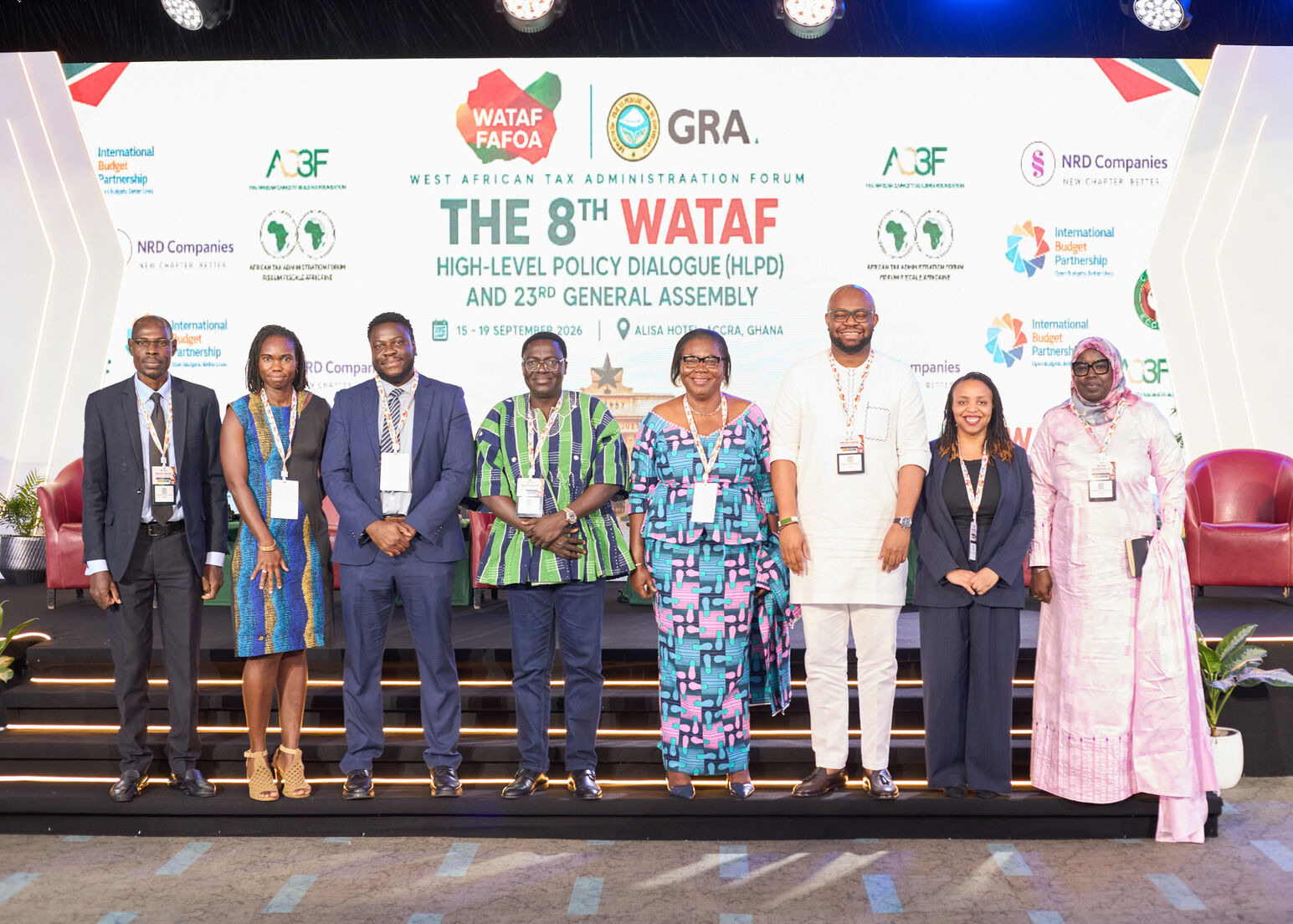
During the 8th High-Level Policy Dialogue of the West African Tax Administration Forum (WATAF), Tax Justice Network Africa (TJNA) called for stronger health taxe policies, greater public accountability and inclusive tax policies to help West African countries mobilise sustainable domestic revenue.
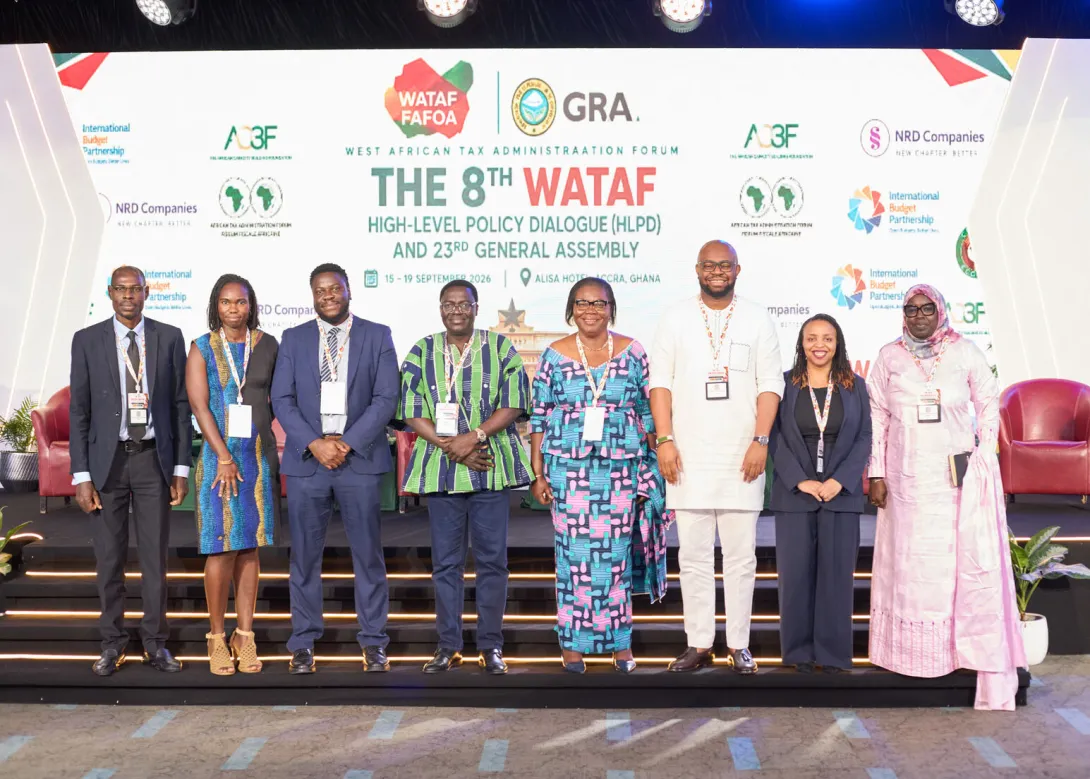
Contributing to discussions in Accra, Ghana, TJNA’s Policy Officer for Tax and Health, Mr John Thomi, and Senior Policy Officer, Ms Everlyn Muendo, highlighted how governments can raise much-needed revenue while improving public health outcomes, strengthening public trust and ensuring fairness in taxation.
The dialogue and WATAF’s 23rd General Assembly were co-hosted with the Ghana Revenue Authority (GRA). Held under the theme “Building Stronger Tax Administrations for Revenue Mobilisation and Sustainable Development,” the gathering also marked WATAF’s 15th anniversary.
Discussions took place against a backdrop of declining external assistance, rising debt-service costs and growing development financing needs, reinforcing the urgency of strengthening domestic revenue mobilisation.
Health taxes for sustainable financing
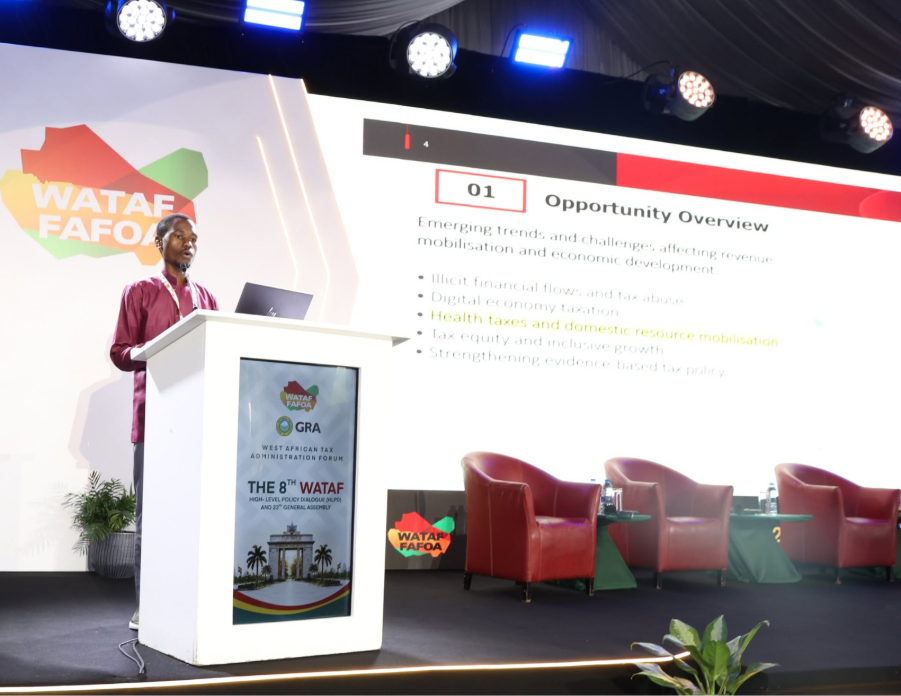
Speaking during the Partner Spotlight Session, Mr Thomi addressed the growing pressure on health financing across Africa. Declining external assistance, rising rates of non-communicable diseases and shrinking fiscal space are increasing the need for sustainable domestic financing.
He posed a central question: “Can health taxes unlock revenue, health, and development gains?”
Drawing on modelling informed by benchmarks from the World Health Organization, the International Monetary Fund and the Center for Global Development, he explained that well-designed excise taxes on tobacco, alcohol and sugar-sweetened beverages could generate between USD 1.7 billion and USD 10 billion annually across Economic Community of West African States (ECOWAS) countries, depending on the tax rates and policy scenarios used.
Mr Thomi called for stronger revenue forecasting, better excise-tax data systems and the use of tobacco excise simulation models to assess how tax changes affect prices, consumption and revenue. He also highlighted the importance of predictable tax policies and regional peer learning to support implementation.
Building trust through fair and inclusive taxation
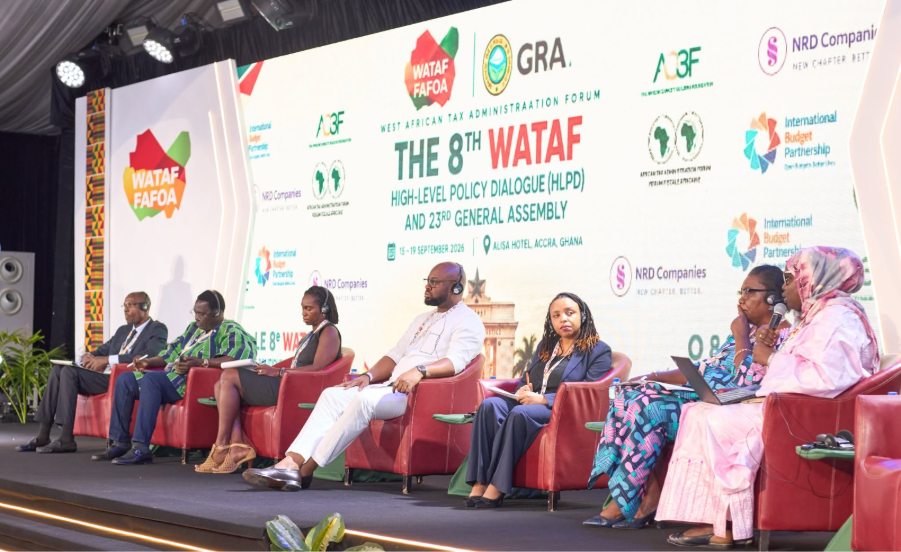
During the panel on “Strengthening Domestic Resource Mobilisation through Partnerships and Inclusive Tax Systems,” Ms Muendo emphasised that effective tax systems depend on trust, transparency and equity.
She noted that broadening the tax base requires meaningful public participation and stronger collaboration between governments and civil society. Taxpayers need to understand their obligations, see the public value of taxation and be able to hold authorities accountable for how revenue is raised and spent.
“We must strengthen taxpayer education to enhance tax morale and demonstrate the public value of taxation, ensure transparency and accountability in how revenues are raised and spent, and conduct gender and socio-economic impact analyses so that tax policies do not disproportionately burden informal operators, small businesses, or women-owned enterprises,” Ms Muendo said.
Her contribution highlighted the need to mobilise revenue in ways that reflect taxpayers’ capacity to pay and protect those already facing economic pressures.
Stronger regional and international cooperation
The wider dialogue examined how digital innovation, regional cooperation and international tax reform can support domestic revenue mobilisation.
GRA Commissioner-General, Mr Anthony Kwasi Sarpong, called for stronger domestic resource mobilisation to finance the region’s development priorities.
“Tax systems are not mere instruments for collecting revenue; they are the architecture of state capacity,” he said.
He highlighted Ghana’s digital reforms, including integrated taxpayer systems and automated value-added tax collection, as examples of efforts to improve compliance and strengthen tax administration.
On international cooperation, Mr Daniel Nuer of Ghana’s Ministry of Finance stressed the importance of African participation in negotiations towards a United Nations Framework Convention on International Tax Cooperation. He highlighted the opportunity to advance rules that reflect African priorities, protect taxing rights and strengthen efforts to curb illicit financial flows.
Turning commitments into action
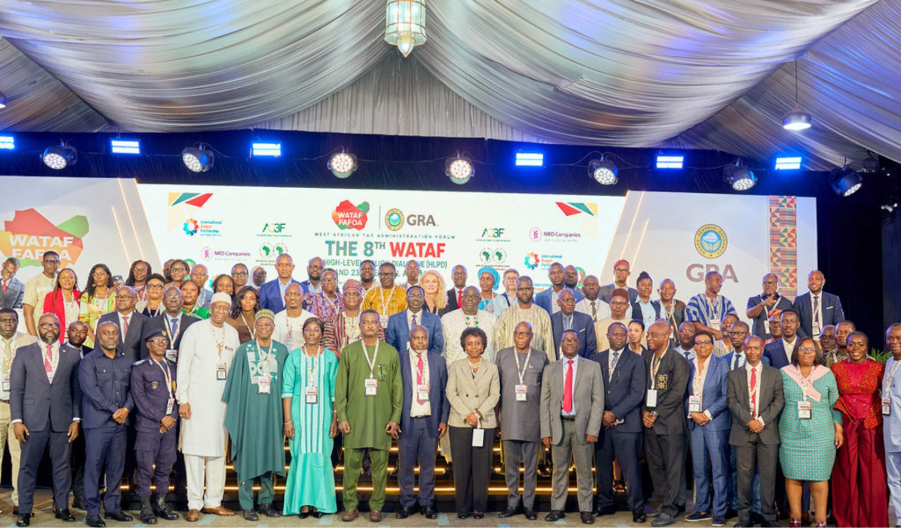
The dialogue culminated in the Accra Outcome Statement, which sets out priorities for stronger tax administration and regional cooperation. These include digital transformation, secure information sharing, safeguards for taxpayer privacy and closer collaboration through joint audits, shared risk analysis and assistance with tax recovery.
TJNA’s contributions highlighted the importance of placing health, fairness and accountability at the centre of these reforms. Mobilising more domestic revenue must go hand in hand with protecting people’s wellbeing, distributing tax burdens fairly and ensuring that public resources support development.
For more information about the WATAF High-Level Policy Dialogue, please contact tthomi[@]taxjusticeafrica.net