Beyond Poverty: Why Tax Justice Matters for a More Equal Africa
By Mercy Kamau
Poverty is often measured by income, but its impact reaches far beyond what people earn. It is seen in families struggling to afford food and housing, children learning in overcrowded classrooms, patients unable to access quality healthcare, and communities living without reliable water, sanitation and other essential services.
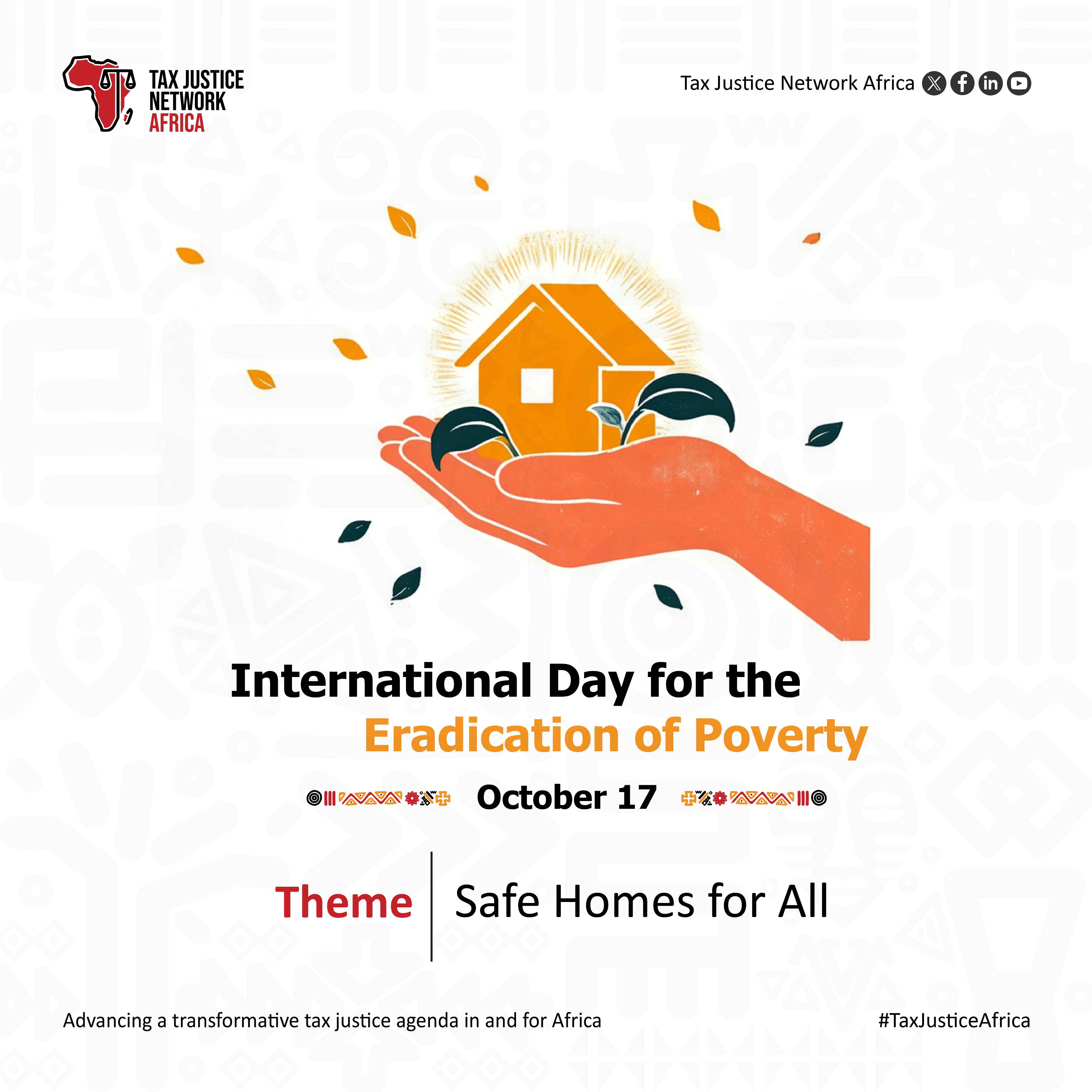
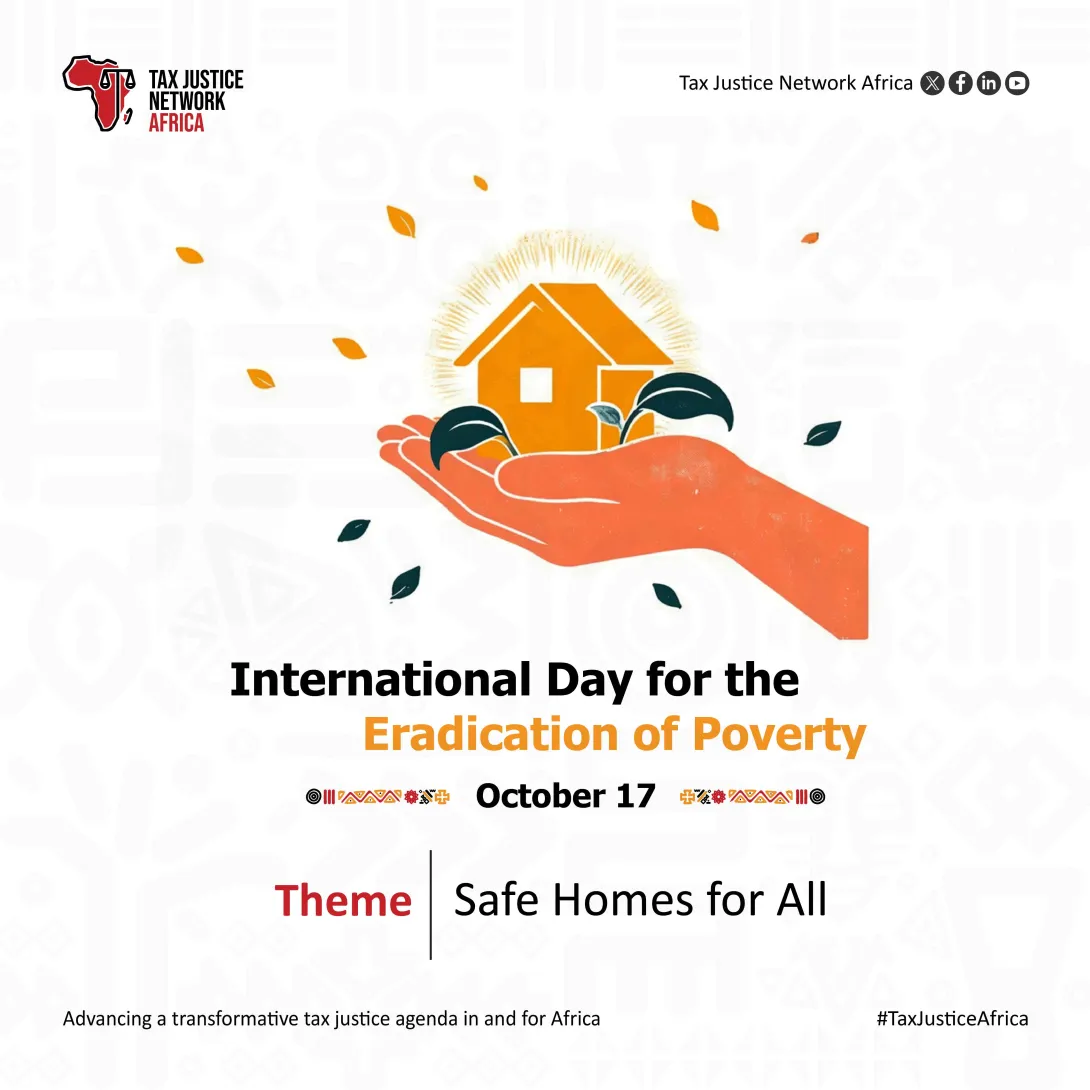
Across Africa, addressing poverty requires more than short-term interventions. It calls for sustainable financing, fair economic policies and public institutions that can mobilise resources and use them to meet people’s needs. As the world marks the International Day for the Eradication of Poverty on 17 October, Tax Justice Network Africa (TJNA) highlights tax justice as an essential part of the solution.
This year’s observance focuses on Safe Homes for All under the broader 2026–2028 United Nations theme, United for Peace and Human Rights. The focus recognises adequate housing as fundamental to human dignity, security and access to other rights. According to the United Nations, more than 2.8 billion people worldwide face some form of housing inadequacy.
For TJNA, this focus reinforces the need to examine how countries raise public revenue, how wealth is distributed and whether public resources are sufficient to finance the services and infrastructure people need to live with dignity.
The poverty challenge in Africa: what do the numbers tell us?
The scale of poverty in sub-Saharan Africa highlights the urgency of sustainable and equitable development financing. According to the World Bank’s September 2025 global poverty update, 46% of the population in sub-Saharan Africa lived in extreme poverty in 2024, based on the international poverty line of US$3 per person per day. The update also estimated that 839 million people worldwide were living in extreme poverty in 2024.
Income alone does not tell the whole story. The United Nations Development Programme’s 2026 Global Multidimensional Poverty Index estimates that 616 million people in sub-Saharan Africa, 51.4% of the region’s population covered by the index experience multidimensional poverty. This reflects overlapping disadvantages in nutrition, schooling, sanitation, access to electricity and housing.
These figures show that poverty is not only about low incomes. It is also about limited access to essential services, inadequate living conditions and fewer opportunities to participate fully in economic and social life. Addressing these challenges requires investment in public services, stronger social protection and inclusive growth. Crucially, these commitments depend on sustainable public resources.
Tax justice: Connecting public revenue to people’s everyday lives
Taxation is one of the most important ways governments mobilise domestic resources for development. When tax systems are fair, transparent and progressive, they can help finance healthcare, education, social protection, affordable housing and essential infrastructure while reducing inequality.
However, the design and collection of taxes matter. When lower-income households bear a disproportionate tax burden while wealthier individuals and corporations minimise their contributions through tax avoidance, abusive tax practices or poorly designed incentives, existing inequalities can deepen.
A fairer approach requires tax systems in which those with the greatest ability to pay contribute their fair share, while low-income households are protected from disproportionate burdens. TJNA advocates equitable and transparent tax systems that address social and economic disparities, strengthen public accountability and support inclusive development.
Ultimately, tax justice is not simply about collecting more revenue. It is about who pays, how much they pay and whether the revenue raised translates into meaningful improvements in people’s lives.
Illicit financial flows: Resources lost, opportunities denied
Africa’s poverty and development challenges cannot be separated from the resources the continent loses through illicit financial flows (IFFs), including tax evasion, trade misinvoicing, corruption and other illicit financial activities. These outflows weaken governments’ ability to mobilise domestic resources and invest in schools, hospitals, housing, water systems and social protection.
TJNA has consistently called for stronger action against illicit financial flows and reforms that enable African countries to retain a fairer share of the wealth generated within their economies. When revenue falls short, governments face difficult choices about spending priorities, borrowing and taxation. The consequences are often felt most acutely by people who depend on public services and have limited private alternatives.
Combating illicit financial flows is therefore not only a matter of financial integrity. It is also a development priority and a necessary part of addressing the structural conditions that perpetuate poverty.
Fair taxation and the financing of safe homes for all
The 2026 focus on safe homes offers an opportunity to connect tax justice directly to the right to adequate housing. Safe and affordable housing requires sustained public investment in infrastructure, land-use planning, water and sanitation, transport and social housing programmes. These investments depend, in part, on governments’ ability to raise sufficient revenue and allocate it fairly.
Where revenue is lost through illicit financial flows or weakened by unfair tax arrangements, resources for these priorities are constrained. At the same time, poorly designed taxes on essential goods and services can place additional pressure on households already struggling to meet basic needs.
A poverty-focused tax agenda must therefore mobilise sufficient public revenue while ensuring that tax policies do not deepen inequality. This includes strengthening progressive taxation, addressing tax abuse, reviewing harmful tax incentives, improving transparency in the extractive sector and ensuring that public spending responds to the needs of marginalised communities.
Accountability must go hand in hand with resource mobilisation
Mobilising revenue is only one part of the solution. Governments must also ensure that public resources are managed transparently, allocated according to public priorities and used effectively. Citizens need access to information about tax policies, government budgets, public contracts and expenditure decisions.
Civil society organisations, journalists and community groups play an important role in scrutinising these processes and holding decision-makers accountable. African countries also need a meaningful voice in shaping international tax rules and financial arrangements that affect their ability to mobilise and retain revenue.
Putting people at the centre of tax justice
Poverty eradication cannot be achieved through revenue mobilisation alone. It requires policies that recognise people’s rights, address structural inequalities and ensure that the benefits of economic activity are shared more equitably.
For TJNA, advancing tax justice means working towards systems in which African wealth contributes to African development, public institutions are accountable and taxation supports the delivery of essential services rather than reinforcing existing inequalities.
As the world marks the International Day for the Eradication of Poverty, the question is not only how to lift people out of poverty today, but also how to build economic and fiscal systems that prevent poverty from being reproduced across generations.
Ending poverty requires resources, but it also requires justice in how those resources are raised, retained and used. Tax justice is a critical part of making that possible.
For more information, contact Mercy Kamau at mkamau[@]taxjusticeafrica.net
