Introduction: Why Tax Justice Must Begin at the Margins
Economics lays the foundation for the tax regimes which countries adopt, changing over time as politics, governance mechanisms, and service delivery needs evolve. Understanding the relationship between economic theory and taxation is crucial for the development trajectory of a country, especially where traditional economics falls short of bridging gaps of inequality and leaves a certain demographic behind. Broadly, the interplay between economics, trade, labour and tax cannot be ignored by policymakers.
Despite current geopolitical instability, there are clear signs that safeguarding human rights, ensuring service delivery as a responsibility of the state, and fostering multilateral cooperation are important to achieving tax justice for marginalised and historically disadvantaged communities.
Within this context, this article challenges the premises of orthodox economics and argues that a historic moment presents itself to move beyond the assumption of taxpayer neutrality and place the experiences of historically marginalised communities at the centre of the international tax architecture. The article draws from heterodox and African feminist economics and discusses the UN Tax Convention and its potential to deliver a fairer international tax system that brings women and girls, in particular, to the centre.
The limits of orthodox economics
Orthodox economics often leads to support of regressive tax measures especially in low- and middle-income countries. In such a system, the poor and the wealthy pay the same tax on food and other services despite differences in disposable income. Other forms of taxpayer differences such as gender, skin colour, class and family dynamics play no role in the distribution of the tax burden.
As such, orthodox economics assumes the tax system is neutral on all taxpayers, ignoring a fundamental question of what impact tax laws have on historically marginalised groups, such as black people, women, lesbian, gay, bisexual, transgender, intersex and queer (LGBTIQ+), people living in poverty, and people with disabilities. Taxpayers are assumed to have the same predisposition and power to participate equally in the formal economy and thus, pay taxes from the margins of the system.
Taxpayer neutrality is central to orthodox economics. It assumes that equity in taxation is realised when taxpayers’ income levels are the only relevant characteristic in determining their ability to pay without any influence of socio-economic positioning, class, gender or skin colour. Equity can be horizontal meaning the “equal treatment of equals,” or vertical meaning the “appropriate differentiation of unequal individuals.” The goal of equity would be to see that there is impartiality and fairness in the treatment of all taxpayers through the fair distribution of the tax burden. No group should bear the tax burden more.
Orthodox economics approaches have been shown to produce a twofold gendered impact. First, they often promote regressive taxes such as Value Added Tax (VAT) and presumptive taxes in the informal economy, which place a disproportionate burden on women. Second, women bear the consequences of underfunded public services resulting from unfair tax systems, often resulting in increased unpaid care and domestic work.
To put this descriptively, it has been shown that African men own three times more wealth than women and that Africa has the widest gender wealth gap. Women not only hold less wealth, but due to systemic inequalities, they also face greater economic disadvantages than men. When there are tax policy measures that favour high-income households such as charitable tax breaks or capital gains tax exemptions, the wealthy secure tax efficiency for a net benefit from the state whilst the poor endure net losses.
Another limitation of orthodox economics is its reliance on consumption taxes such as VAT, which place a disproportionate burden on low-income households by reducing their already limited disposable income. This burden is particularly pronounced for women who dominate low-income households and tend to account for a larger share of household consumption in comparison to men.
These examples illustrate the limitations of orthodox economic thinking, which assumes the "fiction of taxpayer neutrality" and treats taxpayers as a homogenous group, indistinguishable by race, class, gender and/or other characteristics.
Labour market participation is another domain in which orthodox economics has tended to overlook taxpayer differences. Women’s experiences in the labour market are shaped by multiple systemic issues, even within systems that appear neutral. Studies show that women face higher underemployment, and their participation is concentrated in lower-skilled or informal work in comparison to men.
In sub-Saharan Africa specifically, women have higher labour-market participation, but it is in the informal sector. The pattern has significant implications. Employment in the informal economy is often characterised by limited social protection and unstable incomes.
Yet, despite their circumstances low-income informal workers are subject to a range of taxes and levies including licenses, fees, and regressive presumptive taxes. As a result, despite having the least ability to pay these individuals end up paying a higher proportion of their actual earnings to the fiscus. This is the warped nature of the current domestic tax system in several countries where the burden of taxation falls most heavily on those with the fewest resources, reinforcing rather than reducing existing inequalities.
This replicates the hidden role of women and girls in conventional economics even though women and girls contribute over 12.5 billion hours of unpaid labour. They sustain global economic activity. Similarly, women’s unpaid labour sustains households regardless of income, location and tax bracket. In countries like Malawi, reports indicate that unpaid care work is a hidden tax that prevents women’s participation in the formal labour market, and the rate of vulnerable employment amongst women is almost twice that of the Southern African Development Community (SADC).
The emergence of heterodox economics in relation to taxation
The “neutrality” and “homogeneity” assumptions of orthodox economics can be countered by a decolonial feminist lens that corrects the inherited colonial and patriarchal assumptions about whose labour, body and economy matter. The shifting of tax perspectives in the mid-1970s paralleled the globalisation of trade, mobility and technological advancement, increased community participation in formal economies and country participation in multilateral cooperation. The progressive realisation of socioeconomic rights for communities and sovereignty for countries independent from their colonisers was treated as a threat to the global order of that time, hampering efforts to achieve equality through the tax system.
In order to contain this threat, neoliberal instruments, including increased debt, austerity and cheap labour policies, were used, guaranteeing profit concentration for the West and continued extraction and exploitation of the East and South. While income inequality declined in colonial powers, it rose sharply in the Global South. Thus, tax systems did not deliver equality; rather, they replicated the global order of financial, trade and value chain systems.
History and power matter for economic analysis. Dr Sylvia Tamale observed Euro-American colonialism’s globalisation of knowledge production and dissemination. In her observation, she states that colonial powers relied on tools such as mass media, education, religion and law to construct the idea of the “naturalness” of hierarchies of White supremacy and Black inferiority, male supremacy and female inferiority or heteronormativity. She further states that historically many ways of life were conceptualised by colonial powers. Elaborating on the “theory of development,” she states that institutions such as the World Bank and the IMF, development agencies, and transnational corporations strategically ensure that Africa complies with the rules of the game of finance capital. She positions time as a social construct of the West, along with development theory, conceptualizing gender as a social construct and museums of extracted memory and culture. She notes how time was commodified, Gross Domestic Product (GDP) used as a measure to determine development and how indigenous practices never subscribed to binary concepts of gender. All these were deemed irrational to Western political economy, if not uncivil.
States invoke traditional values, sovereignty, and neutrality when committing or permitting harms such as armed conflict, genocide, anti-LGBTI laws, women’s rights regressions (including increasing gender-based violence), and right-wing conservatism. Similar to orthodox economics, this use of “neutrality” serves as a shield, letting existing power structures and harm go unchecked. Just as orthodox economics ignores social structures and systems that underpin public and economic participation, tax systems also operate under this false neutrality ignoring how social structures are shaping who gets to participate in and ultimately benefit from publicly funded services.
Heterodox economics provides an alternative framework for what’s invisible to orthodox economics: cultural complexity, gender norms, sexuality, skin colour, disability, sex work and poverty. These are grounds in which social order can determine access, options and decision making at individual, household and community levels. These areas of marginalisation ultimately translate into undervalued labour, inadequate service provisions and unjust treatment in taxation. A feminist economics analysis draws from heterodox economics, recognising hidden biases and unintended consequences of structural assumptions of neutrality in orthodox economics, inherited colonial laws, heteronormative norms and public narratives that influence tax policies.
Drawn from Latin; heteros (different) and doxa (belief, teaching), heterodox economics challenges our reality by situating the basis of value on morality, ethics and social relations in consideration of social hierarchies of power. Feminist economics builds on this recognising how morality, ethics and social relations can still be narrow or exclusionary. For example, Large-scale research initiatives over the last five decades, notably in Francophone Africa, only focused on women's paid employment. Separating care and domestic responsibilities.
Whilst feminist theory originates from the Western world, it has evolved across several waves from: a) legal (suffrage), to b) inequalities (workplace, family, sexuality), and to c) diversity and individuality. African feminism recognises colonial history, indigenous systems and socioeconomic realities in Africa. Emphasising collectivism, community and shared personhood. A direct contrast to the West's individualism. Juxtaposing colonial legacy and modern influences with tradition on the lives of African women.
Extrapolating Dr Tamale’s decolonial feminist analysis of tax justice recognises how history repeats itself: a) digital economies rapidly expand whilst tax laws for fair taxation lag, b) global South countries’ produces value, but the productivity tax revenue from that value is captured in Global South countries through for example transfer pricing and profit shifting c) gender- diverse communities are often excluded, through stringent eligibility criteria, from benefitting from tax incentives or services. Feminist economics focused on gender inequities allows one to see the blind spots often missed by orthodox economics.
The pink tax is a classic example. The United Nations (UN) acknowledged it as “the practice of gender-based price differentiation” where goods and services cost more for women and girls than for men and boys. A similar pattern exists in gender affirming healthcare, which costs more than general healthcare. Expanding heterodox economics towards feminist economics can only strengthen systems that have historically excluded communities and countries, particularly by adopting an intersectional lens that recognises the multiple layers of exclusion, discrimination and inequity especially in tax systems.
This reflects the unintended consequences of policy-making that intentionally excludes the experiences of women and girls in their diversity.
Putting the Margins at the Centre: Feminist economics as central to tax justice and the UN Tax Convention
The Intergovernmental Negotiating Committee on the United Nations Framework Convention on International Tax Cooperation issued the zero-draft text of the Convention in July 2026. This zero draft contains articles on sustainable development and fair allocation of taxing rights, among others.
In light of the premises above, women shoulder the burden of an unfair tax system. The link between an outdated tax treaty framework and human rights is not abstract; it shows up in who gets resources, who doesn’t, and whose economic activity is valued or overlooked. Who shoulders the real burden of unfair, colonial tax treaties, and who shoulders the burden of the lack of reform of the global tax architecture? The answer cannot be separated from gender. An outdated and unequal international tax architecture is not gender-neutral.
Women’s experiences converge with multiple systemic issues, even within systems that appear neutral. Global tax policy is currently designed to exacerbate the inequalities between states by limiting the ability of global majority states to collect their fair share of tax from MNEs, thus reducing the resources available to finance public goods and services. Low-income groups, which are largely made up of women, feel more acutely the impact of underfunded public services such as healthcare, education, social protection, childcare and other essential services. The relationship between international tax rules and gender equality is therefore not abstract. This is where we argue that the UN Tax Convention needs feminist economics.
An important aspect is that women do not experience tax systems as a homogenous group. The effects of the tax system on women intersect with race, class, disability, migration status, sexuality, gender identity, occupation and other forms of social and economic exclusion. The issues are no doubt multilayered and intersectional.
Feminist economics allows for building the right kinds of narratives, ones that make evidence resonate with the public and its politics by weaving economic opportunity and prosperity as a common denominator across progressive tax, migrant, justice and social protection systems. A feminist UN Tax Convention should therefore place those experiences within the broader architecture of international tax cooperation.
Conclusion: from the margins to the centre
These reflections leave room for interrogating how outliers to macroeconomic, heterodox, feminist and African feminist thought leadership can be centralised in achieving equitable justice in tax regimes. Particularly where dominant narratives, concepts and theories might not have seen value in the margins. This is what an intersectional feminist praxis would demand: an expansive, inclusive and revolutionary approach to tax justice at community, country and international levels. Inquiring where the experiences of informal cross-borders traders are, how disability is ignored outside of care systems or where sex workers lie in platform and informal economic activity. Particularly in a time of heightened xenophobic, misogynistic, transphobic and homophobic rhetoric that dehumanises vulnerable groups globally.
A Pan-African feminist inquiry demands interrogating the impact of the global tax system. Focusing on the margins during the UN Tax Convention negotiations would interrogate the influences of decision- making in public and economic participation, social reproduction, wellbeing and public health service delivery. It also asks a critical question: where do women and girls stand in policy making amidst geopolitical conflict, accelerated climate degradation and fragile multilateralism? Whether it’s universal health coverage, universal basic income, social protections, loss and damage or redistributing wealth, there is a clear argument for feminist economics in tax justice.
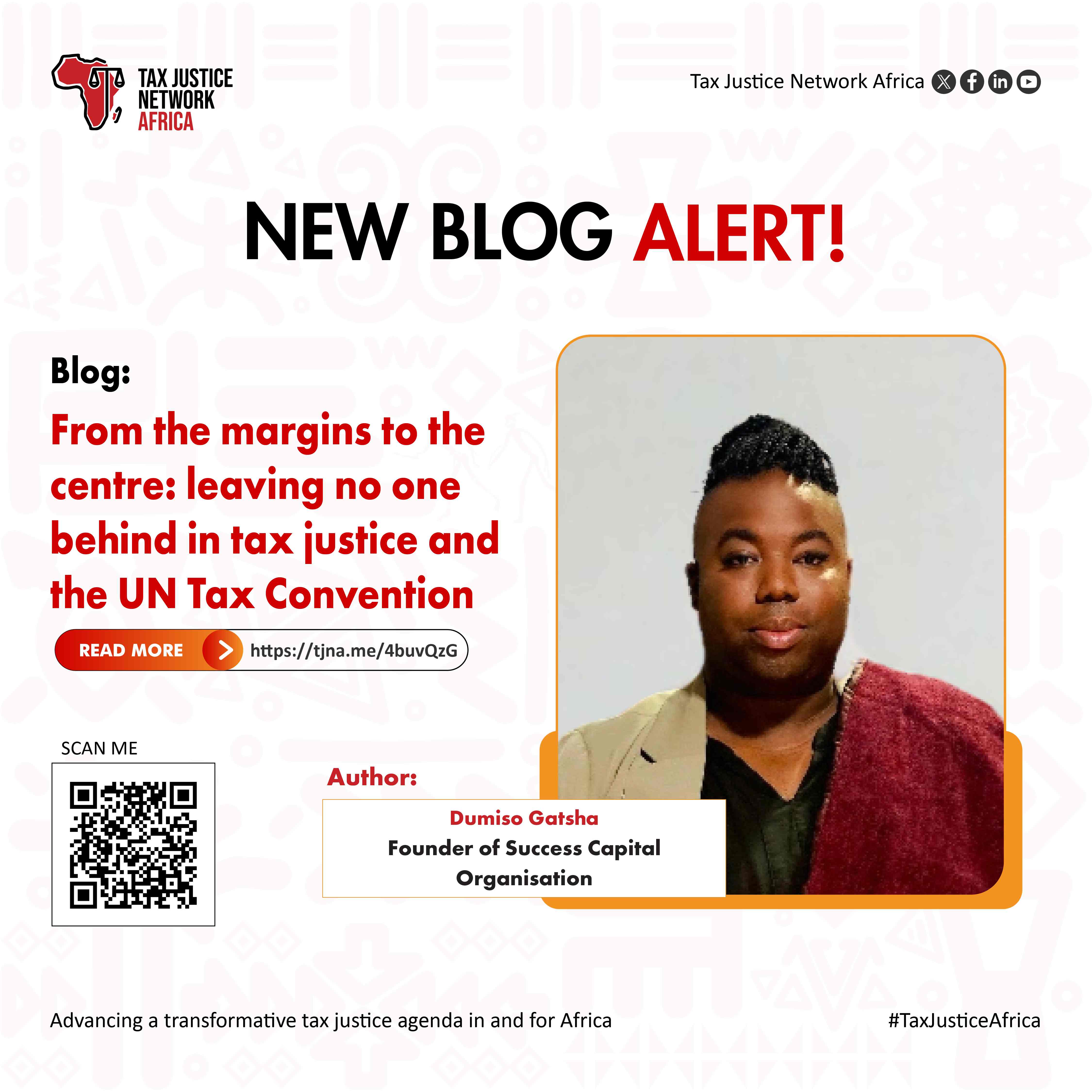
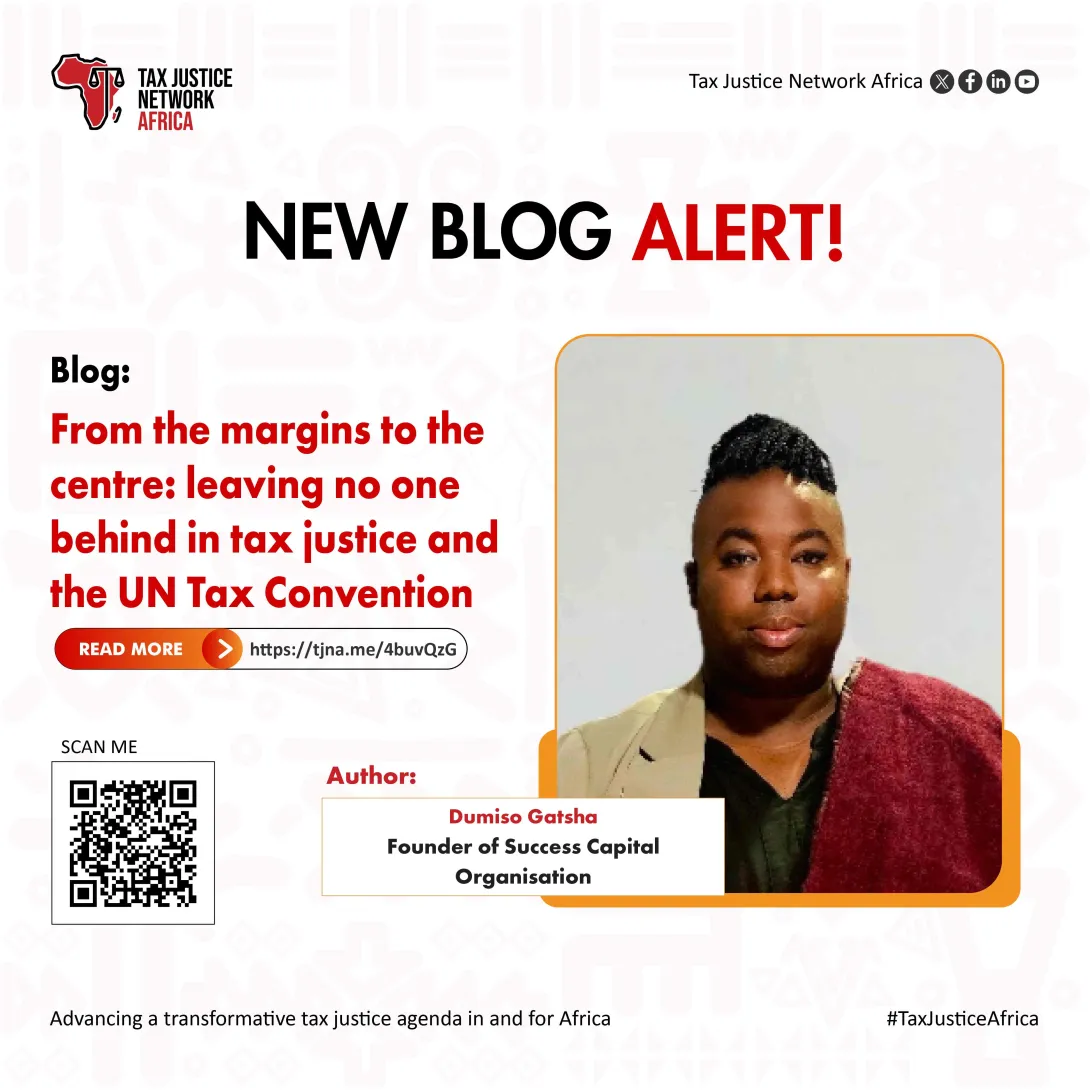
The author of this article is Dumiso Gatsha, Founder of Success Capital Organisation.