


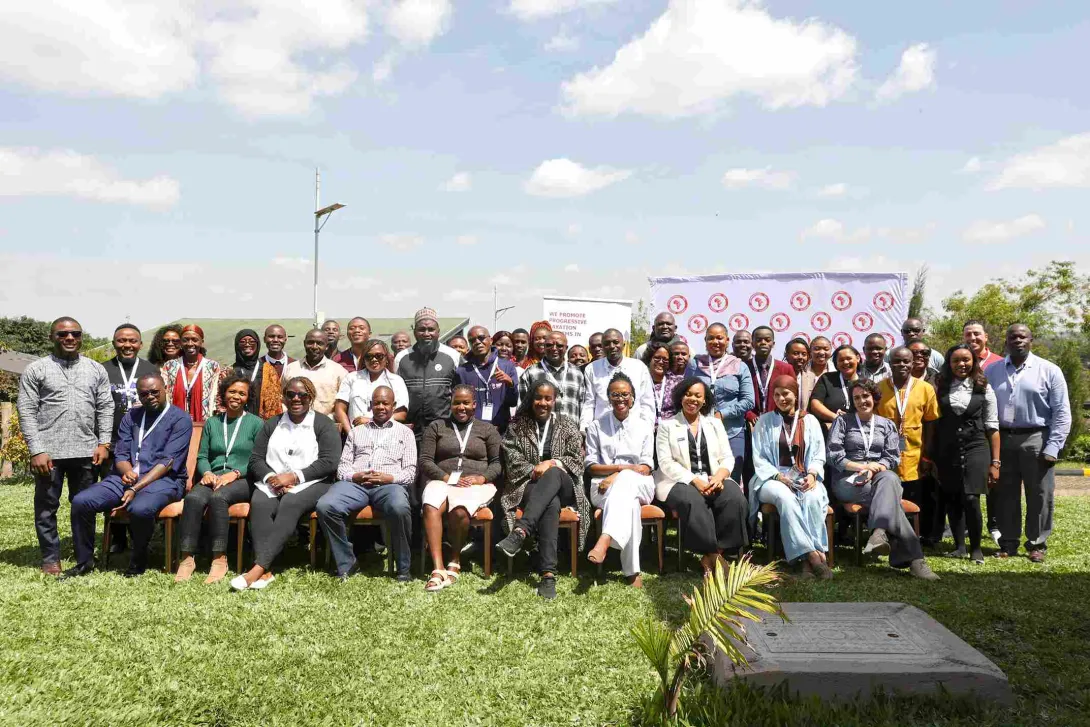
Tax Justice Network Africa (TJNA) successfully concluded the 2026 edition of the Intermediate Course of the International Tax Justice Academy (ITJA), bringing together over 40 civil society actors and media practitioners from across all regions of Africa to deepen their understanding of tax justice and strengthen their capacity to drive evidence-based advocacy and reporting.
Held through a blended learning approach comprising virtual sessions from 2–11 June and an in-person workshop in Kenya from 15–18 June, the programme equipped participants with the technical, practical, and analytical skills to engage effectively with key tax justice issues shaping Africa's development agenda.
The Academy forms part of TJNA's ongoing commitment to building a strong network of tax justice champions capable of influencing policy, strengthening public accountability, and advancing fair and equitable tax systems across the continent.
Opening the in-person phase of the training, TJNA’s Executive Director, Ms. Chenai Mukumba, highlighted the importance of broadening participation in tax justice discussions and ensuring that taxation is understood as a critical development issue affecting people's everyday lives.
"This work must be anchored in strong, evidence-based engagement. While technical expertise is essential, meaningful impact also depends on building connections across countries, sectors, and institutions. Advancing tax justice is a collective effort, and partnerships remain at the heart of our approach," said Ms Mukumba.
Participants engaged in intensive learning sessions covering a broad range of tax justice themes, including domestic resource mobilisation, global tax governance, extractive sector taxation, health taxes, tax-related illicit financial flows, policy advocacy, tax transparency, accountability, and international taxation. The programme also explored emerging issues such as climate finance, environmental taxation, digital transformation, and the role of artificial intelligence in governance.
Delivering the keynote address, Dr. Lyla Latif challenged participants to critically engage with the rapidly evolving intersections between technology, governance, and taxation. Drawing attention to the growing influence of artificial intelligence on public policy and global governance, she urged African countries to proactively shape the systems that will define the future of taxation and development.
"We are moving into a world where automation is becoming normal. The question is whether our tax policies are being designed for that future," said Dr. Latif.
She noted that emerging technologies are transforming economies and labour markets, raising important questions about how governments will mobilise revenue in increasingly automated economies. Dr. Latif also highlighted the emergence of new global institutions and governance frameworks focused on artificial intelligence, emphasising the need for African countries to strengthen their digital capabilities and participate meaningfully in shaping these global conversations.
"Tax justice is all about who holds the pen," she remarked, highlighting the importance of ensuring that African voices are represented in the design of international tax rules, digital governance frameworks, and economic policies.
Her keynote challenged participants to consider not only current tax justice challenges but also the future implications of technological transformation for domestic resource mobilisation, public finance, and equitable development.
Throughout the four-day workshop, participants examined the social implications of taxation and explored how tax systems can be leveraged to promote equity, reduce inequalities, and finance sustainable development. Discussions on domestic resource mobilisation highlighted the governance, technical, and advocacy dimensions of raising public revenues while ensuring accountability and citizen participation.
Recognising the important role of information and public discourse in advancing tax justice, the Academy featured specialised breakaway sessions for journalists and civil society organisations. Journalists received practical training on digital security and source protection, access to information and legal frameworks, data journalism and financial analysis, investigative reporting, and gender-responsive, inclusive, and ethical reporting. Civil society participants explored issues including tax treaty negotiations, tax expenditures, international taxation, tax transparency and accountability, and advocacy strategies for advancing tax justice campaigns.
A key highlight of the programme was the emphasis on collaboration between civil society organisations and the media. Through practical exercises, peer learning, and interactive discussions, participants explored how stronger partnerships can enhance public understanding of tax issues, strengthen accountability, and support evidence-based advocacy.
The Academy concluded with a joint forum that brought journalists and civil society actors together to develop practical approaches for collaboration, recognising the complementary roles both groups play in promoting transparency, accountability, and evidence-based public debate.
The session, themed "From Silos to Synergy: Building Effective Collaborations Between Journalists and Civil Society," enabled participants to identify opportunities for sustained partnerships beyond the training and develop action plans for future engagement.
Closing the programme, TJNA's Partnership and Institutional Learning Manager, Ms. Nelly Busingye commended participants for their commitment and active engagement throughout the Academy while emphasising the importance of maintaining the networks and partnerships established during the training.
"The fight against illicit financial flows and the pursuit of tax justice cannot be achieved in isolation. The relationships built through this Academy are critical to sustaining collective action, strengthening accountability, and advancing equitable development across Africa," she said.
Reflecting on the success of the programme, TJNA's Capacity Building Coordinator, Mr. Geoffrey Sirima, thanked participants for their dedication and active engagement throughout the Academy.
"On behalf of TJNA, I would like to thank all the participants for their commitment and enthusiasm throughout this learning journey. The strength of this Academy lies not only in the technical knowledge shared but also in the connections built across countries, sectors, and disciplines. We hope you leave not only with new skills and insights, but also with a renewed commitment to advancing tax justice in your respective jurisdictions and strengthening collaboration beyond this training," said Mr. Sirima.
As participants return to their respective countries, they join a growing network of tax justice advocates, researchers, journalists, and civil society leaders committed to translating knowledge into action and contributing to fairer, more transparent, and inclusive tax systems across the continent.
Through initiatives such as ITJA, TJNA continues to strengthen African voices and capacities in tax policy discourse, ensuring that tax justice remains central to efforts aimed at financing sustainable development, combating illicit financial flows, and advancing economic justice for all.
For more information about the programme, please contact Geoffrey Sirima: gsirima[@]taxjusticeafrica.net
