
By Mercy Kamau
African Union (AU) Member States have endorsed the continental roll-out of the Anti-Illicit Financial Flows (Anti-IFFs) Policy Tracker, marking a major milestone in Africa’s efforts to curb illicit financial flows (IFFs), strengthen domestic resource mobilisation (DRM), and align tax policy with the continent’s industrialisation agenda.
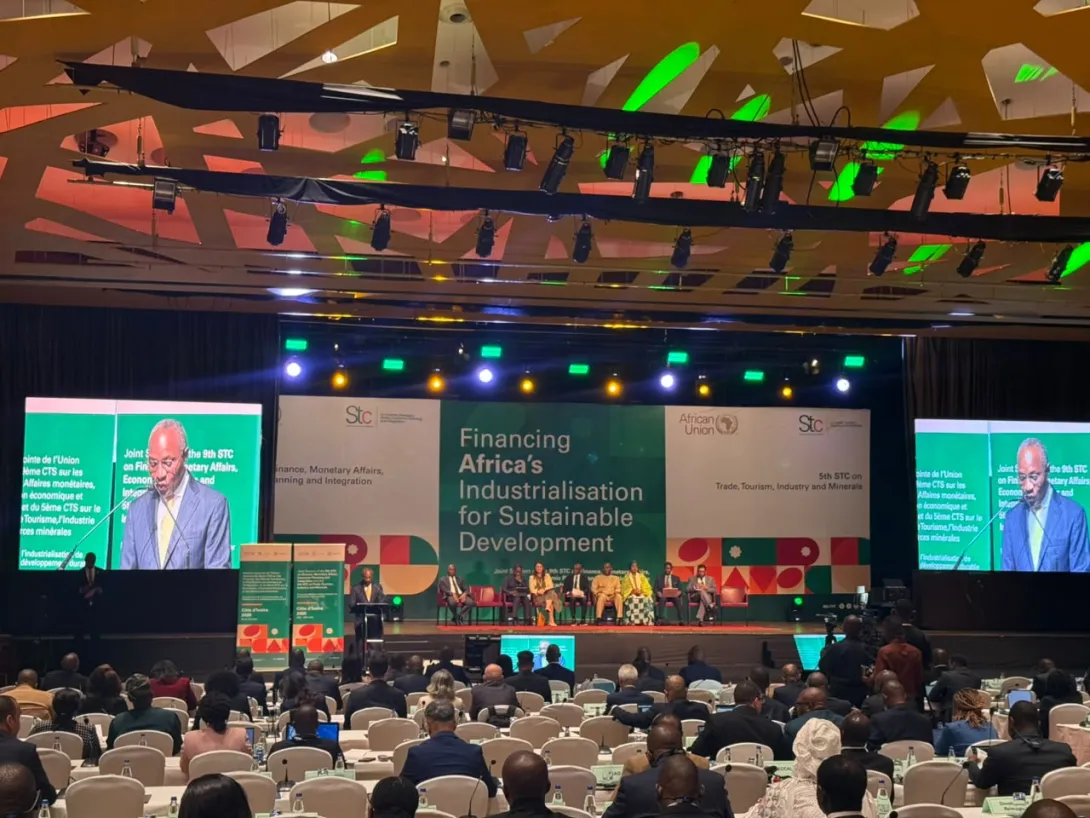
The endorsement happened during the Joint 9th Session of the African Union (AU) Specialised Technical Committee (STC) on Finance, Monetary Affairs, Economic Planning and Integration and the 5th Session of the Specialised Technical Committee on Trade, Tourism, Industry and Minerals, held in Abidjan, Côte d'Ivoire, from 20 to 24 July 2026.
Through the adopted Ministerial Declaration, AU Member States endorsed the recommendations of the 5th STC Sub-Committee on Tax and Illicit Financial Flows and reiterated the recommendations of the Expert Meeting Report calling on the continental roll-out of the Anti-IFFs Policy Tracker.
Specifically, Member States, the African Union Commission (AUC), the African Tax Administration Forum (ATAF), the United Nations Economic Commission for Africa (UNECA) and Tax Justice Network Africa (TJNA) were called upon to coordinate actions to curb IFFs through measures such as full implementation of the Anti-IFFs Policy Tracker with a focus on strengthening country policy, legal and regulatory frameworks, institutional frameworks, data and information sharing frameworks.
Developed by TJNA in collaboration with the African Union Commission’s Department for Economic Development, Tourism, Trade, Industry and Minerals (AUC-ETTIM) and ATAF, the Anti-IFFs Policy Tracker is a practical self-assessment tool which evaluates the strengths and vulnerabilities of countries’ anti-IFFs ecosystems, identifying policy and institutional gaps, and tracking progress on reforms.
Building on this implementation focus, the Experts Report calls for coordinated action by member states, the AUC, the ATAF, the UNECA, and TJNA to strengthen countries' policy, legal and regulatory frameworks, institutional capacity, data systems, and inter-agency cooperation to combat IFFs.
Following its successful AU-mandated pilot implementation in Côte d'Ivoire, Ghana, Liberia, Namibia, Uganda, and Zambia, the Tracker has now been recognised as an instrumental continental mechanism to support Member States in assessing their anti-IFFs frameworks, identifying reform priorities, monitoring progress, and translating continental commitments into measurable national action.
This shift from diagnosis to implementation is especially significant because sealing revenue leakages and strengthening domestic resource mobilisation sit at the heart of Africa’s ability to finance its development priorities, reduce dependence on external funding, and retain more of the wealth generated on the continent.
Why does domestic resource mobilisation matter?
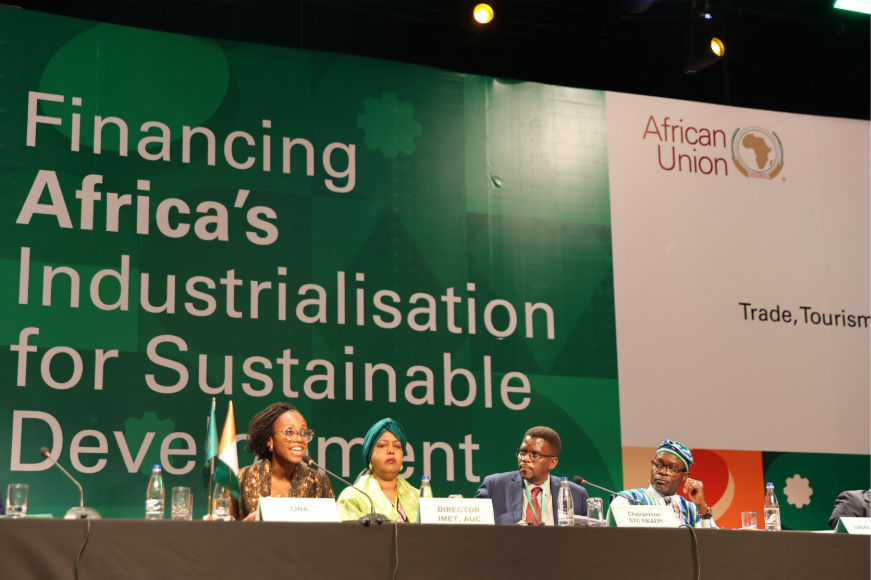
The AU STC meetings had an Expert Segment followed by a Ministerial Segment. During Session V session of the Expert Segment that covered Taxation, UN Tax Convention, Illicit Financial Flows and Domestic Resource Mobilisation for Industrialisation, in which TJNA participated alongside Ghana, the AUC, UNECA and AFROPAC, experts noted that Africa faces an estimated US$1.3 trillion annual SDG financing gap, while the continent’s tax-to-GDP ratio remains at around 16 per cent. Against this backdrop, they reaffirmed domestic resource mobilisation as the only financing channel fully under the sovereign control of African states, especially as Africa continues to lose approximately US$88.6 billion annually through IFFs, including an estimated US$40 billion from the extractive sector alone.
Experts also highlighted the importance of aligning tax policy with Africa’s industrialisation agenda by rationalising tax incentives, strengthening transfer pricing rules, protecting source-based taxing rights, enhancing transparency, securing fair taxation of the digital economy, and reinforcing tax administration capacity.
They further emphasised the need to visibly invest recovered revenues in industrial infrastructure, skills, technology, development finance institutions, and regional value chains to improve tax morale and reinforce the legitimacy of tax reforms. Ghana highlighted how implementation of the Anti-IFFs Policy Tracker has already contributed to the recovery of millions of dollars in revenue, while Equatorial Guinea and Namibia expressed interest in adopting the tool.
Building momentum from pilot to roll-out
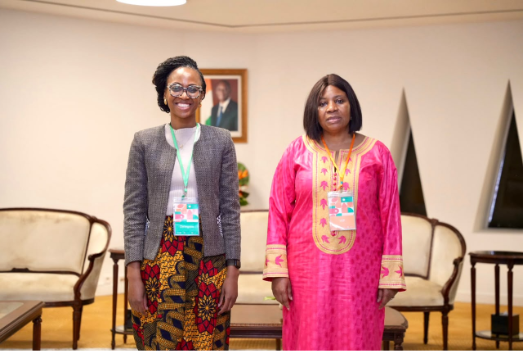
Momentum towards the continental roll-out was reinforced during the high-level side event, "From Pilot to Continental Roll-out: Advancing National-Level Implementation of the Anti-IFFs Policy Tracker," jointly convened by the AUC, ATAF, and TJNA.
Opening the event, TJNA’s Executive Director, Ms. Chenai Mukumba emphasised that Africa's challenge has shifted from diagnosing IFFs to implementing practical reforms. She expressed her appreciation to the AUC, particularly AU-ETTIM Commissioner H.E. Francisca Tatchouop Belobe for the Commission's continued leadership and commitment to advancing Africa's domestic resource mobilisation agenda and the fight against IFFs.
"The challenge before us is no longer identifying illicit financial flows; we have spent years producing evidence and recommendations. The real challenge today is implementation: translating continental commitments into national action," said Ms Mukumba.
What countries are learning from pilots and implementation?
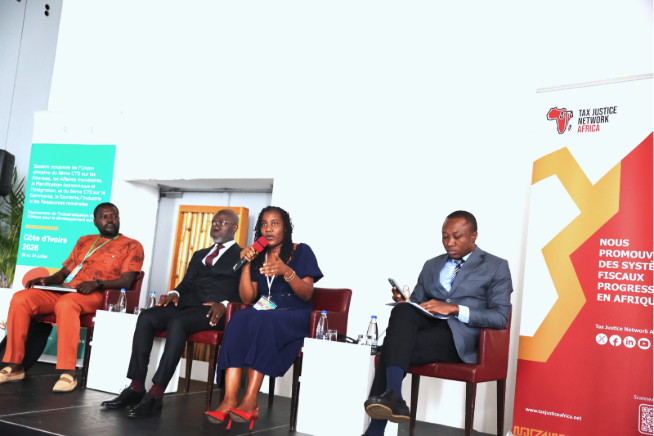
In his opening remarks on behalf of Côte d'Ivoire's Minister of Economy, Finance, and Budget, General Idrissa Touré, President of CENTIF Côte d'Ivoire, highlighted the urgent need for coordinated action to curb IFFs, describing them as a major obstacle to Africa's development and economic transformation. He called for stronger political commitment, institutional collaboration, and practical solutions that enable countries to protect the resources needed to finance sustainable development.
Presenting on behalf of TJNA, Ms Lou Aya Douabou, Policy Officer, reflected on lessons from the eighteen-month pilot phase across six African countries, showcased progress achieved by participating countries, and outlined the roadmap for the Tracker's continental roll-out.
Country experiences demonstrated how the Anti-IFFs Policy Tracker is already translating this commitment into action. Mr Oscar Amaman, Head of the Investigations and Visits Brigade at the Ivorian Revenue Authority (DGI), shared the country's experience in implementing the Tracker, highlighting reforms that are strengthening institutions, improving transparency, and addressing vulnerabilities that facilitate illicit financial flows.
Complementing these experiences, Mr Victor Baidoo, Head of the Revenue Assurance Unit at Ghana's Ministry of Finance, demonstrated how the Tracker has strengthened institutional coordination, enhanced compliance and enforcement, and supported practical reforms that have contributed to increased domestic resource mobilisation.
Collectively, the presentations reinforced a clear message: tackling IFFs requires sustained political leadership, strong institutions, evidence-based and country-led reforms, with the Anti-IFFs Policy Tracker providing a practical framework to drive implementation across the continent.
A living tool for accountability and reform
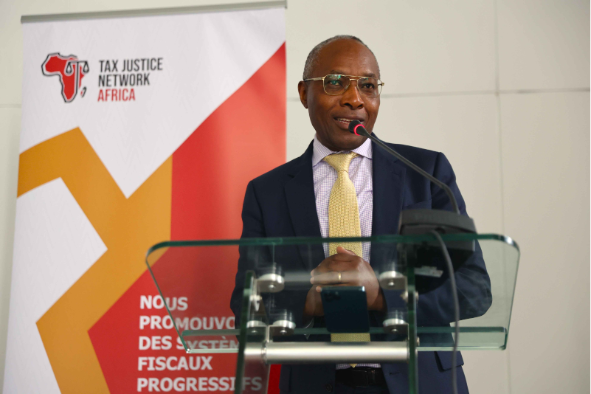
Closing the side event, Dr Stephen Karingi, Director of the Macroeconomics, Finance, Governance and Planning Division (MFGPD) at the United Nations Economic Commission for Africa (UNECA), described the Anti-IFFs Policy Tracker as a significant milestone in Africa's collective efforts to implement the recommendations of the AU/ECA High-Level Panel on IFFs and strengthen domestic resource mobilisation.
Reflecting on lessons from the six pilot countries, he noted that the Tracker has evolved beyond a diagnostic instrument into a practical mechanism that enables countries to identify policy gaps, strengthen institutions, improve inter-agency coordination, and translate continental commitments into measurable national action.
"The Tracker provides the diagnostic framework, but meaningful reforms will ultimately depend on national leadership, institutional commitment and adequate resourcing," Dr Karingi said.
Further, he emphasised that as the Anti-IFFs Policy Tracker moves from pilot implementation to continental roll-out, it should become a living tool that supports continuous learning, accountability, peer exchange, and evidence-based policymaking.
Reaffirming UNECA's commitment to the initiative, he noted that the Commission is already supporting four of the six pilot countries: Ghana, Namibia, Uganda, and Zambia, and will continue working alongside AUC, ATAF, TJNA, and the Member States to ensure Africa retains more of the resources needed to finance its own development and realise the aspirations of Agenda 2063.
What does this mean for Africa’s fiscal sovereignty?
The AU's endorsement of the continental roll-out of the Anti-IFFs Policy Tracker signals a decisive shift from policy commitments to implementation. By embedding the Tracker within the continent's broader domestic resource mobilisation agenda, African Member States have reinforced their commitment to strengthening fiscal sovereignty, combating IFFs, and ensuring that more of Africa's wealth is retained and invested in the continent's own development.
The Ministerial Declaration further calls on Member States and partners to accelerate the digitalisation of tax administration through digital platforms, artificial intelligence and data analytics; integrate beneficial ownership information into public financial management; rationalise tax incentives through cost-benefit analyses, sunset clauses and annual tax-expenditure reporting; and maintain unified African positions in the ongoing negotiations on the United Nations Framework Convention on International Tax Cooperation through 2027.
“The Commission values this partnership and the shared commitment to advancing Africa’s economic integration, industrialisation, trade, investment and sustainable development priorities. As attention turns to implementation, continued collaboration will be critical to carrying forward the outcomes of the Joint STC and ensuring they translate into concrete national and continental action,” said Dr. Patrick Ndzana Olomo, Head of Economic Policy and Sustainable Development at the African Union Commission.
For more information, please contact Everlyn Muendo via emuendo[@]taxjusticeafrica.net or Aya Douabou at adouabou[@]taxjusticeafrica.net.
TJNA's Communications Officer, Mercy Kamau, was in Abidjan, Côte d'Ivoire, and compiled this detailed article about this key development.
