

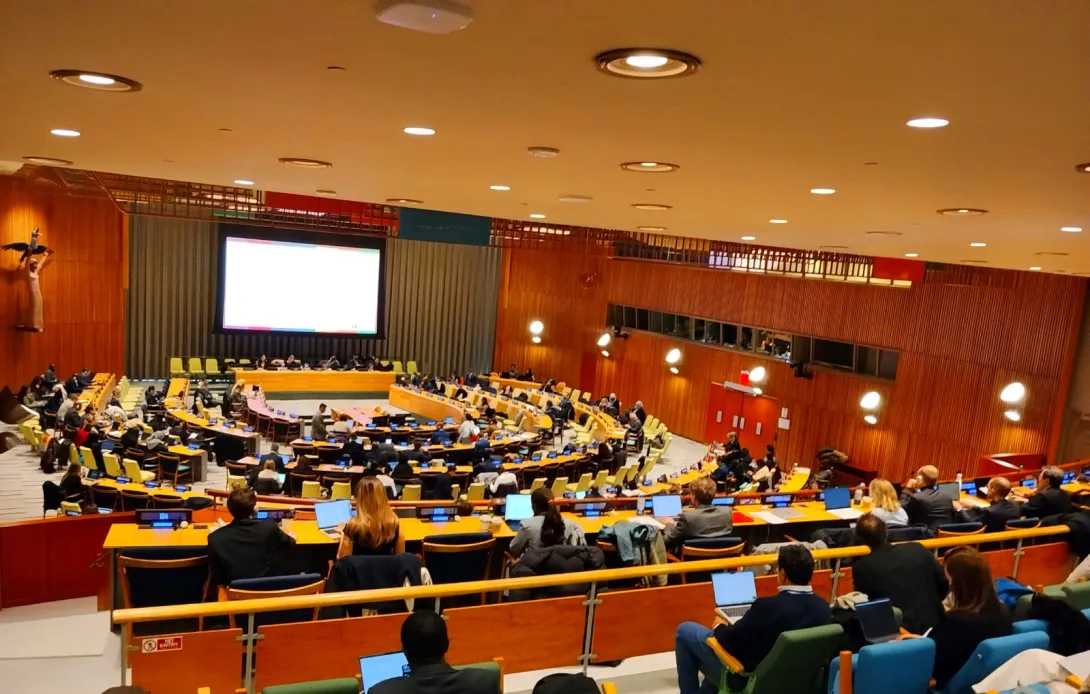
Day 1 – Monday, 2 February 2026, New York
The Fourth session of the Intergovernmental Negotiating Committee (INC) on the United Nations Framework Convention on International Tax Cooperation commenced in New York and began with a discussion on Articles 4 and 5 of the draft Framework Convention, shared by the INC on 22 January 2026. The INC programme of work indicates that the discussion will focus on the framework convention, protocol 1 on taxation of income derived from cross-border services, and protocol 2 on tax dispute prevention and resolution. The UN Tax Convention INC plenary sessions have reached a critical juncture, and Member States should complete drafting the text of the framework convention and the two protocols in 2026.
Day 1 involved discussions on the commitments to sustainable development in Article 4 and to the fair allocation of taxing rights in Article 5.
Article 4 - Sustainable Development
The mandate for Article 4 is the commitment in paragraph 10 of the Terms of Reference, which provides as follows:
10. The framework convention should include commitments to achieve its objectives. Commitments on the following subjects, inter alia, should be:
(a) ...
(b) ...
(c) International tax cooperation approaches that will contribute to the achievement of sustainable development in its three dimensions, economic, social, and environmental, in a balanced and integrated manner;
Further guidance on sustainable development can also be found in the UN Tax Convention's guiding principles, particularly paragraph 9 of the Terms of Reference. It provides that:
9. Efforts to achieve the objectives of the framework convention, therefore, should:
(d) Take a holistic, sustainable development perspective that covers in a balanced and integrated manner economic, social, and environmental policy aspects;
(e) ...
(f) Contribute to achieving sustainable development by ensuring fairness in the allocation of taxing rights under the international tax system;
Article 4 of the framework convention provides as follows:
Article 4: Sustainable development
Taking into account their different capacities, the States Parties agree to pursue international tax cooperation approaches that will contribute to the achievement of sustainable development in its three dimensions, economic, social, and environmental, in a balanced and integrated manner.
Summary of Views and Key Issues
- Support for a High-Level Article
Several countries supported the use of high-level language in Article 4, as they believed it reflected the intent of the framework convention and the terms of reference. They were of the view that Article 4 of the draft text should set guiding principles rather than detailed obligations for Member States. In their view, the article would be further operationalised by protocols. They indicated that any elaboration of the principles outlined in the article could lead to new taxes and increase administrative burdens for revenue administrations.
The Africa Group supported the article as drafted in the November 2025 version, retaining the high-level language and developing protocols to operationalise it. It is important to note that the Framework Convention is a legally binding document, whereas signing the protocols will be optional for Member States.
Human Rights and Gender Equality
Positions diverged significantly on whether human rights should be explicitly referenced in the text. Brazil supported the inclusion of explicit references to human rights and gender equality, while China opposed adding human rights provisions that are not directly connected to taxation. Czechia similarly maintained that human rights are not related to taxation. The Africa Group, including Ghana, Kenya, and Nigeria, did not support specific references to human rights. Zambia acknowledged the relevance of human rights across the three dimensions, i.e., economic, social, and environmental dimensions, but cautioned against expanding the article, suggesting instead that any review mechanisms could be addressed under the Conference of the Parties (COP) without extending the article itself.
Member States were reluctant to discuss this further, maintaining that this had been exhausted during the negotiations on the terms of reference. However, civil society opposed the high-level language of Article 5 and remained keen to include human rights and gender dimensions within it.
- Sustainable Development as a Cross-Cutting Principle
Some countries held that sustainable development should not be restricted to Article 4 but should apply to all provisions of the framework convention. In particular, Norway emphasised that sustainable development should be treated as a cross-cutting issue throughout the convention, while Kenya noted that the economic, social, and environmental dimensions are sufficiently broad and that there is no need to explicitly list all aspects of sustainable development.
- Differentiated Capacities (common but differentiated responsibility)
Some Member States took issue with the phrasing of Article 4, in particular the phrase “taking into account their different capacities…” In their view, Article 4 should apply regardless of the different capacities of Member States.
Brazil supported the inclusion of language recognising different capacities, particularly reflecting the principle of common but differentiated responsibility.
Kenya strongly supported the phrasing of Article 4, maintaining that it reflects the principles in the terms of reference, as paragraph 9 of the Terms of Reference. It sets out key principles by emphasising universality while taking into account the differing needs, priorities, and capacities of all countries, especially developing countries and those in special situations, as well as adopting a holistic sustainable development perspective that balances economic, social, and environmental aspects.
India and the Africa Group similarly supported the recognition of differing capacities within a high-level framework convention.
- Monitoring, Review, and COP Mechanisms
The role of the Conference of Parties (COP) has come up in several INC sessions. It is envisaged that the COP will be the main decision-making body for overseeing global tax rules and negotiating protocols. Brazil supported COP-led periodic reviews but cautioned against rigid monitoring mechanisms. Zambia suggested that review mechanisms could be addressed under the COP without expanding the article, while Germany emphasised that the administrative burdens of any such mechanisms should remain proportionate.
- Article 15 and Future Work
The draft text of Article 15 of the framework convention is yet to be provided by INC, but it will elaborate on the relationship between the framework convention and bilateral agreements, instruments, and domestic law. France, Germany, and the United Kingdom urged that Article 15 be discussed sooner rather than later, whereas Nigeria and India emphasised that protocols and subsequent instruments provide the appropriate avenue for its operationalisation.
In summation, delegations broadly agreed that the article should remain high-level and consistent with a framework convention, with details to be operationalised through protocols or subsequent instruments. However, key areas of divergence remained, particularly regarding the explicit inclusion of human rights and gender equality considerations, as well as the scope, design, and appropriateness of monitoring and review mechanisms.
Article 5 - Fair Allocation of Taxing Rights
In the afternoon session, the Member States and Stakeholders discussed Article 5 on the fair allocation of taxing rights. The co-lead stated that the article now contains additional language after the Member State inputs during and after the Third Session of INC. The current draft text is more extensive than in the previous draft. He encouraged Member States to review the Secretary-General's Report (resolution 78/235) and the terms of reference to understand the basis for the language used in Article 5.
Article 5 in the current draft text of the framework convention provides as follows:
Fair Allocation of Taxing Rights
The States Parties agree that all jurisdictions in which value is created, markets are located, revenues are generated or economic activities take place have a right to tax a portion of the income generated from such activities and shall take such actions as are necessary to ensure a fair allocation of taxing rights among all such jurisdictions, including renegotiation of existing tax agreements that are inconsistent with this article.
Summary of Views and Key Issues
- Nature and Level of the Obligation
There was a strong concern from many delegations (India, Norway, Israel, Netherlands, Hungary, Denmark, Germany, Switzerland) that the Article goes beyond a high-level framework and introduces substantive and operational obligations. The use of “shall” and references to renegotiation of existing treaties were viewed as creating binding legal duties inconsistent with a framework convention. However, some countries (Peru, Kenya, Nigeria, Ghana, Zambia/Africa Group) supported a stronger, more substantive articulation to address existing inequities in taxing rights.
The African Group proposal
Zambia made the following proposal for Article 5 on behalf of the Africa Group:
- States Parties recognise that all jurisdictions in which value is created, markets are located, revenues are generated, user or data is located, or economic activities are carried out, have right to tax income derived or attributable thereof.
- State Parties agree that the allocation of taxing rights shall reflect the real economic contribution of each relevant jurisdiction, taking into account, as appropriate, factors mentioned in paragraph one above and that no state party shall be denied the right to tax an income for the sole reason that such income has been derived from its jurisdiction by a taxpayer without a physical presence in that jurisdiction
- State Parties shall, amongst others, adopt measures to enhance fair allocation of taxing rights, including through:
- domestic measures,
- appropriate protocols,
- development and adoption of simplified nexus and allocation rules,
- coordination of rules and efforts to minimise chances of over-taxation and non-taxation
- interpretation, application, and, where necessary, renegotiation of existing tax treaties and related agreements to ensure consistency with the principles set out in this Article.
They indicated that paragraph 1 was the general principle, paragraph 2 was the standard of allocation, and paragraph 3 was the implementation and cooperation.
Norway/ Sweden proposal
Sweden and Norway also made proposals for the redraft of Article 5 as follows:
The States Parties recognise that every jurisdiction where economic activity occurs and value is created, including, inter alia, where markets are located or revenues are generated or accrued, has a right to tax the income generated from such activities in accordance with national and international laws and policies, unless the State Parties have otherwise agreed in the Protocols to this Convention or other international treaties.
India proposal
India also made the following proposal:
1. States Parties agree that the allocation of taxing rights must reflect the economic contribution of each relevant jurisdiction, taking into account where economic activity occurs, value is created, markets are located, revenues are generated, or users or data are located, and that taxing rights shall not be based solely on physical presence.
2. States Parties agree to pursue and explore cooperative approaches to support the fair allocation of taxing rights, including through domestic measures, suitable protocols, and appropriate nexus and allocation rules, with a view to reducing the risks of double taxation and non-taxation.
- "Portion of the Income” and Allocation Formula
There was widespread concern (India, Nigeria, Kenya, UK, UAE, Germany) over the phrase “tax a portion of the income” used in the Article, as there is no agreed formula or methodology agreed by Member States, and it risks prematurely addressing the quantum of allocation, rather than principles. Also, some Member States stated that there is a risk of double taxation or double non-taxation, particularly where multiple allocation factors apply simultaneously. Several delegations emphasised that detailed allocation rules should be addressed through protocols, not the Convention itself. In previous INC sessions, the draft text proposed allocating taxing rights based on “where business activities are conducted, including jurisdictions where value is created, markets are located, and revenues are generated.”
The current draft text proposes allocating taxing rights based on “value is created, markets are located, revenues are generated, or economic activities.”
There was a general agreement by some Member States that specific allocation formulas should not be embedded in Article 5. However, the Africa Group proposed that allocation keys should be clearly stated with State Parties having the right to tax where “value is created, markets are located, revenues are generated, user or data is located, or economic activities are carried out.”
- Nexus, Physical Presence, and Digital Economy
There was strong support from several developing countries (the Africa Group, Ghana, Kenya, and Nigeria) for expanding nexus rules beyond physical presence alone, especially in a digitalised economy. Some developed countries cautioned against overgeneralised market-based taxing rights without clear guidance. Overall, there was recognition that economic realities have evolved, but disagreement on how explicitly Article 5 should address them.
- Renegotiation of Existing Tax Treaties
The provision in the Article that provides that “... shall take such actions as are necessary to ensure a fair allocation of taxing rights among all such jurisdictions, including renegotiation of existing tax agreements that are inconsistent with this article” was a major point of contention.
Delegations from India, Norway, Israel, Saudi Arabia, Russia, the Netherlands, Germany, Poland, Denmark, and Jamaica opposed any mandatory obligation to renegotiate or terminate bilateral tax treaties. They argued that renegotiation should remain bilateral and voluntary, respecting State sovereignty, a principle in the terms of reference.
Concerns raised about States not party to the Convention, the lack of guidance on renegotiation standards, and departures from established practices (e.g., the OECD MLI) were areas of particular concern.
Kenya and the Africa Group argued that existing treaties constrain developing countries’ taxing rights and should not automatically prevail over the Convention.
- Balance Between Source and Residence Taxation
Several delegations (Norway, Israel, Germany, Spain) noted that residence states’ rights are insufficiently reflected. They argued that Article 5 should ensure a balanced approach between source and residence taxation.
- Role of Article 15 within the Framework Convention
Some delegations (Hungary, Mexico, Norway) emphasised that Article 5 should function as an anchor or guiding principle for future protocols. Its interpretation is closely linked to Article 15 and broader Convention architecture. The Africa Group argued that their proposal presented a structured alternative, separating general principles, allocation standards, and implementation and cooperation measures.
Day 2 – Tuesday 3 February 2026, New York
Day 2 involved discussions on commitments in Article 6 on high net worth individuals and Article 7 on illicit financial flows.
Article 6 – High Net Worth Individuals
1. States Parties shall develop and implement measures to detect, deter, and prevent tax avoidance and evasion by high‑net‑worth individuals.
2. The States Parties shall share information regarding structures and techniques used by high-net worth individuals to avoid and evade taxes.
3. The States Parties shall explore coordinated approaches to ensuring effective taxation of high-net worth individuals.
Article 6 sets out three main pillars for addressing taxation of high-net worth individuals (HNWIs). First, detection and prevention, where States Parties are expected to develop and implement measures to detect, deter, and prevent tax avoidance and evasion by HNWIs. Second, information exchange, under which States Parties share information regarding the structures and techniques used by HNWIs to avoid and evade taxes. Third, coordination, which calls on States Parties to explore coordinated approaches to ensure the effective taxation of HNWIs.
Summary of Views and Key Issues
- Detection and Prevention Measures
Peru requested clarification on the operationalisation of the measures outlined in paragraph 1. Canada observed that many countries already have such measures in place and suggested that the specific types of measures should be clearly specified. Norway further proposed that paragraph 1 explicitly include provisions on the exchange of information, best practices, and experiences.
Progressivity of Taxation
Brazil emphasised the need for coordinated approaches that account for the overall progressivity of effective tax rates across the income distribution. In the same vein, Spain and Sweden highlighted the importance of progressivity in taxation as a key principle for ensuring fairness and equity within tax systems.
To that effect, Brazil made the following proposal for paragraph 3:
3. The State Parties shall explore coordinated approaches to ensuring effective and progressive taxation of HNWI based on the effective tax rates within the State Parties (Brazil proposal)
- Definition of High-Net-Worth Individuals (HNWIs)
Mexico proposed establishing clear criteria to define high-net worth individuals (HNWIs). Norway noted the challenges associated with developing a universally applicable definition of HNWIs, while Spain and Sweden stressed the importance of clearly defining key terms to ensure consistency and clarity in the framework.
Peru requested clarification on the operationalisation of the measures outlined in paragraph 1. Canada observed that many countries already have such measures in place and suggested that the specific types of measures should be clearly specified. Norway further proposed that paragraph 1 explicitly include provisions on the exchange of information, best practices, and experiences.
4. Information Exchange (EOI)
Switzerland and Norway highlighted legal sensitivities with information exchange, with particular reference to privacy concerns. Norway suggested that sharing best practices and experiences could be another way of cooperating to address tax avoidance and evasion by high-net-worth individuals.
Additionally, Member States were also concerned with the scope, procedures, and methods through which information would be exchanged. Switzerland questioned whether the exchange would be automatic, on request, or spontaneous. Canada, on the other hand, sought clarity on the specific structures for which information would be shared.
5. Coordination and Substantive Obligations
Canada was of the opinion that the paragraph was wholly inappropriate. They believed that the Conference of the Parties should be the ones to decide on any coordination and approaches in implementing Article 6. Canada also believed that it would not be appropriate to develop a global minimum tax for individuals.
The African Group proposed stronger language for paragraph 3 by changing the word ‘explore’ to ‘adopt’.
Brazil proposed the following text to replace paragraph 3:
“The States Parties will explore coordinated approaches to ensuring effective taxation of high-net worth individuals, based on the overall progressivity of the effective tax rates across income distribution.”
Many countries, including Peru, Switzerland, Sweden, and Austria, stated that Protocols could elaborate on the coordinated approaches.
Article 7
The States Parties shall develop and implement measures to combat tax-related illicit financial flows, including effective tools for the detection and prevention of tax-related illicit financial flows, enforced through mutual administrative assistance and exchange of information and any other agreed forms of international co-operation, to ensure effective taxation of income and profits from tax-related illicit financial flows.
Definition and scope of Illicit Financial Flows
The question of the definition and scope of IFFs came into question during discussions on Article 7. Several countries asserted that IFFs are connected to illegality. Therefore, tax avoidance should not be included within the scope of IFFs. Belgium, Ireland, Sweden, and Canada were among the countries that were of this view.
Additionally, Jamaica pointed out a discrepancy between the title of the article, i.e., IFFs, and the body of the article. Jamaica asserted that the terms tax avoidance and tax evasion were not used in the title but were used in the body of the article. Portugal, Singapore, and Sweden were among those who agreed. They argued that this was not a commitment to address tax evasion and tax avoidance, rather it was a commitment to address tax-related IFFs, so mention of tax avoidance and evasion should be deleted as this corresponded with paragraph 16b of the Terms of Reference. Singapore asserted that the scope of IFFs may vary in different national regimes. Norway suggested that the scope of IFFs should then be determined by national context and circumstances.
Taxation of proceeds of IFFs
Zambia, speaking on behalf of the African Group, suggested several changes to Article 7, including the following:
State Parties agree to cooperate in combating tax-related illicit financial flows, including:
... by recognising that taxes shall be applied to proceeds of Illicit Financial Flows by jurisdiction from where the flows originate...
Kenya, Ghana, and Nigeria, in support of the Africa Group proposal, argued that, considering that IFFs are a hemorrhage of resources, it would only be fair to allow the jurisdiction from which the IFFs originated to have taxing rights on the proceeds of the IFFs. Canada was not in support of this position, citing that, for instance, if an African country considered transfer mispricing to be an illicit financial flow, then this would give them the right to tax the proceeds from such a flow.
Day 4 - Thursday, 5 February 2026, New York
The 5th meeting of the Fourth Session of INC discussed Articles 8 and 9 on harmful tax practices and Mutual Administrative Assistance.
Article 8 Harmful Tax Practices
On Article 8, the co-lead indicated that they had amended the Article, based on the inputs by Member States and highlighted two key issues which the Article now focused on:
- Commitment to cooperate, including with respect to particular areas
- Goal to neutralize the distortive effects of harmful tax practices
Article 8 of the current text of the framework convention provides as follows:
1. The States Parties shall cooperate, at international and regional levels, to identify and deter harmful tax practices to neutralize their distortive effects and enhance the ability of all countries to tax income in accordance with their domestic laws and policies.
2. The States Parties shall develop, enhance and implement effective tools to address harmful tax practices including tools that provide for:
(a) enhanced transparency;
(b) monitoring and identifying emerging harmful tax practices; and
(c) the effective taxation of economic activities that benefit from harmful tax practices.
Member States expressed broad support for the draft Article’s objective of addressing harmful tax practices. Countries including Germany, the United Kingdom, India, Canada, and France welcomed strengthened cooperation, while others, such as Nigeria, Korea, and Sweden, highlighted its importance for domestic resource mobilisation. Strong backing also came from developing countries, particularly the African Group and Member States such as Kenya, Uganda, Tanzania, and Ghana, who emphasised the negative impacts of harmful tax practices on revenue mobilisation and on taxing rights.
Summary of Views and Key Issues
- Definition and scope of Harmful Tax Practices
Countries such as Russia, India, Canada, Norway, France, and Korea stressed that agreed criteria and principles are necessary before meaningful commitments can be made, while the others, including Japan, the Netherlands, the United Arab Emirates, and Estonia, similarly called for definitional clarity, with some, like Papua New Guinea, proposing specific criteria. At the same time, Austria and Ireland cautioned that any definition should remain flexible to reflect evolving tax practices.
Ghana supported the idea of a commitment on harmful tax practices that addresses artificial arrangements such as liaison offices, representative offices, preferential regimes, and aggressive tax planning schemes that undermine domestic resource mobilisation in developing countries. Ghana emphasised that the UN forum provides a unique opportunity to agree on a comprehensive approach and should be leveraged to ensure that the realities of modern economic activities are accurately reflected.
Views diverged where definitions and detailed rules on harmful tax practices should be located. The African Group suggested that a formal definition could be elaborated in a protocol, a position echoed by Papua New Guinea, which also proposed that compliance and peer review mechanisms sit there. Poland indicated flexibility, suggesting either softer Convention language or a precise definition within the Convention, while the Philippines sought clarity on whether definitions should be placed in Article 3 or in Article 8 itself. The co-lead stated that the location of the definition of harmful tax practices in the framework convention will be discussed in later sessions.
Member States expressed differing views on the scope of harmful tax practices covered by the draft Article. Canada questioned whether the focus should be limited to mobile income or extend more broadly, while Papua New Guinea called for the inclusion of preferential regimes and transparency gaps. Ghana highlighted aggressive tax planning and treaty-related abuses, and Brazil proposed covering transfer pricing practices, tax incentives, and regimes targeting foreign individuals.
In addition to the definition, Israel supported the United Kingdom on the need for explanatory notes to be developed along with the text of the convention.
Member States agreed that the definition of harmful tax practices should be discussed and finalized at the appropriate stage. A delegate from Russia suggested exploring ways to identify harmful tax practices in a coordinated manner using widely accepted criteria, noting that specific mechanisms could be developed later when the related protocol is drafted.
- Avoiding Duplication with Existing Fora / Frameworks
Several Member States stressed that work under the draft Article should build on, rather than duplicate, existing international efforts on harmful tax practices. Germany and Russia called for a clear distinction from, and avoidance of, duplicating current regimes, while the UK sought clarification on links with the Global Forum. Canada, Czechia, and France emphasised coordination and the preservation of progress already made. A broader group, including Korea, Sweden, Singapore, Israel, the Netherlands, Ireland, and others, underscored the need for complementarity and coherence with established frameworks such as the OECD processes, BEPS, the Global Forum, and EU initiatives.
Uganda and Nigeria in response noted that while other work may have been done by other fora, not all states were part of those processes. Nigeria argued that the UN is a global body that will develop global standards and norms and therefore did not support the proposal of including language that acknowledges the work being done within other fora or processes.
- Strengthening Monitoring, Tools, and Measures
Several developing countries advanced proposals to strengthen monitoring, tools, and implementation measures under the draft Article. The Africa Group called for expanded implementation tools, a defined list of measures, and consideration of a minimum tax rate. India proposed enhanced monitoring and identification mechanisms while avoiding overlap with transparency provisions elsewhere. Papua New Guinea advocated for detailed criteria, timelines, peer review, and compliance systems, while Lesotho suggested monitoring mechanisms backed by sanctions. Ghana emphasised the need to address artificial arrangements, treaty abuse, and aggressive tax planning practices.
- Specific proposals to amend draft text
Several Member States raised concerns about specific language in the draft Article. On “distortive effects,” Kenya argued it was too limiting; Brazil saw it as a necessary qualifier; and the African Group preferred its deletion.
Zambia (on behalf of the African Group) emphasised that harmful tax practices undermine domestic resource mobilisation (DRM) and require international tax cooperation. They highlighted that what is distortive in one country may not be so in another. The African Group proposed revising the draft text to reflect these concerns, suggesting language that clarifies the need for cooperation while accounting for jurisdictional differences.
The AG suggested the draft text to read as follows:
- The States Parties shall cooperate, at international and regional levels, to identify and deter harmful tax practices.
- The States Parties shall develop, enhance, and implement effective tools and measures to address harmful tax practices, including tools and measures for:
- enhanced transparency, including country-by-country reporting rules accessible to all States.
- monitoring and identifying emerging harmful tax practices; and
- the effective taxation of economic activities that benefit from harmful tax practices at a minimum rate as agreed by State Parties.
Belgium stated that it does not understand why “distortive effects” are considered an issue for the AG. Kenya, aligning with Nigeria and Zambia, noted the merits of proposals by Norway and India. Kenya stated that the term “distortive effects” as used in current draft text of Article 8 acts as a qualifier that could be used by countries to circumvent the legal commitment if they argue that no distortive effects exist in their jurisdiction, thereby limiting the application of the article.
Kenya further emphasised that common standards on harmful tax practices should be developed under the UN as a global platform. Uganda aligning with the AG noted that the qualifying words following that term are overly prescriptive, potentially constraining further work to support the cooperation envisioned in paragraph 1.
Senegal stated that it aligns with the AG. Senegal noted that paragraph 1 may pose implementation challenges, as it acknowledges existing distortions to effective taxation caused by harmful tax practices but does not specify which harmful tax practices are at issue. India agreed with the intentions expressed by the African Group. It raised concerns about what constitutes harmful tax practices, noting that this could vary depending on economic circumstances and that they needed to be identified. India acknowledged that, given the current time constraints, the matter could not be discussed in detail but emphasised that the door for in-depth discussions should remain open. India proposed an amendment to paragraph 1.
Additionally, under paragraph 2(c), the term “effective taxation” was found to be subjective and open to multiple interpretations. The term “effective taxation” was considered vague by Luxembourg, Portugal, and Belgium, prompting calls for clarification or its removal.
Senegal emphasised that paragraph 2 should clarify which tools are considered effective, as it does not do so in its current form. Regarding paragraph 2, India noted that, in its current format, it introduced tools for enhanced transparency that overlapped with the article on exchange of information and suggested modifying it.
Article 8 would then read as follows:
- The States Parties agree to develop and apply common principles and standards to identify harmful tax practices that distort cross-border taxation or erode the tax base of other jurisdictions.
- The State Parties agree to develop, enhance and implement effective tools and measures that provide for monitoring and identifying harmful tax practices.
Norway noted the progress achieved to date on the matter, emphasising that future discussions should also be included. They observed that the list of measures in paragraph 2 went beyond a high-level commitment and should be decided later. It also suggested merging paragraphs 1 and 2, moving 2 (a) and 2 (b) into paragraph 1, and deleting 2 (c), as it was already covered. Norway proposed the following text for Article 8:
- The States Parties shall cooperate, at international and regional levels, to identify, monitor and deter harmful tax practices, including emerging harmful tax practices, to promote transparency and enhance the ability of all countries to tax income in accordance with their domestic laws and policies.
They noted that references to transparency did not need to be included here as they would be covered elsewhere.
Other Member States made their submissions and stated as follows:
Nigeria recognised the importance of the Article in preventing harmful tax practices that undermine global tax stability and noted that such practices hamper domestic resource mobilisation (DRM). It fully supported the African Group’s proposals. Nigeria observed that the phrase “enhance the ability of all countries to tax income in accordance with their domestic laws and policies” could limit the protocol's application to certain circumstances. It also suggested that paragraph 2b should not include references to global tax practices or standards, and that the Article should avoid mentioning any other global tax body.
Papua New Guinea emphasised that the article should identify criteria for harmful tax practices, such as preferential regimes and ring-fencing, and should explicitly refer to related areas, including TP rules, to avoid gaps. Three objective criteria should be considered: (i) a threshold for ascertaining harmful tax practices, (ii) timelines for reporting harmful tax practices, and (iii) mechanisms to create a benchmark for application. Establishing these criteria would provide clarity, encourage compliance, and ensure consistent and comprehensive application of the article.
Lesotho aligned with the AG position and welcomed the improvements suggested by India, Russia, and others. Lesotho emphasised that the same rules should apply to all States in determining what constitutes harmful tax practices, noting that there is currently unequal treatment in how countries apply potential harmful tax practice measures. The delegation stressed that this must change through clear and consistent language and that sanctions should apply to all States through a monitoring mechanism based on well-defined criteria.
Tanzania also aligned with the AG and expressed support for the constructive language proposed by India. Tanzania highlighted that the UN-led process was initiated because existing tools and approaches have not adequately addressed harmful tax practices across all jurisdictions, and there is a risk of falling short of the mandate of the General Assembly and the Terms of Reference. The delegation stressed that paragraph 2 should be drafted to reflect clear and inclusive commitments, aligned with the GA resolution and ToR, while addressing existing risks and realities.
Article 9 – Mutual Administrative Assistance
The morning session continued with a discussion on Article 9 on Mutual Administrative Assistance, which provides as follows:
1. States Parties shall afford one another the widest measure of mutual administrative assistance in tax matters to facilitate the effective assessment of taxes and to combat tax evasion and avoidance, including through:
(a) exchange of information in accordance with Article 10;
(b) assistance in tax collection;
(c) simultaneous tax examination;
(d) tax examination abroad;
(e) service of documents; and
(f) any other form of mutual administrative assistance as may be agreed by the States Parties from time to time through protocols or other instruments.
2. The States Parties shall cooperate to identify and eliminate administrative barriers that prevent effective mutual administrative assistance in tax matters.
3. The requested State shall act on requests for assistance as soon as possible. If the request is declined, the requested State shall inform the requesting State of that decision and the reason for it as soon as possible to allow the requesting State to take further action if necessary.
The Co-lead indicated that the article had been amended to highlight the following:
- As requested, split the information exchange into a stand-alone article.
- Specifies, in very general terms, the types of mutual administrative assistance included.
- Includes some commitments intended to make sure that administrative assistance is provided in a smooth and timely manner.
Summary of Views and Key Issues
- Widest Measure of Assistance
India expressed several concerns regarding the current draft of Article 9. They highlighted that paragraph 1’s reference to the “widest measure of mutual assistance” could create an open-ended obligation that is not aligned with the administrative capacities of States and suggested a more balanced formulation without this phrase. Switzerland supported India's view on the phrase “widest measure,” emphasising that such measures must have clear limits and that countries must be able to respect them.
Botswana aligned with the African Group's submission and shared India’s concerns about the phrase “widest measure,” noting that it could be problematic. They emphasised that Mutual Administrative Assistance is both important and critical to achieving the Convention's objectives. Botswana further suggested that MAA should not only facilitate cooperation but also enable effective tax assessment, supporting the inclusion of the word “enable” alongside or after “facilitate” to strengthen the operational intent.
2. Forms of assistance
Several countries submitted proposals on the forms and modalities of mutual administrative assistance. India noted that the scope and goal of assistance, currently framed as “including” a list of measures such as “effective assessment of taxes,” is too narrow, as mutual administrative assistance encompasses a broader spectrum of actions, including collection and recovery. They proposed replacing this language with “effective administration and enforcement of tax matters” to better reflect the article’s objectives.
India further argued that if there is a separate Exchange of Information article, there is no need to reference it here, and greater flexibility should be allowed. Regarding paragraph 3, India observed that, while its intent is positive, it addresses operational aspects in isolation, without a comprehensive framework in place, which may be insufficient to govern the full practice of mutual administrative assistance and may require further elaboration.
On behalf of the Africa Group, Zambia emphasised that Article 9 is a key provision for combating tax evasion and avoidance, as well as for enhancing administrative capacities. They appreciated India’s submission and agreed that there is room to accommodate India’s concerns regarding paragraph 1 . However, they highlighted the need to carefully consider paragraph 1, noting that while various forms of MAA are listed, their implementation depends on mechanisms developed by each State Party, recognizing that capacities differ across countries. Zambia recommended developing mechanisms or protocols to implement them, taking into account state capacities.
Nigeria expressed agreement with India’s concerns while also fully supporting the African Group’s positions, particularly regarding paragraph 1. They noted that the word “effective” may not be necessary and that “assessment” is too limiting, proposing instead to use “administration” to broaden the scope to include collection, enforcement, and other relevant measures. Nigeria also reaffirmed that paragraph 1 should remain binding, using the word “shall,”.
Botswana emphasised that MAA should not only facilitate cooperation but also enable effective tax assessment. Brazil cautioned that the use of “shall” may create legally binding obligations and proposed replacing it with “shall endeavour to cooperate.” They also recommended expanding the scope of measures to include enforcement, not just assessment, and suggested moving the last part of sub-paragraph (f) into paragraph 1 to clarify the modalities of assistance.
Switzerland suggested that paragraph 1(f) could include provisions for further assistance, while Singapore proposed that types of assistance be detailed in a protocol rather than in the Convention to encourage broad participation. Papua New Guinea stressed that obligations should include reciprocity and relevant safeguards.
The UAE suggested replacing specific lists with language that allows mutually agreed measures, noting that assistance in tax collection could be optional. France, Italy, and the United Kingdom highlighted that operational forms of assistance should remain high level in the Convention, with detailed modalities addressed in protocols.
3. The question on duplication
The United Kingdom, Canada, Norway, the UAE, and Singapore emphasised the need for clarity on how Article 9 would interact with existing instruments, including the MAAC, bilateral treaties, and other frameworks. They called for avoiding duplication and maintaining high-level language in the article, leaving detailed operational matters to protocols. The Netherlands raised questions about how existing agreements would align with the standards set out in Article 9 and stressed the importance of including safeguards and the possibility of reservations to facilitate broad participation.
Ghana and Zambia highlighted that the convention aims to address gaps in existing selective instruments and reinforces universality and inclusiveness, ensuring that all states, not only wealthy or developed countries, can benefit.
Ghana addressed concerns regarding potential duplication, noting that while the concern is valid, it should not be misapplied. They highlighted that the convention is corrective rather than duplicative, responding to the realities of existing instruments, which are selective, uneven, and often favor developed economies. For the first time, this framework provides a convention that applies to all countries, not just a few. Ghana pointed to clear evidence of gaps and failures in the current system and stressed that the convention is intended for consolidation, not the creation of another set of voluntary guidelines. They underscored the importance of shared obligations and giving all countries an equal voice in shaping the rules, concluding that the convention is necessary and not redundant.
Building on Ghana’s points, Zambia noted that the issue of duplication has arisen multiple times, including during discussions in Nairobi. They highlighted that the Terms of Reference give the INC the mandate to consider the work of other relevant fora, which will be addressed in the drafting of Article 15. Since Article 15 is not yet drafted, Zambia explained that timing is important, as the relationship of this Convention with other agreements and domestic law will be clarified there. They stressed that the UNFTIC must now include text on mutual administrative assistance, as it exists in other fora, and that relying solely on protocols would be insufficient.
Raising concerns about duplication at this stage could hinder progress and erode trust, particularly since some countries are not members of existing fora. Zambia concluded that operational issues related to MAA will be addressed during protocol development and emphasised the need to finalize the articles while maintaining a clear timeframe.
Sierra Leone aligned with the African Group and Zambia, noting that many points had already been articulated. At the national level, Sierra Leone considers mutual administrative assistance (MAA) essential and supports its establishment as a substantive and universal mechanism to deliver meaningful cooperation for all countries, not only wealthy states. They emphasised that the system should function for all countries and protect against abuses in multilateral settings and by high-net-worth individuals.
Given that current systems are largely inaccessible to most developing countries, a new framework should account for affordability and capacity constraints. Sierra Leone cautioned against replicating existing frameworks, such as OECD MAAC systems, which do not work for all countries, and highlighted the importance of filling gaps to ensure that states without full capacity can fully benefit.
4. Safeguards
Several countries emphasised the importance of including safeguards in Article 9 to ensure that mutual administrative assistance respects state capacities, taxpayer rights, and fundamental principles. Germany highlighted the need for safeguards that reflect subsidiarity, proportionality, reciprocity, confidentiality, and the protection of taxpayer rights, while Norway underscored the importance of listing fundamental principles and safeguards. Canada noted that commitments should include sufficient safeguards.
Papua New Guinea stressed the inclusion of safeguards such as reciprocity and other relevant protections, and Portugal highlighted the linkage to safeguards, including confidentiality and reciprocity. Sierra Leone advocated for confidentiality, equitable access, and capacity building, while France recommended focusing the article on high-level principles, leaving operational and safeguard details to protocols. Belgium emphasised the need for possible reservations as a safeguard, and UAE suggested framing commitments as “appropriate and feasible measures” while allowing reservations to protect state interests.
5. The issue of timelines
Several delegates, including India, Saint Kitts and Nevis, Zambia, Singapore, and Morocco, proposed deleting paragraph 3, noting that the operational details of MAA including timelines are better addressed in protocols rather than in the framework convention itself. The African Group suggested replacing paragraph 3 with language that would guide the development of protocols, ensuring that the implementation of various forms of mutual administrative assistance is clearly structured and adaptable to differing state capacities.
Zambia speaking on behalf of the Africa Group supported the deletion of paragraph 3, as proposed by India. The AG proposed replacing paragraph 3 with language stating that:
State Parties shall develop guidelines, protocols, or additional instruments necessary for the implementation of this article.
This ensures a clear implementation roadmap. This approach would clarify how different forms of MAA are operationalized, remove ambiguities, and facilitate the progressive achievement of all forms of administrative assistance envisaged under the article.
Regarding paragraph 3, Nigeria supported the African Group’s recommendation for deletion, observing that the current drafting could unduly limit the scope of protocols to be developed. They agreed that operational details currently in paragraph 3 could instead be addressed in protocols, which would provide a clear basis for implementation and specify the rules and processes required for paragraph 1 to be effective. Nigeria noted that removing paragraph 3 would moderate the text while protocols would ensure clarity on implementation.
Ghana stated that the Africa Group’s suggested paragraph 3 would provide for additional instruments to be issued by the COP, ensuring that mutual administrative assistance can evolve over time and respond to the changing sensitivities and circumstances of international tax cooperation.
Switzerland noted that paragraph 1(f) could accommodate provisions for further assistance and observed that paragraph 3 is operational in nature and would be better addressed in protocols. Italy emphasised that the framework convention should focus on high-level commitments, and agreed that paragraph 3 is operational and insufficient for a high-level article.
6. Specific proposals to amend draft text
The Africa Group proposed the following:
1. States Parties shall afford one another the widest measure of mutual administrative assistance in tax matters to facilitate the effective assessment of taxes and to combat tax evasion and avoidance, including through:
(a) exchange of information in accordance with Article 10;
(b) assistance in tax collection;
(c) simultaneous tax examination;
(d) tax examination abroad;
(e) service of documents; and
(f) any other form of mutual administrative assistance as may be agreed by the States Parties from time to time through protocols or other instruments.
2. The States Parties shall cooperate to identify and eliminate administrative barriers that prevent effective mutual administrative assistance in tax matters.
3. The States Parties shall develop guidance, protocols, or additional instruments necessary for implementation of this article.
India proposed the following wording:
1. States Parties shall afford one another mutual administrative assistance in tax matters to facilitate the effective administration and enforcement of tax matters to combat tax evasion and avoidance through various measures, as may be agreed by the States Parties through protocols or other instruments.
2. States Parties shall cooperate to identify and eliminate administrative barriers that prevent effective mutual administrative assistance in tax matters without compromising procedural safeguards.
Norway proposed the following wording:
1. States Parties shall cooperate to promote mutual administrative assistance in tax matters to facilitate the effective assessment of taxes and to combat tax evasion and avoidance,
2. The States Parties shall cooperate to identify administrative barriers that prevent effective mutual administrative assistance in tax matters.
Day 5 - Friday, 6 February 2026, New York
The informal session was on Article 10 of the Framework Convention.
Article 10 on Exchange of Information states that:
1. The competent authorities of the States Parties shall exchange such information as [may be][is foreseeably] relevant for the administration or enforcement of the domestic laws of the State Party concerning taxes of every kind and description imposed on behalf of the State Parties (but not including social security contributions). In particular, information shall be exchanged that would be helpful to a State Party in preventing avoidance or evasion of such taxes, including:
(a) information regarding types of assets and instruments that in the future have been
identified by the States Parties as providing opportunities to circumvent then-existing
automatic exchange of information mechanisms;
(b) transaction information to allow the matching of exports and imports of goods and
services to facilitate the detection and prevention of tax-related illicit financial flows; and
(c) such other information as may be agreed by the States Parties from time to time through protocols or other instruments.
2. Any information received by a State Party under paragraph 1 or Article 9 shall be treated as secret in the same manner as information obtained under the domestic laws of that State and, to the extent needed to ensure the necessary level of protection of personal data, in accordance with the safeguards which may be specified by the requested Party as required under its domestic law. It shall be disclosed only to persons or authorities (including courts and administrative bodies) concerned with the assessment or collection of, the enforcement or prosecution in respect of, or the determination of appeals in relation to, the taxes referred to in paragraph 1. Such persons or authorities shall use the information only for such purposes. They may, however, disclose the information in public court proceedings or in judicial decisions.
3. In no case shall the provisions of paragraphs 1 and 2 be construed so as to impose on a State Party the obligation:
(a) to carry out administrative measures at variance with the laws and administrative practice of
that or of the other State Party;
(b) to supply information which is not obtainable under the laws or in the normal course of the
administration of that or of the other State Party; or
(c) to supply information which would disclose any trade, business, industrial, commercial or
professional secret or trade process, or information, the disclosure of which would be contrary to
public policy (ordre public).
4. If information is requested by a State Party in accordance with this Article, the other State shall use its information gathering measures to obtain the requested information, even though that other State may not need such information for its own tax purposes. The obligation contained in the preceding sentence is subject to the limitations of paragraph 3 but in no case shall such limitations be construed to permit a State Party to decline to supply information solely because it has no domestic interest in such information.
5. In no case shall the provisions of paragraph 3 be construed to permit a State Party to decline to supply information solely because the information is held by a bank, other financial institution, nominee or person acting in an agency or a fiduciary capacity or because it relates to ownership interests in a person.
6. In implementing this article, the States Parties shall take into account the needs and capacities of developing countries and countries in special situations as well as such limitations as may be agreed by the States Parties from time to time through protocols or other instruments.
Summary of Views and Key Issues
- Stand-alone article vs deletion vs integration into Article 9/other provisions.
Discussions focused on the legal nature and placement of Article 10. Member States debated whether Exchange of Information (EOI) should be retained as a stand-alone article, integrated into Article 9 on Mutual Administrative Assistance, dispersed across various provisions, or deleted altogether. Relatedly, differing views emerged on whether EOI constitutes a commitment in its own right or serves primarily as a modality for operationalising and implementing other commitments under the Convention.
Several Member States also questioned the article’s alignment with the Terms of Reference, seeking clarity on the mandate for including EOI commitments, while others referenced Article 15 as the appropriate avenue to clarify how any EOI obligations would interact with existing international instruments and cooperation frameworks.
Several countries, including Germany, Canada, Austria, Italy, the UK, France, Spain, Israel, Belgium, Switzerland, Hungary, Korea, Denmark, and Japan, supported either deleting Article 10 or integrating it into other provisions, emphasizing that the Framework Convention (FC) should contain high-level commitments only and not operational rules. They argued that Article 10 was overly detailed, prescriptive, and technical, and that Exchange of Information (EOI) was already addressed under Article 9 on Mutual Administrative Assistance (MAA), creating a risk of duplication.
They stated that operationalisation of EOI should have been left to future protocols rather than embedded in the Convention itself. These countries also expressed concern that the draft might have created binding obligations beyond the Terms of Reference (ToRs) and risked duplicating existing international instruments, such as OECD standards, the Global Forum, the Common Reporting Standard (CRS), and the MAAC. They noted that clarity was needed under Article 15 on how Article 10 interacts with existing agreements. Additionally, the scope of Article 10, particularly the reference to “taxes of every kind,” was seen as too broad, and confidentiality, safeguards, reciprocity, and taxpayer rights had to align with established international standards.
Zambia (on behalf of the Africa Group), Nigeria, India, Brazil, Egypt, Russia, Colombia, Morocco, Uganda, Tanzania, the Philippines, Indonesia, Kenya, Algeria, ATAF, Saint Kitts and Nevis, and Senegal supported the inclusion of a standalone article on Exchange of Information (EOI). They argued that EOI was a core pillar of international tax cooperation, essential for combating tax evasion and illicit financial flows (IFFs), enhancing transparency, and enabling the effective implementation of the Convention.
In their view, a standalone article would have anchored commitments politically, signalled the seriousness of cooperation, and supported countries that were not part of existing information-exchange frameworks. From a developing country perspective, they emphasised that current EOI systems were uneven and exclusionary, with high costs and capacity barriers limiting participation.
In particular, Zambia, on behalf of the Africa Group, emphasised that Exchange of Information (EOI) should be a stand-alone article to anchor broad commitments. They noted the current text is too detailed, and a shorter version would suffice if it retains its scope. While EOI is mentioned in protocols, it should also appear in commitments to strengthen tax cooperation. The Africa Group supported a dedicated article because dispersing EOI across other provisions would weaken its overall impact.
They therefore called for recognition of capacity constraints, technical assistance needs, and staffing and infrastructure gaps necessary to make EOI effective.
- Level of Detail: Framework vs Operational Provisions
Member States expressed criticism regarding the level of detail contained in the draft article, noting that it appeared too specific and prescriptive for a framework instrument, which is intended to set out high-level commitments rather than operational rules. This view was advanced by, among others, Germany, Canada, Italy, Austria, France, Belgium, Spain, Israel, Portugal, Hungary, Poland, Korea, and the United Arab Emirates. At the same time, several of these Member States considered that, despite its prescriptiveness, the text still lacked sufficient clarity to ensure legal certainty. In this regard, detailed lists, modalities, and the delineation of scope were widely viewed as more appropriately addressed in future protocols rather than within the Framework Convention itself.
- Principle of foreseeable relevance
The principle of “foreseeable relevance” received broad support for retention in the text, particularly from countries including Germany, Canada, Saint Kitts and Nevis, Norway, Japan, Korea, Switzerland, Poland, Singapore, and the United Kingdom. These delegations viewed the standard as essential for preventing fishing expeditions and for protecting taxpayer rights within Exchange of Information processes. However, there was debate over the appropriate wording, particularly whether the standard should refer to information that “is” foreseeably relevant or “maybe” foreseeably relevant.
- Standards, Safeguards & Scope of EOI
Safeguards and rights protections were strongly emphasised by several delegations, including Germany, Canada, Italy, Norway, Switzerland, Korea, Poland, the United Kingdom, the United Arab Emirates, and Saudi Arabia. They stressed the importance of ensuring robust confidentiality, data protection, reciprocity, proportionality, and purpose limitation in the exchange of information. Concerns were also raised regarding the disclosure of exchanged information in court proceedings, with the view that such disclosure should require the explicit consent of the providing State
- Effectiveness, Equity & Implementation Capacity
Developing country implementation concerns were raised by several delegations, who emphasised that the effectiveness of the Exchange of Information (EOI) depends on adequate capacity-building, technical assistance, and resource availability. They stressed that provisions addressing the needs of developing countries should be elevated within the text and made more operational. In this regard, suggestions were made to establish clearer linkages with Article 12 and to provide guidance through the Conference of the Parties (COP) to support implementation.
6. Specific drafting provisions
Zambia, on behalf of the Africa Group, stated that Paragraph 6 of Article 10 as currently drafted focuses too much on limitations and should be redrafted as an implementing article. Regarding paragraph 6, they proposed it read:
In implementing this article, the State Parties shall take into account the needs of developing countries and countries in special situations, as well as develop such guidance and instruments through protocols or other means by the COP.
The COP is empowered to guide implementation through the Secretariat. They stated that having this implementing article, which provides the COP to develop guidance and instruments, is cardinal for the Africa Group.
Senegal expressed support for the position of the Africa Group as presented by Zambia. It noted that Article 10, paragraph 1, focuses primarily on prevention, whereas Exchange of Information (EOI) serves both preventive and enforcement functions.
Regarding paragraph 3a, Senegal cautioned that it could undermine the effectiveness of EOI and emphasised the need to clearly define where EOI would be incompatible or where countries cannot share information. Paragraph 3b was described as ambiguous and largely covered by paragraph 3c, leading Senegal to propose its deletion. The country also highlighted that paragraphs 4 and 5 provide limited examples and stressed that paragraph 3 should be drafted as clearly and stably as possible to ensure the article functions effectively.
Norway stressed that paragraph 1 should retain the standard of “foreseeably relevant,” as noted by Saint Kitts and Nevis, Germany, and Canada. It questioned the exclusion of social security contributions, which had not been discussed, and noted that the last sentence of paragraph 1, which lists specific items, was unclear and potentially incompatible with the first sentence; if retained, it would require more detail to be operationalised.
Norway stated that paragraph 2 should reflect current standards, while paragraph 6, which considers different country situations, raised questions about the provision’s effectiveness and might be better addressed under Article 12. Provisions related to the Conference of the Parties would be covered elsewhere. Overall, Norway concluded that Article 10 should remain at a high level, include appropriate safeguards, and be operationalised through future protocols.
Article 12 - Capacity building
1. Each State Party shall take the necessary measures, including legislative and administrative measures, to ensure the implementation of its obligations under this Convention.
2. The States Parties recognize that inclusive and effective participation in international tax cooperation requires procedures that take into account the different needs, priorities and capacities of all countries to meaningfully contribute to the norm-setting processes and support them in doing so, including giving them an opportunity to participate in agenda-setting, debates and decision-making, either directly or through country groupings, according to their preference.
3. Accordingly, the States Parties shall make concrete efforts to the extent possible and in coordination with each other, as well as with international and regional organizations, to respond to demands for technical assistance and capacity development:
(a) To enhance their cooperation and provide technical assistance at various levels with other State Parties as necessary, with a view to strengthening the capacity of all States Parties to participate in international tax cooperation as described in paragraph 2 and to implement this Convention as described in paragraph 1;
(b) To enhance financial and material assistance to support efforts to fight illicit financial flows, tax avoidance and tax evasion successfully; and
(c) To provide technical assistance to other States Parties as necessary to allow them to establish automatic information reporting systems to allow them to track cross-border payments and participate in information reporting and information exchange.
4. To the extent possible, these measures shall be without prejudice to existing foreign assistance commitments or to other financial cooperation arrangements at the bilateral, regional or international level.
5. States Parties may conclude bilateral or multilateral agreements or arrangements on material and logistical assistance, taking into consideration the financial arrangements necessary for the means of international cooperation provided for by this Convention to be effective.
Nearly all Member States including Belgium, Russia, Norway, China, Germany, Zambia/AG, Saudi Arabia, India, Sierra Leone, Nigeria, Singapore, the UK, Korea, Jamaica, Lesotho, Indonesia, Brazil, Japan, Ghana, and Egypt recognised that capacity building and technical assistance are essential for the effective implementation of the Framework Convention and for strengthening international tax cooperation. It is intended to enhance tax administration, support domestic resource mobilization, enable meaningful participation in international taxation, promote accountability, and equip States to fulfill their obligations under the FC.
Summary of Views and Key Issues
- Scope and Focus
Discussions on scope and focus reflected differing emphases among Member States. Belgium, Saudi Arabia, Singapore, and Korea supported a broad, demand-driven approach to capacity building that avoids prescriptive language or prioritizing specific topics. In contrast, Russia, Norway, China, Zambia, and Jamaica stressed that capacity building should extend beyond tax policy to include operational, procedural, and institutional dimensions, particularly to address administrative gaps in developing countries.
Nigeria and Peru underscored that capacity building should be tailored, resource-driven, and measurable, taking into account the fiscal and institutional constraints faced by developing countries. Many developing countries including Zambia/AG, Sierra Leone, Lesotho, Ghana, Egypt, and Jamaica highlighted that CB/TA should primarily enhance the capacities of developing jurisdictions, although Nigeria noted that support needs may arise across all countries. Belgium further linked capacity building to development outcomes, referencing its role in helping countries progress toward a 15 percent tax-to-GDP ratio target.
- Placement & Structure of Paragraph 1
A strong convergence emerged among Member States that Paragraph 1 is misplaced within Article 12. Delegations including Norway, China, Germany, India, Singapore, Korea, Jamaica, Lesotho, Brazil and Egypt suggested that its content would be better situated in a general provision, preamble, or implementation article, given its overarching nature, while Russia also questioned its mandatory character.
The main concerns raised were that the paragraph is too broad and general, reads more like a cross-cutting obligation applicable to the entire Convention rather than being specific to capacity building and technical assistance, and risks creating mandatory commitments in an area where technical assistance has traditionally been voluntary.
As such, many considered it more appropriate to include in general obligations or implementation-focused provisions rather than in the dedicated capacity-building article.
- Scope of Capacity Building
Many delegations called for a broader, more holistic capacity-building approach that extends beyond tax policy alone. Interventions highlighted the need to support tax administration systems, as noted by Russia and Jamaica, as well as operational, procedural, and institutional capacities, emphasised by Russia.
Sierra Leone stressed the importance of institutional strengthening and digital systems to enable effective implementation, while Lesotho highlighted the relevance of registries and broader structural arrangements, underscoring that capacity building should encompass the foundational infrastructure and institutional frameworks necessary for effective tax administration and cooperation.
On behalf of the Africa Group, Zambia underscored that capacity building and technical assistance are fundamental to enhancing domestic resource mobilisation and are central to effective international tax cooperation, particularly in light of emerging instruments and the evolving global tax architecture.
The Group welcomed the inclusion of capacity building as a standalone article, while expressing reservations regarding Paragraph 1 and indicating that written text would be proposed to address key gaps. It stressed that capacity building should be broad, sustainable and encompass information sharing, peer learning, technology transfer, knowledge exchange and the strengthening of international institutional arrangements.
The Africa Group proposed language under which States Parties would commit to cooperating to strengthen tax capacities, taking into account the needs of developing countries, and outlined illustrative measures to operationalise such cooperation. These included establishing institutional mechanisms; facilitating technology development and transfer, skills and expertise, particularly through peer learning; cooperating with national, regional and international organisations; supporting programmes addressing harmful tax practices and illicit financial flows; establishing data analytics and exchange of information frameworks; developing and implementing training programmes, especially for developing countries; enhancing financial support; and coordinating technical assistance to ensure efficient use of resources.
The proposal further clarified that such cooperation would operate without prejudice to existing bilateral and regional arrangements, while allowing States Parties to conclude additional agreements on material assistance to advance the effectiveness of international tax cooperation under the Convention.
- Coordination & Institutional Architecture
Several delegations emphasised the importance of coordination and institutional architecture for implementing capacity-building and technical assistance. China proposed a structured model in which the primary responsibility rests with individual States, complemented by support from developed countries, with the COP and Secretariat playing a coordinating and facilitating role.
Germany supported the use of coordinated mechanisms to ensure efficiency and avoid fragmentation, while Japan cautioned against duplication and highlighted the need to align efforts with existing regional and international organisations. The Africa Group, represented by Zambia, also underlined the importance of coordinating assistance to maximise impact and ensure resources are used effectively.
Day 6 - Monday, 9 February 2026, New York
Summary of Views and Key Issues
- Scope of Taxes Covered
There was broad support among many developing countries for a wide scope that covered income taxes and similar taxes. The African Group (AG), led by Nigeria and supported by Ghana, Kenya, Zambia, Egypt, Sierra Leone, Lesotho, Botswana, Morocco, and Algeria, called for the protocol to cover all taxes on income arising from cross-border services. They emphasised an approach that would prevent avoidance through legal or tax classification engineering. In their view, digital services taxes (DST-type measures) should not fall outside scope merely because of their label. The African Group argued that the scope should cover income from digital, remote, and physical services, while excluding VAT as an indirect tax. They favoured starting with a broad scope that could be refined later.
India aligned with this approach, supporting coverage of all income taxes while excluding VAT and cautioning against restrictive definitional limitations. Peru similarly supported application to income taxes and taxes of a similar nature, also excluding VAT. Senegal emphasised that all income derived from cross-border services should fall within scope, with a particular focus on taxing the income of service providers.
Several developed countries were open to an income-tax focus but called for greater precision. Germany indicated openness to including taxes that have a functionally similar effect to income taxes but stressed the need for clear definitions. Switzerland supported focusing on income taxes regardless of how they are labelled and agreed that VAT should be excluded. Russia also supported an income tax scope, excluding indirect taxes.
Other delegations raised caution about adopting too broad a scope. The United Kingdom questioned expanding beyond traditional income taxes and expressed concern about potential classification disputes. Spain raised concerns about amending existing treaty scope and questioned the inclusion of DSTs and VAT. France warned about risks of double taxation and called for clarity regarding economic substance and the identification of whose income is being taxed. Portugal queried whether the protocol might effectively create a new taxation model for services. Israel argued that scope could not be properly defined without first resolving nexus rules.
On VAT and indirect taxes, there was broad convergence that VAT should generally be excluded from. However, some technical concerns were raised. Estonia pointed to potential overlap between VAT and withholding taxes. The Co-lead clarified that the intention would be to exclude only “pure VAT,” not engineered substitutes designed to replicate income taxation effects.
- Sequencing Debate: Scope vs. Nexus
A central procedural debate focused on whether protocol discussions should begin by defining the scope of covered taxes or by designing nexus rules. Two broad camps emerged, alongside a smaller group proposing hybrid approaches.
The “scope first” camp, comprising the Africa Group and countries including Nigeria, Ghana, Kenya, Zambia, Sierra Leone, Lesotho, Morocco, Algeria, Egypt, and Russia, argued that international tax rules traditionally begin by defining what is being taxed before allocating taxing rights. In their view, scope establishes the outer boundary of taxing rights, while nexus operates within that boundary to allocate those rights among jurisdictions. Sierra Leone stressed that without an agreed scope, nexus rules would “float in the air,” lacking a defined object to which they apply. They also emphasised that starting with scope was important to safeguard source-country taxing rights, ensuring that allocation discussions do not inadvertently narrow the tax base from the outset.
By contrast, the “nexus first” or “parallel sequencing” camp including Canada, Italy, Spain, Belgium, Czechia, Norway, and Israel cautioned against defining scope prematurely. These delegations argued that the design of nexus rules would directly influence which taxes should ultimately fall within scope. From their perspective, it would be more logical to clarify the nexus first, then refine the scope accordingly. Some suggested that once nexus rules are settled, explanatory notes or interpretative guidance could help clarify which taxes are covered, thereby avoiding overbreadth or unintended treaty conflicts.
A bridging perspective also emerged. The UN Independent Expert on foreign debt, other international financial obligations, and human rights, proposed advancing work on scope and nexus simultaneously to maintain momentum and avoid procedural deadlock. The Co–Lead similarly acknowledged that the two issues are deeply interlinked: while scope can guide nexus design, nexus outcomes may also require revisiting scope. This view frames sequencing less as a binary choice and more as an iterative process, with each element informing the other as negotiations progress.
- Scope of Services Covered
There was broad support for comprehensive coverage of cross-border services. The African Group (AG), joined by Nigeria, Kenya, Zambia, Senegal, Sierra Leone, and ATAF, called for an approach that covers both digital and traditional services, avoids lists, and allows only narrow exclusions. Russia supported a broad scope, but preferred listing excluded services for clarity. Peru stressed that digital economy services should remain fully in scope.
3.1 Differentiation of Service Types
Many delegations, including India, Switzerland, China, Germany, the Netherlands, Norway, Japan, Czechia, Belgium, Singapore, and Italy, supported differentiating service types. The options paper had provided several bases for categorisation including varying profit margins, value creation models, nexus suitability, and transfer pricing risks. Some cautioned against complexity. India also suggested differentiating on the basis of core and ancillary activities.
Nigeria on behalf of the African Group provided 3 categories of services. Kenya, Zambia and Egypt were in support of this categorisation. These included:
- Physically performed services
- Remotely delivered services
Automated digital services
3.2 Intra-Group Services
Views diverged on intra-group services. Zambia and Egypt highlighted intra-group services as key profit-shifting and transfer pricing risks that warrant focus. Others, including the UAE, China, and Norway, opposed singling them out and preferred general rules.
3.3 Possible Service Exclusions
Canada suggested excluding independent personal services due to low BEPS risk and potential import-tax distortions.
- Nexus
The co-lead began by presenting the second discussion point for the day, nexus. The following points were covered during the presentation:
Nexus: when a State may tax
- Is there support for providing different nexus rules for different types of services?
- Are the proposed approaches in Section III.B appropriate?
- Are there other proposed nexus rules that should be considered?
Physical presence
- Is any presence sufficient?
- Time threshold?
- PE-style concept?
Remote/digital services
- identity of the payer
- location of users
- revenue thresholds
- significant economic interaction
5.1 Support for Expanded Nexus
Several developing countries, notably members of the Africa Group, advocated for expanded source-based nexus rules. Nigeria, speaking for the AG, proposed differentiated nexus rules based on service type. For physical presence, any presence in the state would suffice to trigger nexus. For remote or digital services, nexus can be established based on factors such as payments from the state, the consumer's location, user data, or the location where the service is used. Peru supported these suggested approaches.
5.2 Value Creation and Traditional Nexus Emphasis
Some jurisdictions emphasised traditional nexus principles tied to value creation and physical presence. Germany stressed that taxing rights should correspond to where physical activity occurs, where value is created, and the link to the market, aiming to avoid both fragmentation and double taxation. Italy expressed skepticism toward withholding tax solutions and cautioned that consumer location does not necessarily equate to value creation, though they remain open to the concept of Significant Economic Presence (SEP). Belgium raised privacy concerns about using user location data and supported the use of auditable proxies, highlighting the importance of double taxation relief. Similarly, the UAE noted that mere payment is insufficient to establish nexus, and that instead, focus should be placed on identifying value drivers.
5.3 Conceptual and Analytical Considerations
Several delegations highlighted the complexity of value creation and nexus determination. India pointed out that value creation can span multiple locations and that payment alone is insufficient, noting gaps in traditional physical presence rules. The Co-Lead, alongside the Chair, underlined that value is generated across supply chains, including extraction, processing, market use, and data generation. Jamaica raised questions about ensuring coherence with Article 5 on permanent establishment rules within double taxation agreements, reflecting concerns about alignment between new nexus concepts and existing international standards.
Day 7 - Tuesday, 10 February 2026, New York
The discussion on Protocol 1 on the taxation of cross-border services continued.
Summary of Views and Key issues
1. Differentiation /Classification of service type
A key issue raised was whether nexus and taxation rules should vary depending on the nature of services supplied. Several stakeholders supported differentiated classification frameworks. India proposed a four-tier model covering physical services, remote human services, automated digital services, and platform services. India supported differentiated nexus rules and proposed a four-tier classification framework focused on how services are delivered.
Tier 1 covers services with clear physical presence, such as construction, installation, and maintenance, for which the traditional physical nexus applies.
Tier 2 includes services delivered remotely but with strong human intervention in the market jurisdiction, such as software and professional services, often subject to transfer pricing rules.
Tier 3 refers to services delivered remotely with minimal human intervention, such as streaming and advertising.
Tier 4 captures intermediary or platform services operating between providers and users.
India’s proposal received support from Italy, Norway, Switzerland, Kenya, Malaysia, Singapore, and Uganda, the latter noting that a simple physical-versus-remote distinction is insufficient. Malaysia emphasised that classification could reduce disputes. ATAF stated that there is a need for differentiation in services and that different nexus factors should exist for different categories of services.
Kenya further mapped India’s tiers to African Group nexus factors. Kenya aligned its intervention with the position presented by Nigeria on behalf of the African Group the previous day, recalling that three categories had been outlined. The first related to payment or remittance-based triggers, the second to market engagement measured through revenue or user interaction, and the third to physical presence or permanent establishment, with emphasis placed on “where relevant.”
Kenya then mapped these categories against the classification framework presented by the Indian delegate. With respect to the first class, nexus based on physical presence, Kenya noted that the approach suggested that any presence could be sufficient and that a reduced time threshold might also suffice; if so, the existing conceptual framing would need to be revisited and redrafted.
Turning to the second class, concerning services delivered remotely with human involvement, Kenya observed that key nexus factors previously identified by the African Group would still apply, notably payment and identity of the payer, as well as the location of the user and recipient of the service, the latter falling within market engagement measured through revenue or user interaction.
In the third class, services delivered remotely with minimal human intervention, Kenya again highlighted payment and payer identity as central, linking back to payment or remittance-based triggers, alongside user location and service recipient factors tied to market engagement.
Finally, regarding the class on digital platforms, Kenya reiterated that payment and identity of the payer remained relevant, reinforcing payment or remittance-based triggers. Additional factors included user location, utilisation of data generated from a state, and the recipient of the service, all of which Kenya situated within the broader concept of market engagement measured through revenue or user interaction.
Kenya concluded by submitting that the African Group’s three nexus categories were fully reflected across the service classes presented.
2. Payment / Payer Location as Nexus
Another central theme concerned the use of payment origin or payer location as a nexus trigger for taxing rights. Supporters argued that taxation should arise where the payer is located or where payment originates. This position was advanced by ATAF and another stakeholder, both of which viewed payer location as a primary nexus factor.
Ghana and Kenya highlighted payment and remittance triggers, particularly in government payments, while Nigeria highlighted the relevance of payer identity in designing nexus rules. Colombia also supported payment linkages as one of several nexus indicators. Singapore, however, cautioned that payer identity alone may be insufficient, especially in the context of intra-group payments.
3. Moving Beyond Physical Presence
There was broad recognition that physical presence alone is no longer adequate to establish nexus in an increasingly digitalised economy. Colombia, India, Norway, Singapore, and Malaysia all supported expanding nexus rules beyond physical presence, particularly to capture remote and digital services.
Ghana supported the African Group proposal regarding permanent establishment (PE) and physical presence, noting that Ghanaian law defines PE using a 90-day threshold that captures a range of activities. Ghana emphasised that payment constitutes a nexus for taxation and expressed support for a mixed nexus rule. It confirmed support for applying different nexus rules to different service types. Regarding proposed approaches, Ghana supported a combination of physical presence and PE for traditional services, differentiation for digital services and government payments, and the use of market engagement factors. It further indicated that payment source and significant economic presence interaction, as proposed by the African Group, should be utilized.
Colombia highlighted that the issue of nexus remains central, noting that current rules are insufficient to address business models that operate without physical presence, which in turn leads to base erosion and lost revenues. The country pointed to its domestic legislation on significant economic presence as yielding good results, underscoring the importance of the source state’s taxing rights and emphasizing that significant economic presence in the market jurisdiction is key. While acknowledging this, it noted that the continuation of physical presence as an indicator may not be the most appropriate on its own but could co-exist alongside other indicators.
However, several stakeholders stressed that physical presence remains relevant. France raised operational questions regarding short-term physical presence, while Singapore and Norway noted that in-person services still justify physical presence as a nexus factor. Malaysia emphasised the need to balance physical and remote nexus considerations.
4. User / Market Location Nexus
The role of user or market location as a basis for taxing rights also featured prominently. Proponents argued that taxation should reflect where users are located or where market engagement occurs. ATAF and India supported user location as an additional nexus factor, particularly for digital services. Singapore acknowledged the potential relevance of user nexus, while Kenya highlighted market engagement and Colombia recognised the legitimacy of market jurisdiction taxing rights. Nonetheless, Singapore raised concerns regarding privacy, data accuracy, and consistency in applying user-based nexus rules.
5. Significant Economic Presence / Market Engagement
Closely related was the concept of significant economic presence (SEP) or sustained market engagement as a nexus trigger. India discussed revenue thresholds and economic interaction as indicators, while Colombia pointed to the effectiveness of its domestic SEP rules. Ghana and Kenya also supported market engagement triggers, including revenue generation and user participation, as bases for establishing nexus.
6. Value Creation Principle
Another major theme focused on aligning taxing rights with where value is created. Egypt underscored the relationship between value creation and transfer pricing, and Malaysia supported aligning taxation with value generation. Singapore and the UAE highlighted that net taxation better reflects value inputs, a view echoed by Brazil, which argued that net-basis taxation more accurately captures real economic gain.
Senegal further explained that value creation can take different forms: under a transactional approach, each transaction creates its own value and taxation follows that basis, whereas under a proportional approach, impacts may be felt even in the delivery of parts, though the services impact may not necessarily be significant.
7. Multiple / Layered Nexus Framework
Several stakeholders proposed that nexus should not rely on a single factor but instead operate through multiple or layered indicators. Nigeria emphasised that multiple nexuses could coexist. Colombia supported the coexistence of different nexus indicators, and Senegal highlighted the complementarity and possible hierarchy among nexus rules within a broader framework.
Sénégal noted that there are various business models and differing opinions, with nexus methods underpinned by different approaches. What is crucial, however, is ensuring complementarity between nexuses so that a clear hierarchy is established. Within this hierarchy, the first criterion should be where the economic substance exists. For example, where a service is provided in one country but delivered into another, the key consideration is that the service originates in the first country, raising the question of how to take into account the economic impact in the second country.
8. Thresholds
The appropriateness of revenue or user thresholds as nexus triggers generated cautious reactions. India raised technical and design questions regarding how such thresholds would be structured and applied, signalling the need for further analysis before adoption.
9. Administrative Feasibility & Compliance
Administrative practicality and compliance capacity were also key concerns. France pointed to challenges in detection, declaration, and allocation of taxing rights. Malaysia stressed the importance of legal certainty and administrability. Canada highlighted trade-offs between compliance costs and economic distortions. Brazil noted audit complexities associated with net taxation, Tanzania questioned whether administrative costs would outweigh revenue gains, and Colombia observed that gross-basis taxation may be simpler for jurisdictions with limited administrative capacity.
10. Gross vs Net Taxation - Simplicity vs Fairness
Discussions reflected a fundamental divide between gross-basis and net-basis taxation, framed around administrative simplicity versus profit alignment. Proponents of gross taxation emphasised its simplicity, predictability, and revenue-protective features. Colombia and Brazil highlighted ease of administration, while Switzerland and Uganda viewed gross taxation as a suitable default, with Uganda proposing interaction rules.
Chile pointed to administrative simplicity for both investors and tax authorities, and Senegal stressed revenue base protection. Tanzania emphasised enforceable withholding mechanisms, while Zambia and Lesotho expressed strong preferences for gross systems, noting taxpayer familiarity and administrative practicality.
Lesotho aligned with the African Group's statement, emphasising several issues previously discussed. It noted that domestically taxpayers have the option to file on a net basis, but in practice very few make use of this option. The logical conclusion, therefore, is that consideration should be given to how cross-border tax rates can be structured to approximate net basis outcomes as closely as possible. This would require examining data and understanding value chains in order to better approximate the profits generated across those chains.
Lesotho stressed that for the majority of countries, taxing on a net basis is not feasible, particularly because income tax is levied on the basis of residency, while most taxpayers involved in cross-border services are non-residents and would therefore not fall within the tax net.
Referring to a study undertaken by ICC on the economic impact of the proposed Article 12 AA on taxation of services that had been referenced by several member states earlier, Lesotho expressed appreciation for the work undertaken but noted concern upon learning that Global South countries covered in the study were becoming net exporters of services. Lesotho questioned which countries were included in the scope and expressed reservations about applying the findings if the Global South countries considered included economies such as China, India, and South Africa.
Conversely, supporters of net taxation argued that taxing profits rather than revenue ensures fairness and economic accuracy. Singapore stressed that taxation should apply to profits, not gross receipts, while Japan noted that net taxation accounts for service delivery costs. The UAE linked net taxation to value creation, and Ireland supported alignment with established corporate tax principles. Austria and Portugal underscored profit and net income as the appropriate tax base, while Norway highlighted that net systems help avoid economic distortions.
A third group supported hybrid or optional systems combining elements of both approaches. Brazil proposed a gross default with an elective net regime, while India suggested safe harbor net options. Chile described a bridging approach between the two systems, and Uganda again referenced interaction rules. Switzerland supported allowing net taxation above certain thresholds, the Netherlands favored including a net option, and Canada referenced analytical work studying the effects of elective net regimes.
11. Economic Impact of Gross Taxation
Several stakeholders raised macroeconomic concerns regarding gross-basis taxation. Norway warned that gross taxation can function similarly to an import tariff, generating welfare losses. Canada echoed concerns about distortionary economic effects, while the UAE highlighted potential negative implications for trade and investment flows. Japan cautioned that gross taxation could deter inward investment, and Ireland noted heightened risks for small, open economies. Portugal similarly stressed the sensitivity of open economies to gross-basis taxation measures.
12. Double Taxation Risks
The risk of double taxation emerged as a significant concern requiring mitigation mechanisms. Norway emphasised the need to avoid multiple layers of taxation on the same income, while Italy warned of concrete over-taxation risks arising from overlapping taxing rights. Belgium and Ireland highlighted particular exposure within the transport sector, including shipping and aviation. Switzerland also raised technical concerns related to expense recognition, which could exacerbate double taxation under certain models.
13. Sovereignty & Flexibility in Method Choice
A number of delegations stressed the importance of preserving national sovereignty in determining taxation methods. Peru argued that states should remain free to choose their preferred method of taxation, while Sierra Leone maintained that any protocol should not impose a single mandatory approach. Estonia emphasised domestic sovereign discretion, and Portugal clarified that allocation of taxing rights does not necessarily prescribe the taxation method to be applied.
14. Sequencing: Nexus First, Method Later
There was notable support for addressing nexus rules before determining taxation methods. Nigeria argued that nexus design should precede method selection, a view echoed by Zambia, which called for exhausting nexus discussions first.
Zambia acknowledged paragraph 38 of the draft proposal, emphasizing that the decision on the method of taxation should be left to the source state. They stressed that these nexus rules must be proven effective given their relatively new character. Zambia expressed support for gross-based taxation, viewing the review of nexus rules as a significant opportunity to reallocate taxing rights, and underscored the importance of fully discussing nexus issues before deciding on the method of taxation.
Tanzania linked taxation methods to the eventual nexus outcome, while Italy supported this sequencing approach. Norway similarly cautioned that it is premature to make final decisions on taxation methods before nexus rules are settled.
15. Public Goods / Infrastructure Nexus
An additional perspective linked taxing rights to the role of public goods and infrastructure in enabling service delivery. Kenya emphasised that territorial infrastructure, security, and public systems facilitate the provision and consumption of cross-border services, thereby contributing to value creation and justifying taxing rights in the market jurisdiction.
16. Special Sector Considerations
Finally, stakeholders noted that certain sectors may require tailored treatment. Belgium highlighted the distinct regimes applicable to shipping and aviation, while Ireland raised transport sector taxation more broadly. Portugal pointed to the need to distinguish between services income and passive income streams, suggesting that sector-specific characteristics may warrant differentiated taxation approaches.
Day 7 - Wednesday, 11 February 2026, New York
The Co-lead stated that, until that point, drafting solutions had been based on the options paper, including types, methods, and nexus. She indicated that they were considering a solution that would be useful for countries without large treaty networks. She noted that discussions were now moving toward implementation. She added that the group could return to nexus and methods before lunch if requested.
She emphasised the need to discuss implementation beyond bilateral negotiations and outlined that the available options included multilateral instruments, fast-track instruments, and existing instruments designed for overriding. She referred to both multilateral processes and bilateral negotiations as possible pathways. She also mentioned the possibility of an MLI-style matching system or other similar systems.
On implementation, the co-lead stated that many countries argue in favor of revisions of the existing system to redress these imbalances. A multilateral process may allow for more rapid implementation of any changes. But some argue that bilateral negotiations may help to ensure that changes are not one-sided. The following was put to the floor for discussion:
How should the protocol address these issues:
- Remain silent (leaving implementation to bilateral renegotiations)
- Provide that the protocol supersedes incompatible bilateral treaty provisions
- MLI style matching system, or
- Other? Bottom of Form
- Implementation approach of protocol 1
The implementation approach of Protocol 1 generated a range of views among countries and stakeholders, with some favoring multilateral instruments (MLI/FTI), others bilateral negotiations, and others a combination of both. Several countries strongly supported a multilateral approach to ensure uniformity and faster implementation: Russia favored an MLI-style matching system for multilateral acceleration. Nigeria, on behalf of the African Group (AG), supported fast-track instruments (FTI) for mandatory amendments and considered multilateral implementation preferable to bilateral.
Nigeria, on behalf of the African Group (AG), stated that they understood they were negotiating a protocol intended for signature by as many countries as possible, with binding provisions. Nigeria indicated that their expectation was that the protocol would include provisions allowing or mandating parties to ensure that their treaties and other agreements complied with the provisions of the protocol. Nigeria stated that they expected the protocol to mandate members to amend their existing tax treaties. Nigeria added that they expected the protocol to provide a mechanism for the fast-track amendment of treaties among signatories. Nigeria emphasised that these amendments should be compulsory for signatories.
Nigeria explained that they expected some form of compatibility rules to be included in the protocol so that it could amend those treaties. Nigeria noted that, at that stage, they could not determine whether this should be MLI-style because there were recognised complexities associated with the MLI. Nigeria referred to the fast-track instrument developed under the UN by the last tax committee and suggested it could be worked on and adopted for the process. Nigeria indicated that this might provide a better option, provided it addressed compatibility rules to ensure alignment with the protocol.
Nigeria further stated that, for members of the protocol, the provisions were expected to be binding. Nigeria added that, for others, the Framework Convention itself contained provisions requiring fair taxation and the renegotiation of rules inconsistent with the protocol. Nigeria therefore expected that the protocol would provide a process, through the fast-track instrument, for amending tax treaties.
Kenya aligned with the AG, seeking a protocol that would supersede incompatible treaties. Ghana supported overriding double taxation agreements (DTAs) rather than leaving matters to bilateral negotiations. Sierra Leone advocated for multilateral, faster, coordinated implementation and rejected a silence or bilateral-only approach. Zambia supported the use of MLI under the UN framework, with override as a suitable option.
Algeria favored MLI or FTI to efficiently insert provisions into existing treaties. Cameroon rejected silence or bilateral-only methods and supported the AG proposal of automatic updates via protocol. Egypt aligned with the AG and emphasised FTI to support implementation. ATAF favored a multilateral solution over bilateral, particularly for cross-border economic activities.
Some stakeholders expressed caution or mixed views on multilateral instruments due to complexity or legal challenges. Israel did not advocate for MLI, noting it was difficult for the private sector to understand. Norway considered MLI and FTI complex and potentially unsuitable for all legal systems. France preferred leaving implementation to bilateral frameworks, raising concerns about linking the protocol to 125 treaties. Switzerland noted that automatic superseding reduced support but found multilateral acceptable if flexible. China emphasised the need for flexibility given large treaty networks.
A smaller group preferred bilateral negotiations or optional approaches: Sweden favored leaving implementation to bilateral negotiations. Belgium emphasised flexibility and optionality with bilateral negotiations acceptable. Spain supported Sweden and Belgium’s position, considering bilateral negotiations as the first option. UAE preferred implementation through bilateral treaties. Germany did not support multilateral override, although eventual MLI with reservations was possible.
Finally, some countries proposed a dual-track approach to accommodate treaty and no-treaty situations: India recommended two tracks, using MLI/FTI for countries with treaties and bilateral negotiations for those without. The co-lead suggested that annexes could reflect these two tracks. Senegal advocated for a combined approach depending on the situation. Singapore supported a flexible approach for both treaty and no-treaty scenarios.
- Superseding Existing Treaties
Regarding superseding existing treaties, views diverged on whether the protocol should automatically override bilateral agreements. Several countries supported automatic precedence. Nigeria expected the protocol to mandate amendments to existing treaties. Kenya stated that the protocol should supersede incompatible treaties. Ghana supported overriding bilateral DTAs. Sierra Leone supported the option of the protocol superseding treaties.
Zambia considered override a suitable option and found silence or bilateral negotiations insufficient. Algeria emphasised the importance of protocol primacy over treaties. Cameroon stressed that legal superiority without implementation capacity would be insufficient and that the protocol should be effective.
Others urged caution or did not support automatic override. Saudi Arabia warned that automatic override could raise concerns and preferred a core set of commitments with optional elements. France preferred leaving implementation to bilateral negotiations to preserve negotiated balances. Switzerland cautioned that superseding could reduce the number of signatories and preferred optional or bilateral approaches. Sweden favored bilateral renegotiation. Belgium favored bilateral renegotiation. Spain favored bilateral renegotiation.
Germany did not support multilateral override. Some proposed flexible approaches. Morocco supported allowing States to choose when the protocol would apply. Singapore supported flexibility, reservations, and respect for policy space. Norway indicated that the protocol could modify bilateral treaties while domestic law would apply where no treaty existed.
- No-Treaty Situations
On no-treaty situations, discussions focused on how the protocol would apply where no bilateral tax treaty existed. Some supported the protocol providing a framework. Kenya stated that domestic law would apply but the protocol could provide substantive guidance. Singapore supported flexible protocol application alongside domestic law without restrictions. Senegal outlined three scenarios covering signatories and treaty status and viewed the protocol as providing legal basis. Algeria stated that domestic law would apply in the absence of a treaty but remained open to approaches. Estonia preferred a self-executing operational legal instrument. Zambia supported protocol application even without a treaty. Others preferred bilateral handling. Denmark stated that national law would apply. The Co-lead noted that the protocol could remain silent while allowing inclusion in future solutions.
Protocol 2: Dispute Prevention and Resolution
In the afternoon, the session focused on Workstream III on dispute prevention and resolution. The presentation outlined a three-phase approach consisting of scoping solutions, developing technical solutions through possible approaches and mechanisms, and reaching the final stage of the phase, with the process now preparing to move into drafting. The session was described as decisive because it would provide guidance for the drafting phase, reflect the inputs and needs of all delegations, and address essential gaps and unresolved issues before drafting could begin.
On optionality and the menu of mechanisms, strong support from November discussions for a step by step pproach was recalled. The first step involved establishing a menu of mechanisms, while the second step would identify which could become core mechanisms available to all parties, with others remaining optional. Key features of each mechanism were being outlined to inform drafting, with identification of core elements to follow at a later stage. Optionality was discussed in terms of operationalisation and interaction, noting that there would be no automatic superseding effect. Three operational scenarios were identified: absence of core mechanisms, coexistence with other mechanisms, and replacement of mechanisms.
Questions to address:
(a) whether the Committee considers additional prevention or resolution mechanisms for potential inclusion in the protocol;
(b) whether the three broad situations described in paragraph 12 (absence of, coexistence with, or replacement of mechanisms) provide a sufficient basis for the drafting work on the interaction between the protocol and other tax-related instruments;
On scope and approach, discussions centered on cross-border tax disputes. Consideration was given to whether to include formal definitions. In intersessional discussions, it was suggested work could proceed without definitions, provided two features were recognised: that disputes arise between states and rest on a common legal or agreed framework. For no-treaty situations, a targeted standalone mechanism was proposed.
Scope: questions
(c) whether it is appropriate that the protocol does not include a definition of a “cross-border tax dispute” and instead relies on its general features to inform the design and operation of the mechanisms under the protocol;
(d) whether it is appropriate to include a provision addressing no-treaty situations, as described in paragraph 19, and if so, what types of situations and key legal and practical considerations should be taken into account;
On dispute prevention, the approach emphasised reducing administrative burdens while enhancing administrability. Mean features for each mechanism were being developed. The importance of capacity building was highlighted, particularly linking protocol implementation with the Framework Convention’s capacity-building provisions.
Prevention: questions
(e) whether the main features outlined for each mechanism provide an appropriate basis for drafting the corresponding provisions under the protocol;
(f) whether it is appropriate for the protocol to include one or more provisions emphasizing the FC’s capacity-building commitment as a key element to facilitate effective implementation of the protocol’s dispute-prevention mechanisms;
On dispute resolution, a list of mechanisms was presented. Anchoring provisions were proposed to enable the United Nations to play a facilitating role through technical assistance and communication tools, aimed at making mechanisms more accessible and workable for all parties.
Dispute: questions
(g) whether the indicative key features outlined for each dispute resolution mechanism provide an appropriate basis for drafting the corresponding provisions under the protocol;
(h) for MAP, whether it is appropriate that the current MAP article of the United Nations Model Convention should serve as the starting point for the protocol MAP provision;
(i) whether it is appropriate for the protocol to include an anchoring provision allowing the United Nations to support resolution mechanisms, and if so, which areas of support should be prioritised;
Finally, access to information was underscored as essential, particularly transfer pricing databases. It was noted that without adequate information, prevention and resolution mechanisms could not function effectively. The creation of a dedicated task force of transfer pricing experts was proposed to undertake technical work in parallel and ensure the right expertise supported implementation.
Summary of Issues and Key Views
1. Menu of Mechanisms for Dispute Prevention and Resolution
Under the menu of mechanisms for dispute prevention and resolution, stakeholders debated core versus optional tools. Some supported Advance Pricing Agreements (APAs). Russia considered APAs potentially core but difficult for developing countries. Malaysia viewed APAs as a key preventive tool. Egypt recommended APAs but not as a core mechanism due to technical requirements. Mutual Agreement Procedures (MAP) received support. Colombia supported MAP as an internationally recognised dispute mechanism.
Singapore viewed MAP as a minimum standard. Skepticism emerged regarding joint or simultaneous audits. India stated that joint audits were not appropriate for dispute prevention. Switzerland, China and Saudi Arabia stated that joint audits should not be the focus.
The Co-lead acknowledged these concerns and emphasised uptake. Optionality and flexibility were widely emphasised. Nigeria stressed that optionality was key, rejected overriding effects, and opposed arbitration on sovereignty grounds. Zambia emphasised optionality to reflect different capacities and avoid complexity. Germany viewed optionality as central while avoiding superseding effects.
The United Kingdom warned that excessive optionality could create uncertainty. Singapore supported optional mechanisms to facilitate participation and respect legal diversity. The Co-leads stated that core mechanism discussions would occur at the drafting stage. Nigeria sought clarification that core elements would be discussed later. Senegal indicated it had no comment until core mechanism discussions commenced.
2. Capacity Building, Technical Assistance, and Information Access
Finally, on capacity building, technical assistance, and information access, stakeholders emphasised enabling measures. Co-lead linked prevention features to Framework Convention provisions.
Day 8 - Thursday, 12 February 2026, New York
The discussion on dispute prevention and resolution continued. The key takeaways from the session included the following:
1. Definition and Scope of “No-Treaty” Situations
A divergence emerged regarding what constitutes a “non-treaty” situation. Nigeria, on behalf of the Africa Group (AG), clarified that a non-treaty situation arises where no bilateral treaty exists or where one or both jurisdictions are not parties to the Framework Convention or the relevant Protocol.
However, where both States are party to Protocol 1, this should not be considered a non-treaty situation because Protocol 1 provides a common legal basis. Algeria took a stricter position, stating that absence of a bilateral treaty means Protocol 2 cannot apply, even if States are signatories to a Protocol.
Senegal supported the Africa Group on scope but cautioned against inserting a rigid definition at the outset, while also stressing the need to clarify how dispute resolution would operate if one State opts into Protocol 2 but the dispute arises under Protocol 1.
2. Advance Pricing Agreements (APAs)
There was broad recognition of APAs as a dispute prevention tool, but disagreement over their status. India noted that APAs are workable but must respect domestic legal frameworks, including time limits and rollback provisions. Russia suggested that APAs could allow retroactive application.
Germany and Portugal viewed APAs positively, though Germany raised doubts about their use in no-treaty situations. In contrast, Egypt stressed that most developing countries lack bilateral APA experience and that APAs are often unilateral and unsuitable as a core mechanism. Zambia therefore supported making APAs optional.
3. Simultaneous and Joint Audits
Simultaneous and joint audits received strong support, particularly from African delegations. Senegal highlighted their usefulness for transfer pricing and secondary adjustments. Egypt described them as practical, adaptable to different capacities, and not requiring entirely new systems. Israel supported their inclusion but stressed they should remain optional and case-by-case. India raised procedural concerns, noting that national audit timelines and legal frameworks must be respected to avoid conflicts with domestic legislation. Overall, they were seen as a promising and practical prevention tool.
4. Cooperative Compliance Programmes (CCPs) and Advance Rulings
United Arab Emirates stressed that cooperative compliance mechanisms require clarity on outcomes to encourage taxpayer uptake and suggested exploring whether outcomes could evolve into APAs. Confidentiality was considered essential. Russia proposed that advance rulings should be binding on tax administrations. Portugal sought clarification on whether cross-border rulings would be unilateral or joint. Across interventions, there was consensus that interaction between mechanisms and domestic law must be clarified.
5. Capacity Building
Capacity building was widely supported but differed in emphasis. Nigeria, on behalf of the Africa Group, strongly advocated anchoring capacity building in the Protocol, proposing that the UN serves as a neutral platform for training, peer learning, model legislation, expert advisory panels, and monitoring of MAP performance. Papua New Guinea supported capacity building, noting limited experience with such mechanisms. Germany and Singapore supported capacity building but stressed that it should be demand-driven and realistic given resource constraints. Zambia argued that capacity building is already addressed in the Framework Convention and the Protocol should focus strictly on dispute prevention and resolution.
6. Mutual Agreement Procedure (MAP) as Core Mechanism
There was broad convergence that MAP should be central. Nigeria (AG) stated that MAP should be the core mechanism and should not include mandatory arbitration. Germany, China, Austria, Portugal, India, and Senegal supported using Article 25 of the United Nations Model Double Taxation Convention as a drafting basis. Many delegations emphasised the need for clearer timelines and improvements in efficiency.
7. Arbitration
Arbitration was the most divisive issue. Germany, United Kingdom, Switzerland, Austria, Italy, and Portugal supported arbitration as an optional last-resort backstop to MAP, arguing it incentivises timely resolution and differs fundamentally from ISDS mechanisms. Switzerland emphasised that arbitration rarely proceeds to a final decision but encourages compromise. In contrast, Nigeria (AG) and ATAF opposed mandatory arbitration, citing concerns about capacity asymmetries and exposure of lower-capacity jurisdictions. India expressed discomfort with conciliation, mediation, and arbitration due to lack of experience, preferring to anchor discussions in MAP.
Day 9 - Friday, 13 February 2026,New York
On the final day of INC, the discussions concluded on dispute prevention and resolution. The following issues emerged during the discussions:
1. Rationale for Establishing a Task Force on Access to Information
The Co-leads introduced the proposal to establish a Task Force to address asymmetries of information, particularly in transfer pricing (TP). During the scoping phase, Member States had highlighted disadvantages faced by developing countries due to limited access to high-quality comparables and databases. Concerns included funding, governance, feasibility, complexity, and confidentiality. The proposed mandate would: (i) map Member States’ information needs and regional gaps; (ii) assess existing international, regional, and commercial tools; (iii) explore options such as anonymized or aggregated data, treaty interpretation compilations, and high-level case summaries; and (iv) identify funding and confidentiality safeguards. The Task Force would operate in parallel to the Workstream, composed of experts (particularly TP specialists), and report back to WSIII.
Brazil supported the initiative, emphasising the need first to diagnose the problem, whether it relates to funding, confidentiality, or market incentives and suggesting that database providers could respond if there is sufficient demand. India welcomed the Task Force, stressing that access to data is crucial for operationalizing any solution under the Protocol and expressing willingness to contribute. Russia fully supported the initiative, agreeing that the Task Force should begin by reviewing existing databases and noting that much TP data is already publicly available. Germany supported the mandate and suggested exploring open-source or more affordable alternatives to commercial databases.
2. Concerns About Mandate, Duplication, and Scope
Several delegations questioned whether the Task Force might duplicate existing work or stretch beyond the scope of the Workstream. Norway supported the idea in principle but questioned whether it should instead fall under broader capacity-building commitments. Norway also cautioned against an overly broad mandate and stressed the need to leverage existing UN work on TP. Portugal echoed these concerns, asking whether the Task Force’s role would be confined to supporting the Protocol drafting.
Ghana raised strong reservations, citing human and financial constraints, duplication risks, and lack of clarity regarding Secretariat support and funding. Ghana suggested suspending the initiative pending further clarification. Liberia shared similar concerns, warning that the Task Force could replicate work already being undertaken in the Workstream. Botswana questioned whether sufficient time remained to establish a new structure and suggested strengthening the existing Workstream instead.
The Co-leads clarified that participation would be voluntary, the Secretariat would support the process, and the Task Force would form part of intersessional work. They committed to reflecting on concerns and providing further written clarification.
3. Access to Transfer Pricing Comparables and Regional Gaps
A major theme was the limited availability of regionally relevant TP data, particularly for African markets. Cameroon welcomed the initiative, emphasising that access to high-quality comparables would strengthen dispute prevention, dispute resolution, and audit quality. Cameroon suggested that, once discussions mature, database providers could be engaged. Senegal supported the idea of improving databases but questioned whether a separate Task Force was necessary. Senegal stressed that existing databases contain very little African data and that adjustments are often required when applying non-African comparables, underscoring the importance of ensuring geographically relevant information.
Mauritius highlighted the high cost of commercial TP databases as a major barrier for developing countries and supported anonymised data with appropriate confidentiality safeguards. Saudi Arabia supported the Task Force provided that confidentiality safeguards are robust and that participation remains flexible, without mandatory contributions given varying capacities.
4. Confidentiality and Safeguards
Confidentiality emerged as a sensitive issue. Norway cautioned that even aggregated data in smaller jurisdictions could risk taxpayer identification and stressed the need for strong safeguards. Russia considered confidentiality concerns manageable, given that TP comparables are often publicly available. Mauritius supported anonymized information provided appropriate safeguards are in place. The Co-leads clarified that any information-sharing improvements would focus on publicly available information and enhancing quality and accessibility.
5. Structure, Participation, and Resource Constraints
Questions were raised about the composition, size, and funding of the Task Force. Brazil requested clarification on expected size and outputs, suggesting engagement with regional tax organizations. Ghana reiterated concerns about resource overstretch and Secretariat capacity. Botswana emphasised time constraints and existing resource commitments to WSIII. Liberia questioned whether the same experts would participate in both structures, leading to duplication.
The Co-leads responded that participation would be voluntary, the group would ideally remain relatively small but regionally representative, and the Secretariat would facilitate its work. They emphasised that the Task Force would report back to WSIII and would not micromanage its methodology, instead giving it flexibility within the mandate.
6. Way Forward
The Co-leads acknowledged the diversity of views and committed to reflecting on concerns raised. The intention is to draft a first draft reflecting Member State inputs for discussion in August, with finalization envisaged in 2027 before submission to the General Assembly. The informal session was then formally closed.
About the African Civil Society Working Group on the UN Tax Convention
The African Civil Society Working Group comprises African-based civil society organisations coordinated by Tax Justice Network Africa, with the aim of promoting a UN Tax Convention that promotes African interests and enables the mobilisation of resources for the delivery of public services and social and economic rights of the African people. Please read a joint press release: https://tjna.me/46mkoDm
For more information about the African Civil Society Working Group, please email Everlyn Muendo via emuendo[@]taxjusticeafrica.net or Zandile Ndebele via zndebele[@]taxjusticeafrica.net
