



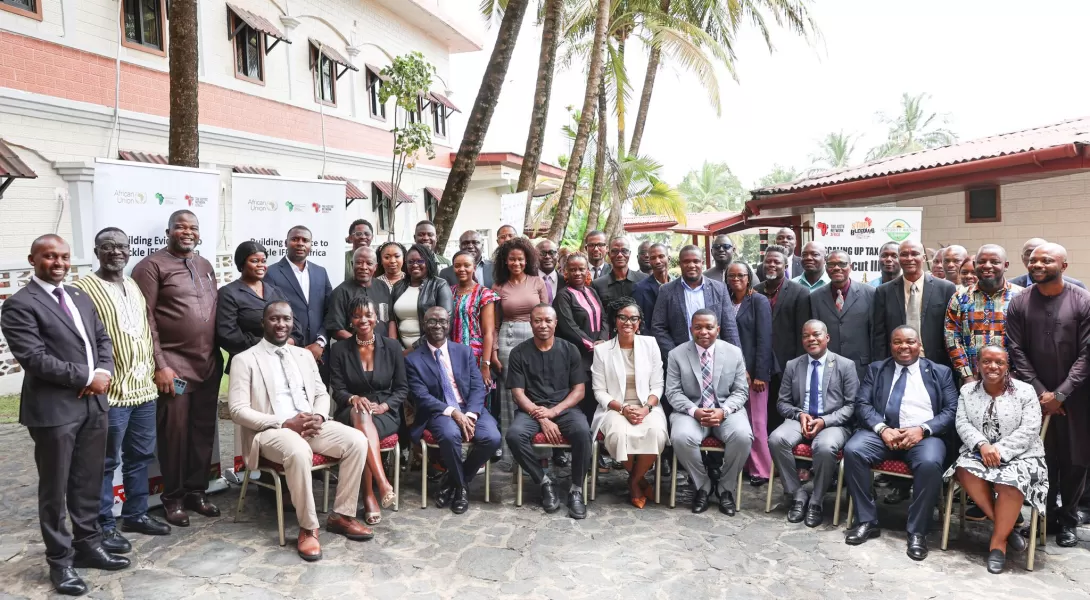
Liberia has taken a significant step in the fight against illicit financial flows (IFFs) by successfully piloting the Anti-IFFs Policy Tracker, reaffirming their commitment to tackling illicit financial flows (IFFs) across the continent. This occurred during the fifth piloting workshop of the Anti-IFFs Policy Tracker, held in Monrovia from 1st to 3rd September 2025.
Organised by the Tax Justice Network Africa (TJNA) in partnership with the African Union Commission’s Economic Development, Trade, Tourism, Industry and Minerals Department (AU-ETTIM) and the African Tax Administration Forum (ATAF), the Liberia pilot builds on previous successful implementations in Namibia, Uganda, Ghana, and Côte d'Ivoire.
In her opening remarks, TJNA’s Executive Director, Ms. Chenai Mukumba, emphasised the significance of the pilot and extended special thanks to the government representatives from Liberia for their commitment to the Anti-IFFs Policy Tracker and the piloting workshop.
“Liberia, like many African nations, faces the challenge of mobilising sufficient domestic resources to finance development. By piloting this policy tracker here, we are not only advancing Liberia’s leadership in tackling IFFs but also contributing to a continental and global effort to ensure greater transparency, accountability, and equity in financial systems,” Ms. Mukumba added.
The Anti-IFFs Policy Tracker is designed for government institutions, tax policymakers, and civil society organisations that work on combating IFFs. It aims to identify high-risk areas in the financial system, recommend policy reforms, and enhance cooperation among national and regional stakeholders. The findings will contribute to a broader anti-IFFs strategic framework for Africa.
In her remarks, Ms. Luckystar Miyandazi, Tax and Domestic Resource Mobilisation Adviser at ETTIM, African Union Commission, stressed the urgency of addressing IFFs as the workshop represents an important step in the shared commitment to tackling a critical issue that undermines sustainable development, weakens our economies, and compromises the very sovereignty of African countries.
“IFFs continue to drain substantial resources from Africa, with UNCTAD estimating annual losses at approximately USD 89 billion. Liberia alone loses an estimated $966 million annually, mainly driven by losses in the extractive sector and through activities such as trade mis invoicing, corruption, tax evasion and money laundering,” Ms. Miyandazi stated.
The Anti-IFFs Policy Tracker represents a confident, proactive approach that addresses IFFs. By offering real-time data and policy insights, this tool is designed to empower African countries to respond more effectively and coordinate more comprehensively against IFFs.
The pilot mapped national vulnerabilities to IFFs across sectors such as taxation, procurement, and extractives and actionable reforms were proposed to strengthen Liberia’s anti-IFFs frameworks. The workshop fostered stronger interagency collaboration and data sharing.
The Liberia pilot marks a critical milestone in Africa’s collective effort to combat IFFs. By applying the Anti-IFFs Policy Tracker, Liberia has demonstrated its commitment to transparency, accountability, and inclusive development. The insights from this pilot will not only shape national reforms but also contribute to a stronger continental strategy against IFFs.
TJNA remains committed to advocating for inclusive tax reforms that address systemic inequalities and ensure that taxation serves as a tool for social and economic justice.
For more information about the Anti-IFFs Policy Tracker, please contact Francis Kairu at fkairu[@]taxjusticeafrica.net.
