




As cryptocurrency adoption surges across Africa, experts have warned that the continent faces a growing wave of crypto-fueled financial crimes.
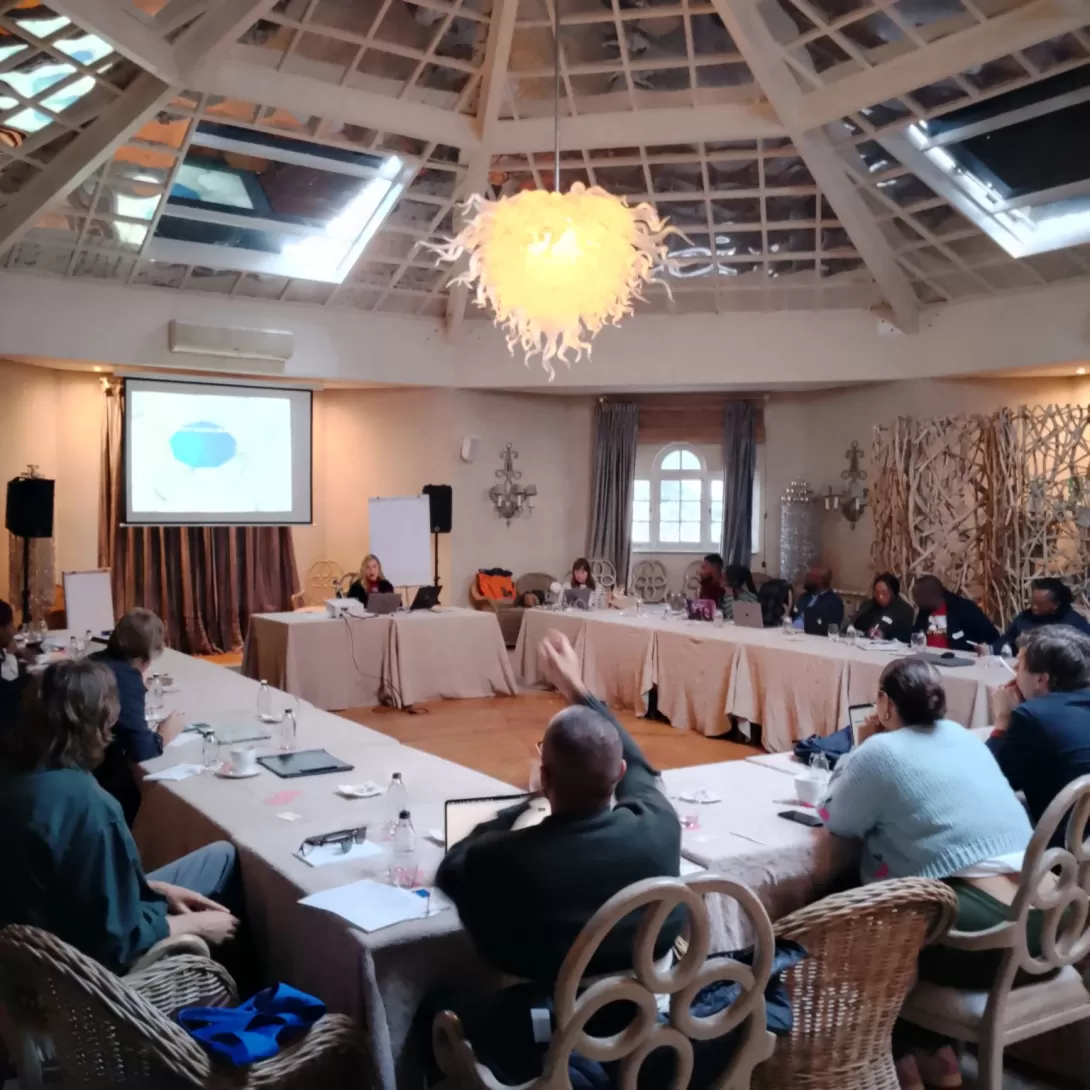
This was the central message from the recent symposium on “Investigating Illicit Financial Flows and Cryptocurrencies in Africa,” held in Cape Town from May 23 to 27, 2025.
Organised by Code for Africa (CfA) in partnership with Deutsche Gesellschaft für Internationale Zusammenarbeit (GIZ) and under the African Digital Democracy Observatory (ADDO) initiative, the event brought together 30 experts, from investigative journalists and researchers to blockchain technologists, to unpack the new realities of financial crime in a digital age.
The experts cautioned that without swift action, Africa risks becoming a hotspot for money laundering, fraud, and other digital financial crimes that threaten economic stability and development. They called for urgent, tighter regulations and stronger cross-border cooperation to stem illicit financial flows hidden behind blockchain transactions.
During the session, Tax Justice Network Africa (TJNA) emphasised the urgent need for regulatory bodies across the continent to strengthen financial policies governing the use of cryptocurrencies to combat illicit financial flows (IFFs).
In her remarks, TJNA’s Communications Officer, Ms. Mercy Kamau, highlighted the need for responsible use of cryptocurrencies, such as for fundraising to support charitable causes and promoting financial inclusion for unbanked and underbanked populations, while stressing that those who misuse these technologies to finance crime must be held accountable.
"Cryptocurrencies should be tools for empowerment, not enablers of crime. It is time regulators step up, and perpetrators face the consequences,” Ms. Kamau added.
She urged journalists to strengthen partnerships with civil society organisations (CSOs) and appealed to institutions to provide access to critical data, key to producing hard-hitting investigative stories that expose illicit financial flows and crypto-related crimes.
The symposium also explored the media’s role in covering crypto responsibly. Ms. Yasmin Elgouze from the Thomson Reuters Foundation shared lessons from training journalists on blockchain literacy. “The hype around blockchain often overshadows the harm it can cause when unregulated,” she warned.
The author of Beyond Bitcoin, Mr.Simon Dingle, cautioned against fearmongering, arguing that “It’s not just shadowy hackers; increasingly, it’s insiders exploiting crypto’s opacity for old-school corruption.”
Ms. Denisse Rudich of Rudich Advisory provided an insightful overview of the global regulatory landscape for cryptocurrencies, highlighting several high-profile scandals that have recently captured international headlines.
She emphasised the growing challenge regulators face, stating, “We are witnessing a significant shift where regulation is continually playing catch-up with rapid technological innovation. This lag creates critical loopholes that are ripe for exploitation by bad actors.”
The delegates developed investigative toolkits and identified shared investigations. From expanding blockchain analysis skills to forming new cross-border collaborations, participants agreed that the only way to address crypto crime is together.
“This is not just about crypto,” said Daniel Wegner of GIZ in his closing remarks. “It’s about building the capacity to hold power to account in an increasingly digitised financial world.”
The four days included presentations on regulatory frameworks, pitfalls, and challenges for cryptocurrency in countries such as Kenya, Nigeria, and South Africa; case studies of investigative stories on illicit financial flows (IFF); and technical workshops focused on actionable insights, regulatory discussions, and collaborative problem-solving.
Investigative newsrooms that specialise in financial crime are acutely aware of the evolving landscape of illicit finance, with the rise of cryptocurrency and blockchain technology presenting a significant challenge to journalists’ ability to expose and report on these complex schemes. Delegate newsrooms identified critical gaps in the tools and resources available to them, hindering efforts to investigate this specialised and growing area of financial crime effectively.
What are the most effective investigative tools for tracing cryptocurrency transactions? What training and resources are essential for journalists to investigate financial crimes involving crypto and blockchain? How can newsrooms overcome the technical and legal challenges of investigating decentralized financial systems? For many African newsrooms, current toolkits and resources are demonstrably insufficient to keep pace with the evolving methodologies of crypto criminals.
Delegates identified fundamental questions: how do journalists effectively trace complex cryptocurrency transactions across multiple blockchains and through various obfuscation techniques, such as mixers and decentralized exchanges? What specialized training is required to equip journalists with the technical understanding of blockchain forensics, smart contracts, and decentralized finance (DeFi) protocols? Beyond technical skills, how do we navigate the labyrinthine legal and jurisdictional challenges that arise when investigating crimes that transcend traditional geographical boundaries and regulatory frameworks? We need to develop strategies to access crucial data that often resides on private platforms or in semi-anonymous environments. The sheer volume and speed of crypto transactions demand automated solutions, yet we must ensure these tools maintain the evidentiary integrity required for robust reporting and potential legal action.
These were the main issues identified that African newsrooms will need to address:
- Understanding regulatory gaps: Journalists must grasp where regulatory frameworks are lacking, as these gaps often present the greatest risks for abuse and criminal activity. Staying up to date with regulatory changes and market research is crucial.
- Technical skills and tools: Journalists need to understand blockchain mechanics, how to trace transactions, and the limitations of tracking in DeFi and peer-to-peer markets. Access to blockchain analysis tools is important, and solutions to overcoming cost and access barriers are needed.
- Collaboration with regulators and experts: Engaging with regulators, technologists, and forensic analysts will help journalists to interpret complex data and to understand evolving threats. Ideally, newsrooms should build networks with “white hat” crypto experts and leverage communities of practice.
- Consumer education and awareness: There is an urgent need for journalists to help educate the public about crypto risks, scams, and regulatory developments, as consumer protection, and its concomitant consumer literacy, is a growing concern given the rising adoption of crypto in many African countries.
- Privacy and data access: Journalists need to navigate privacy issues—regulatory data is not always public, but aggregated insights may be available. Direct access to advanced monitoring tools is limited, but insights can be shared on request.
- Establishing legal and ethical guidelines: As the field is rapidly evolving, developing clear ethical and legal frameworks for crypto investigations is paramount to ensure responsible, impactful reporting and to avoid eroding trust in the media.
The symposium also yielded several key takeaways for investigative newsrooms working in crypto and financial crime. They include:
- Regulatory landscape: In a presentation by the FCSA, it was noted that South Africa has made significant progress in regulating crypto assets, including licensing requirements for service providers and the implementation of the “travel rule” for transaction reporting. However, DeFi and peer-to-peer markets remain challenging to regulate.
- Crypto crime trends: Criminals increasingly use mixers and DeFi platforms to obfuscate transactions. Centralized exchanges are improving surveillance and compliance, but illicit flows are shifting to less regulated spaces.
- Several case studies highlighted opportunities and risks for corruption and capital flight. These included the collapse of Mirror Trading International, the use of crypto in Zimbabwe’s fragile economy, and the Central African Republic’s Sango project.
In a call to improve the resources and skills available to African newsrooms, presenters emphasised the importance of open-source blockchain explorers, forensic platforms, and collaboration with global experts. AI and advanced analytics are seen as future solutions for tracking illicit flows.
The complexity of crypto technology, lack of affordable tools, and evolving criminal tactics make investigations difficult. Journalists must continually upskill and adapt to new threats. Affordable, localised training is crucial to this, as is access to expensive investigative tools.
Africa cannot afford to remain passive in the face of rising digital financial crime. As cryptocurrencies continue to reshape the financial landscape, so must the continent’s investigative capacity, regulatory frameworks, and cross-border cooperation.
TJNA is building a new Africa where tax justice prevails. Alongside leading researchers, policymakers, campaigners, and civil society organisations, we are mobilizing a movement to comprehensively transform tax policy, challenge harmful investment practices, improve international tax transparency, and restore the sovereignty of natural resources to African countries.
For more information on the symposium, please contact Mercy Kamau at mkamau[@]taxjusticeafrica.net
