

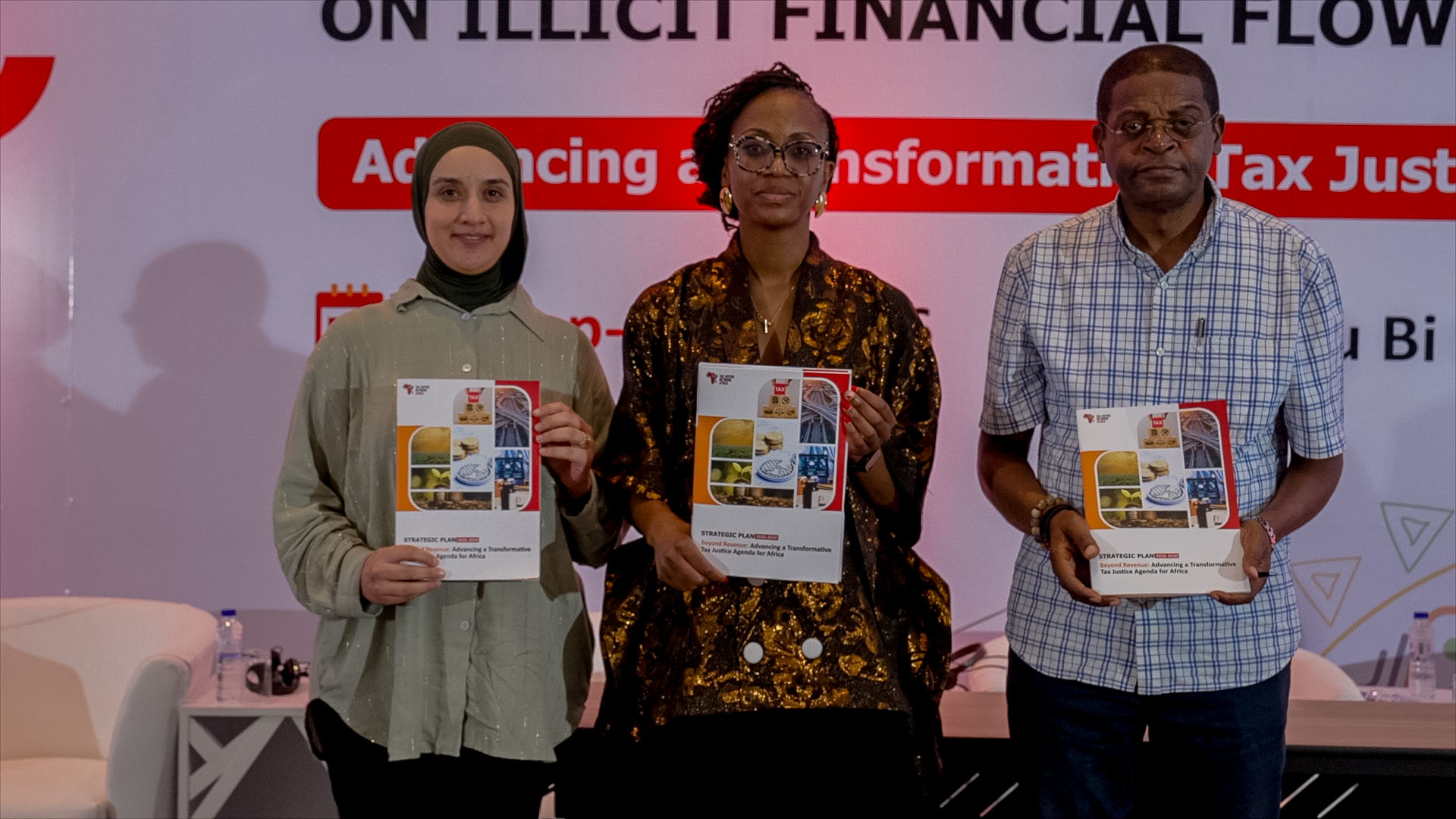
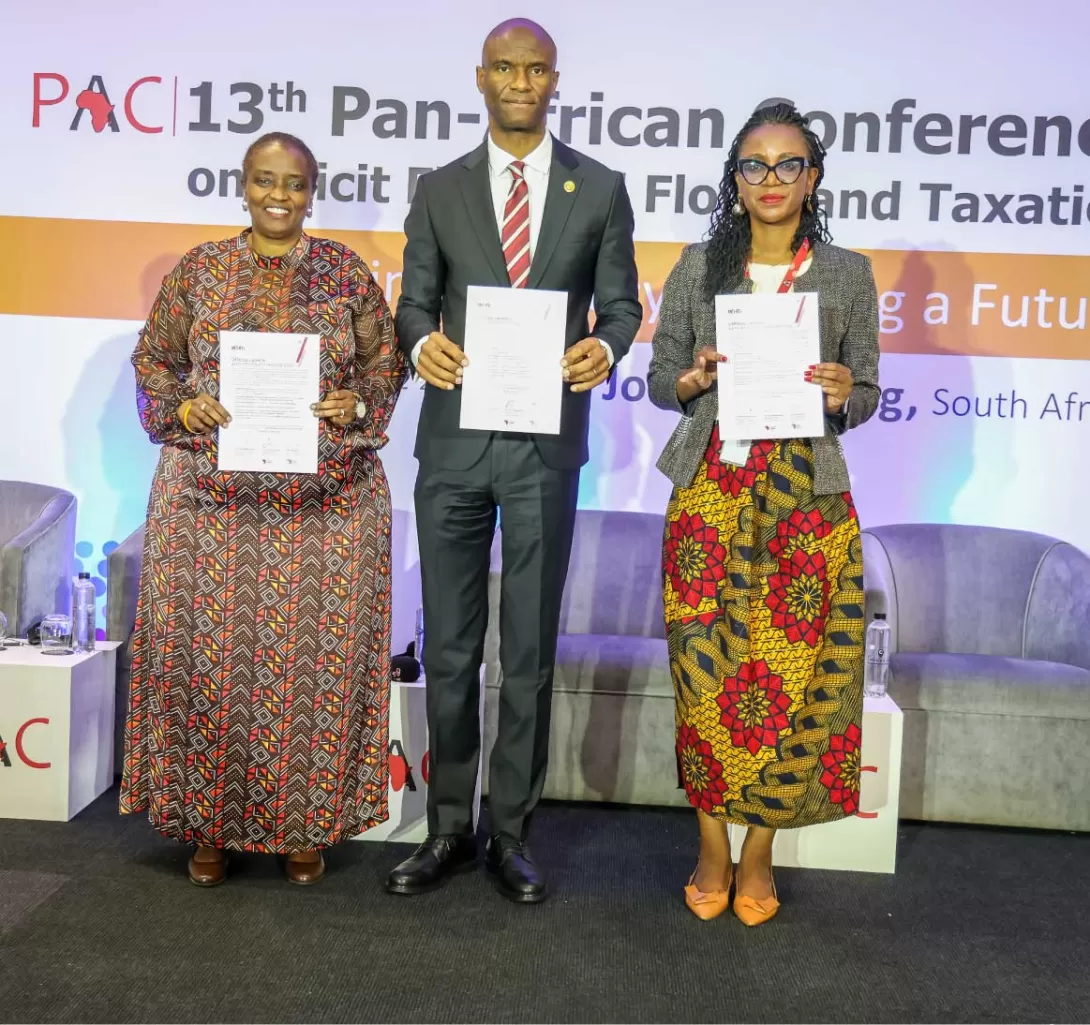
African governments, regional institutions, and civil society reached a new milestone in the continent’s fight against illicit financial flows (IFFs) with the official launch of the Anti–Illicit Financial Flows (IFFs) Policy Tracker tool. This took place during the 13th Pan-African Conference on Illicit Financial Flows and Taxation (PAC) in Johannesburg, South Africa, on 7–10 October 2025.
The Anti-IFFs Policy Tracker tool targets government institutions working on illicit financial flows, civil society organisations, and tax administration policymakers. Throughout the piloting phase, the Policy Tracker has engaged a wide range of national actors, including Ministries of Finance, Revenue Authorities, Financial Intelligence Units, Central Banks, Anti-Corruption Agencies, Public Procurement and Concessions bodies, National Audit institutions, and civil society organisations, ensuring that the tool captures the institutional landscape necessary for combating IFFs and strengthening accountability.
The official launch, on 8 October 2025, was graced by H.E. Thabo Mbeki, Former President of South Africa and Chairperson of the High-Level Panel on IFFs from Africa. This launch signifies a shared commitment to advancing transparency, accountability, and sustainable domestic resource mobilisation across Africa. Illicit financial flows continue to drain billions of dollars from African economies each year, undermining public service delivery and slowing progress toward the Sustainable Development Goals.
The Anti-IFFs Policy Tracker tool provides comprehensive, up-to-date information for tracking policy implementation and government actions on tax-based IFFs. It is designed to provide an objective, standardised, and data-driven assessment, enabling stakeholders to identify policy gaps, track progress, and understand the effectiveness of reforms.
The Policy Tracker was developed by Tax Justice Network Africa (TJNA), in collaboration with the African Union Commission (AUC) and the African Tax Administration Forum (ATAF), building on the recommendations from various reports that have extensively documented procedures needed to combat IFFs, including the High-Level Panel report on Illicit Financial Flows from Africa (commonly referred to as the Mbeki Panel Report) and recent reports such as the High-Level Panel on International Financial Accountability and Transparency (FACTI Panel report).
The development of the Anti–IFFs Policy Tracker was strengthened through a pilot phase that engaged Namibia, Uganda, Ghana, Côte d’Ivoire, and Liberia, reflecting diverse regional representation.
H.E. Thabo Mbeki reflected on the decade-long journey since the publication of the High-Level Panel’s landmark report. He highlighted that illicit financial flows are not an abstract issue but a concrete drain on Africa’s capacity to finance its own development and provide essential social services.
“The IFFs were not an abstract problem, but a very real drain on Africa’s capacity to finance its own development, to provide social services and build the industries and infrastructure necessary for the prosperity of Africa’s peoples,” said H.E. Mbeki.
In her remarks, TJNA’s Executive Director, Ms. Chenai Mukumba, emphasised the need to have more African countries implement the Anti-IFFs Policy Tracker by consolidating data and policy indicators across member states. She noted that the Tracker will enable governments and civil society to monitor national and regional efforts, benchmark progress, and inform policy reforms aligned with the AU’s Agenda 2063 and the Sustainable Development Goals (SDGs).
“We wanted to take this opportunity to officially launch and roll out the Policy Tracker, and we are hoping to get more invitations from African countries to implement it. We appreciate all the partners who have been on board and invite other institutions to be part of this as we work to curb illicit financial flows,” said Ms. Mukumba.
In his remarks, TJNA’s Senior Policy Officer, Mr. Francis Kairu, indicated that the Tracker allows countries to assess their performance using a simple traffic-light system, facilitates cross-country comparisons, and supports evidence-based decision-making, all while requiring minimal resources.
“The Policy Tracker tool is designed to convert recommendations from landmark high-level reports into measurable indicators across four clusters: legislative and policy frameworks, institutional frameworks, data and information frameworks, and inter-agency cooperation,” Mr. Kairu explained.
A significant aspect highlighted was the African Union’s engagement in tackling illicit financial flows. In his remarks, Dr. Patrick Olomo, Acting Director of Economic Development, Integration and Trade, and Head of Economic Policy and Sustainable Development at the African Union, noted that as AUC, they have used the HLP report as a milestone to understand the scale of resources lost annually from Africa. He further noted that this understanding has positioned domestic resource mobilisation at the forefront of their work, framing a transformative mindset to harness their own capabilities for development.
“Through the creation of the STC Subcommittee on Tax and illicit financial flows and collaboration with institutions like ATAF, TJNA, and UNECA, the AU has reinforced political commitment across member states and advanced Africa’s leadership in international tax cooperation. While challenges remain, the foundation laid by the Panel sets the stage for a decade of action to stem illicit financial flows and maximise domestic resources,” said Dr. Olomo.
As Africa continues to lose an estimated USD 89 billion annually to illicit financial flows, the launch of the Anti–IFFs Policy Tracker marks a transformative step toward curbing leakages, protecting public resources, and strengthening domestic revenue systems.
Following the continental launch, the next phase will focus on capacity building and encouraging adoption by member states, ensuring that the Policy Tracker becomes a vital part of Africa’s fiscal governance framework. The collaborative approach supporting the tool, connecting research, policy, and implementation, establishes it as a key element in Africa’s pursuit of financial integrity and inclusive growth.
The Anti-IFFs Policy Tracker plays a vital role in addressing IFFs in Africa. The findings and recommendations will help form a wider strategic framework for combating IFFs across the continent. The pilot results have already contributed to continental discussions at the 8th Ordinary Session of the African Union’s Specialised Technical Committee (STC) on Finance, Monetary Affairs, Economic Planning, and Integration, organised by the African Union in October 2025.
For more information about the Anti-IFFs Policy Tracker, please contact Francis Kairu at fkairu[@] taxjusticeafrica.net.
