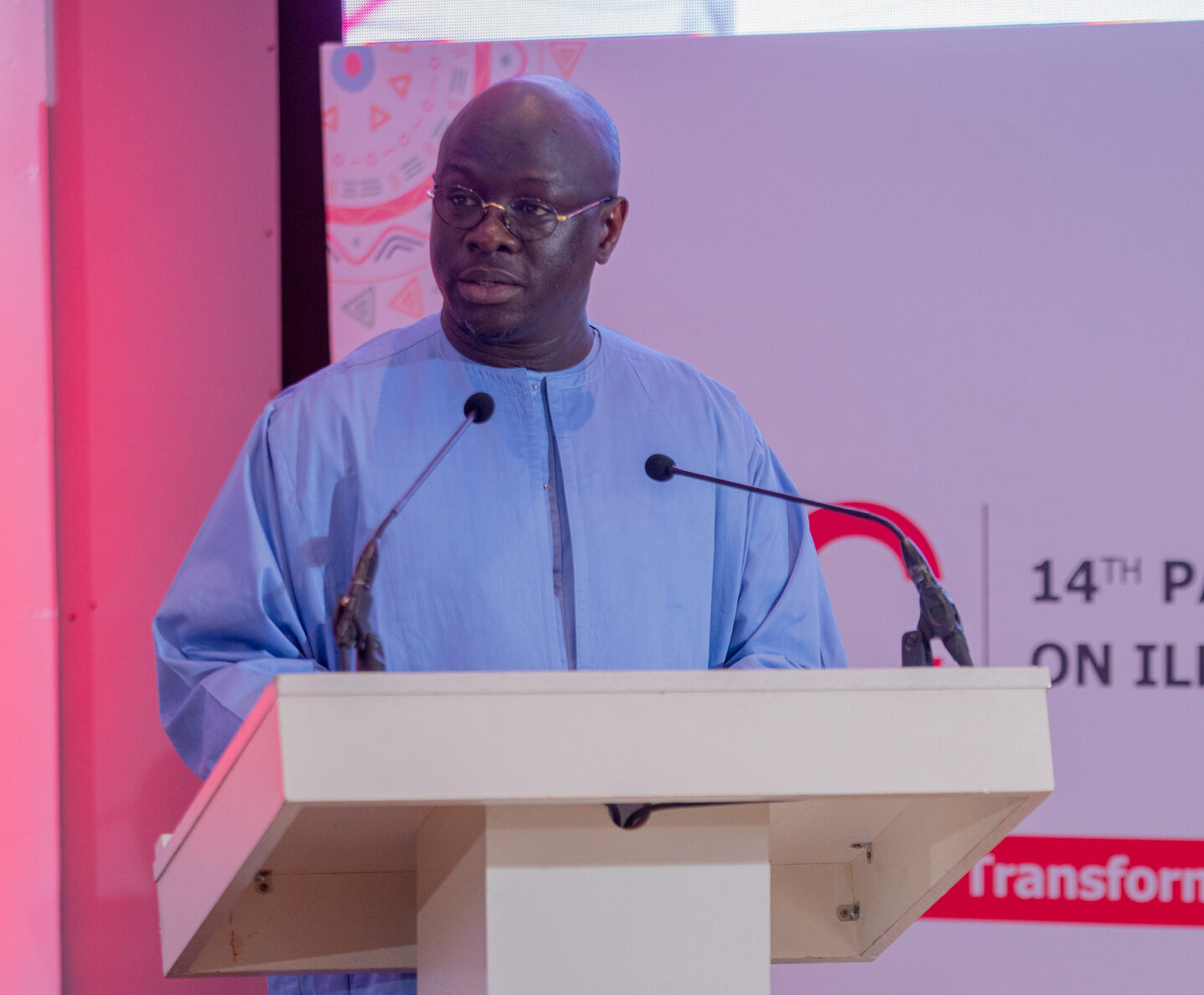
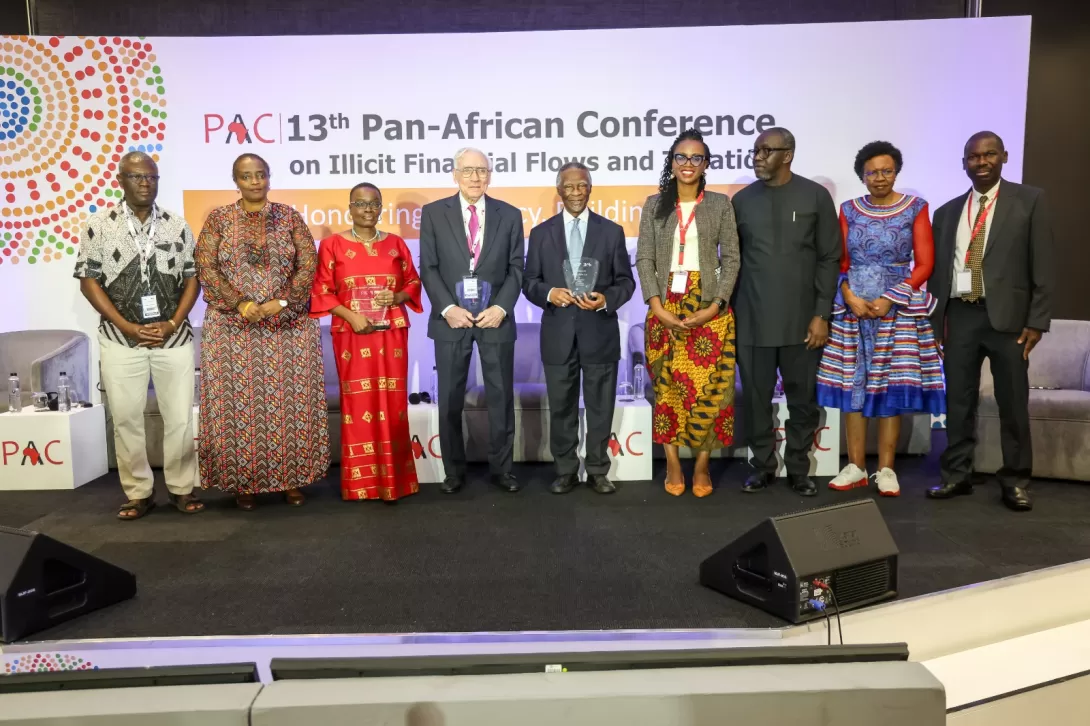
African leaders urged the continent to adopt coordinated reforms to curb illicit financial flows during the 13th Pan-African Conference on Illicit Financial Flows and Taxation (PAC 2025), held from October 7 to 10 in Johannesburg, South Africa. This year's conference marked a defining moment in Africa’s long journey to fight illicit financial flows (IFFs) and advance tax justice.
Convened under the theme “Honouring a Legacy, Building a Future: A Decade of the HLP Report”, the conference brought together over 400 delegates, including policymakers, parliamentarians, oversight institutions, and anti-corruption bodies, academics, think tanks, and research institutions; as well as regional and international organisations and development partners. These diverse actors reflected on progress, assessed challenges, and charted a bold path forward.
In his opening remarks, H.E. President Thabo Mbeki reflected on the decade since the launch of the HLP Report in 2015. He reminded participants of the urgency and nature of illicit financial flows, emphasising that these outflows amount to significant haemorrhaging of Africa’s resources, undermining development, weakening governance, and perpetuating inequality. He stressed that addressing IFFs is not merely a technical exercise but a political and economic imperative for safeguarding Africa’s sovereignty and financing its structural transformation.
“Ten years ago, the High-Level Panel declared that Africa could not afford to lose one more dollar through illicit financial flows. Ten years on, we must declare that Africa cannot afford another decade of subordination in the global financial system,” said H.E. Thabo Mbeki.
“Technical expertise must be matched with political mobilisation. Only by uniting as a continent, and by speaking with one voice, can we hope to transform the global rules that so profoundly affect Africa’s capacity to mobilise its resources,” he emphasised.
The conference also featured members of the High-Level Panel in a session titled “Ten Years Later – Reflections on the High-Level Panel Report.” This opening session set the stage for the conference by revisiting the Report’s influence on Africa’s policy and advocacy landscape. Speakers reflected on how the HLP Report changed the framing of illicit financial flows, from a purely technical concern to a multifaceted issue central to Africa’s economic sovereignty, encompassing political, developmental, and justice aspects.
The session emphasised the report’s catalytic role in shaping continental and global discourse on tax justice, transparency, and financial accountability. Panellists noted that while significant strides have been made in institutionalising the fight against IFFs, persistent structural and political barriers continue to hinder progress, reaffirming the need for sustained collaboration and political will to realise the HLP’s vision.
“This conference is not just a reflection on the past decade; it is a strategic moment to shape the next. TJNA remains committed to building coalitions, amplifying African voices, and driving policy change that puts justice at the centre of Africa’s fiscal future,” said TJNA’s Executive Director, Ms. Chenai Mukumba.
“Africa needs to leverage existing platforms, appreciate shared strategic agendas, and build inclusive coalitions that transcend silos,” Ms. Chenai added.
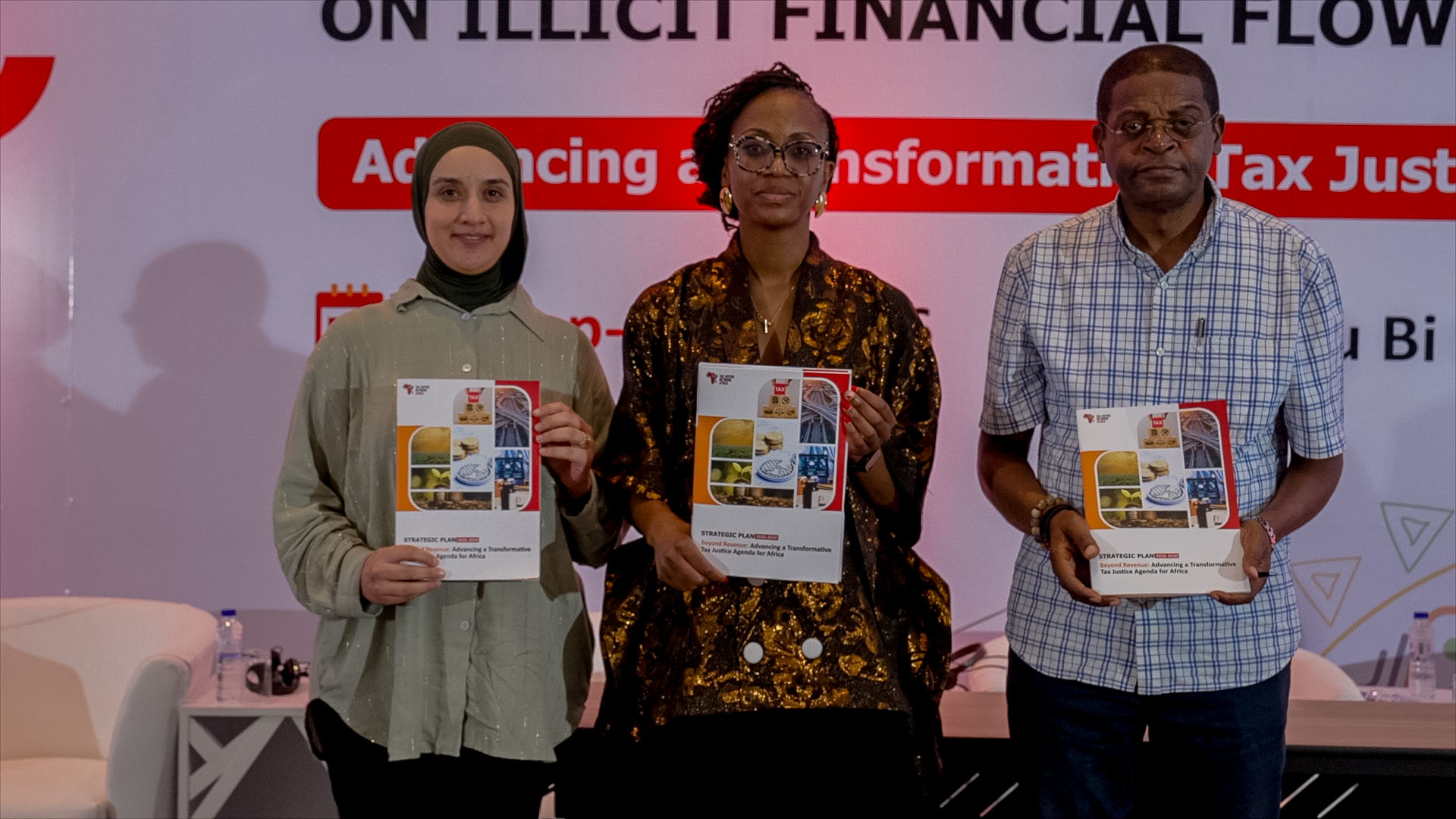
TJNA, in collaboration with the African Union and the African Tax Administration Forum (ATAF), also launched the Anti-IFFs Policy Tracker, a legacy tool rooted in the High-Level Panel (HLP) on IFFs from Africa that will help African countries monitor, assess, and strengthen their policy responses to IFFs.
The PAC 2025 featured plenaries and side sessions that explored the intersection of tax policy, governance, and development. Participants engaged in discussions on how tax systems can be leveraged to drive industrialisation, promote value addition, and reduce reliance on raw exports. Sessions also tackled the structural imbalances in the global financial architecture, calling for decolonised approaches to international tax cooperation.
A major milestone discussed was the UN Framework Convention on International Tax Cooperation, driven by the Africa Group at the United Nations. “For decades, the OECD has dominated global tax rulemaking, with limited space for developing countries. It was through political unity, driven by the Africa Group, that the world finally recognised the need for a universal and inclusive forum,” noted H.E. Thabo Mbeki.
Delegates called for aligning tax policies with Africa’s industrialisation agenda, promoting job creation, value addition, and local ownership. It was emphasised that tax is not merely a tool for revenue collection, but a strategic instrument for economic transformation, democratic accountability, and redistribution of power and resources.
“Africa faces a shifting geopolitical landscape where traditional development models reliant on aid, foreign direct investment, and remittances are no longer viable. Africa holds immense potential, including rich mineral resources, a growing population, and favourable development dynamics. The recommendations of the HLP report will continue to guide our work as we double our efforts. Let us remember it is our collective enthusiasm and passion that fuel this fight against IFFs. Together, we are building a future where Africa’s wealth works for its people,” noted Ms. Mary Baine, Executive Secretary of the African Tax Administration Forum.
“Let us carry forward the spirit of open dialogue and collective action, for it is through honest conversation and shared commitment that we shape the next decade of even greater impact,” added Dr. Patrick Ndzana Olomo, Ag. Director Economic Development, Integration and Trade, African Union Commission.
As PAC 2025 concluded, one message resonated clearly: Africa needs political champions, technical innovation, and continental solidarity to drive the fight against IFFs. The next decade must be about results, resilience, and reclaiming Africa’s wealth.
“Together, we are laying the foundation for a future where Africa’s wealth works for its people,” said TJNA’s Chairperson for the Executive Council, Mr. Jean Mballa Mballa.
PAC 2025 was not just a commemoration; it was a call to action. A decade after the HLP Report, Africa stands united and determined to build a future rooted in justice, equity, and sovereignty.
For more information about PAC 2025, please contact Christine Mutinda at cmutinda[@]taxjusticeafrica.net
